How Nasdaq Ownership Shapes Index Investing
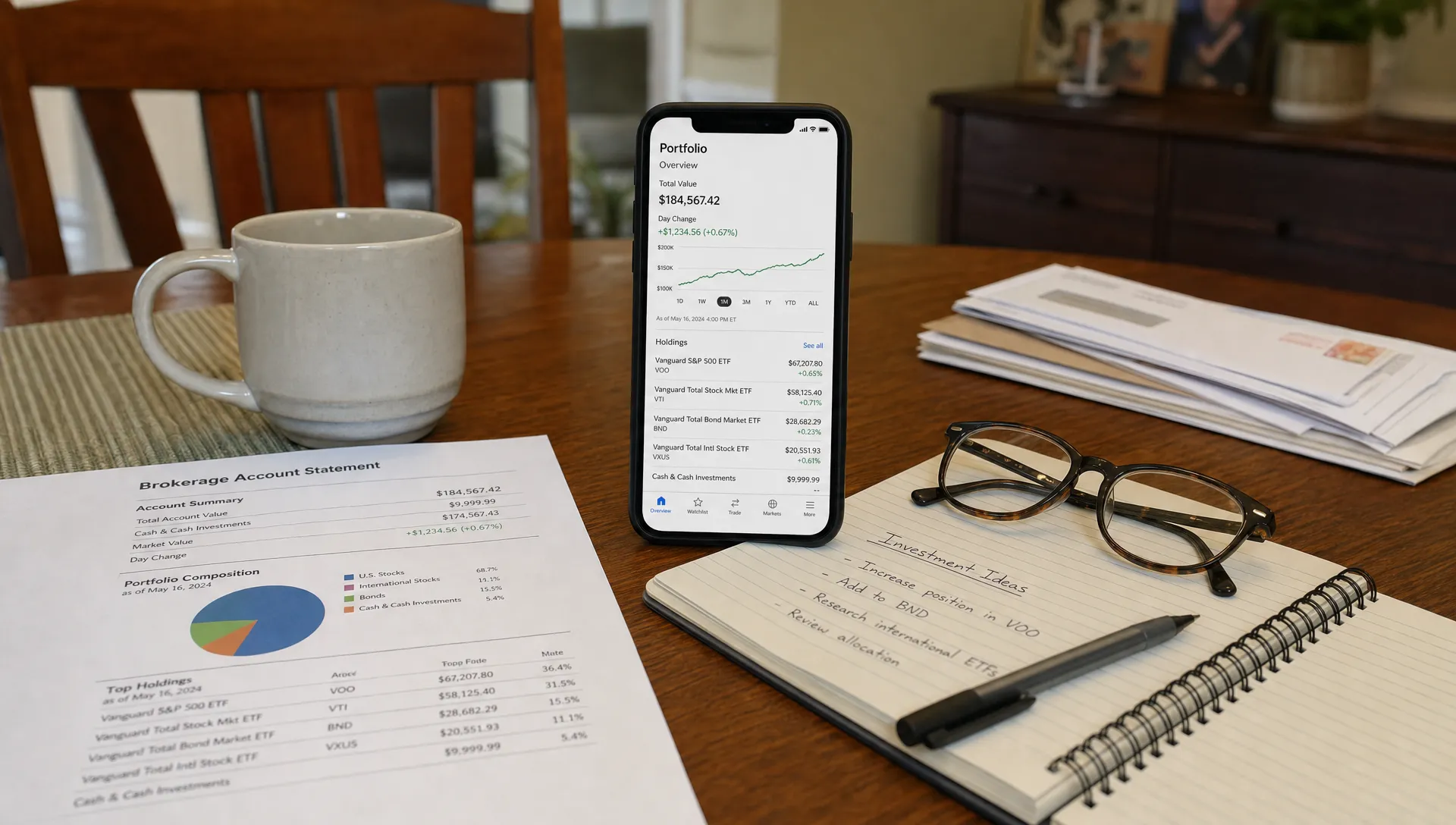
Nasdaq ownership is not just a data point for stock pickers. If you buy Nasdaq Composite, Nasdaq-100, or tech-heavy index funds, ownership patterns influence what you actually own, how much of each company sits in your fund and how crowded your exposure may become.
That matters because index investing can feel automatic. You choose a ticker, set a recurring buy and let the methodology do the work. Under the surface, though, the index is still made of companies with share counts, insiders, institutions, retail holders, buybacks, dilution, voting rights and liquidity constraints. Ownership shapes how those ingredients behave when money flows in or out.
Why Nasdaq ownership matters in index investing
The first step is separating three ideas that often get blended together. Nasdaq is an exchange operator and index provider. The Nasdaq Composite is a broad index of Nasdaq-listed stocks. The Nasdaq-100 is a narrower index that tracks many of the largest non-financial companies listed on Nasdaq and is widely accessed through ETFs and mutual funds.
Index investors usually care less about the exchange itself and more about the ownership profile of the companies inside these indexes. A fund may look diversified because it holds dozens or hundreds of names, but its risk can still be concentrated if a small group of companies dominates the weight or if large holders control a meaningful share of the float.
In practice, Nasdaq ownership helps explain why two investors can both be passive and still hold very different risk. One may own a broad total-market fund with some Nasdaq exposure. Another may own a Nasdaq-100 fund where mega-cap technology and growth companies carry much more influence.
The mechanics: float, market cap and index weights
Most index funds do not buy equal amounts of every company. They follow rules. Those rules often give larger companies larger weights, though the exact approach depends on the index methodology. Market capitalization, investable shares, liquidity and periodic rebalancing all affect how much of each stock ends up in the fund.
Ownership enters the picture through float. If insiders, founders or strategic holders control a large percentage of shares, fewer shares may trade freely in the public market. That can affect liquidity and, depending on the index, the investable weight of the company. Even when an index does not fully remove closely held shares from the calculation, the real trading float still matters for price movement.
This is why Nasdaq ownership should be read alongside share count and float, not as a headline percentage alone. A company can be popular with institutions but still trade thinly if the freely available supply is limited. Another can have broad ownership but plenty of liquidity, making fund rebalancing easier to absorb.
| Ownership factor | Why it matters for index investors | What to watch |
|---|---|---|
| Public float | Influences tradable supply and liquidity | Insider control, strategic holders and locked-up shares |
| Market capitalization | Drives weight in many index strategies | Price changes, buybacks and share issuance |
| Institutional holdings | Shows professional ownership and fund exposure | Concentration, filing delays and crowded trades |
| Retail participation | Can affect momentum and volatility | Sentiment shifts and volume spikes |
| Rebalancing rules | Determines when funds add, remove or resize positions | Index review dates and methodology changes |
Passive funds can amplify ownership signals
Passive investing is rules-based, but it is not impact-free. When money flows into a Nasdaq-focused ETF, the fund may need to buy the underlying stocks according to index weights. When money leaves, it may sell. In highly liquid mega-cap stocks, this usually blends into normal market activity. In smaller or less liquid names, rebalancing can matter more.
This does not mean passive funds control every price move. Earnings, rates, guidance, valuation and sentiment still drive markets. But ownership structure can change how quickly a move travels through a stock. A company with a tight float and strong institutional conviction may respond differently to new demand than one with a broad float and more sellers available.
For a deeper look at interpreting professional holders without overreading the headline number, Upside Invest has a guide on how to read institutional ownership of a stock. That context is especially useful when Nasdaq ownership appears to confirm a trend, because fund ownership can reflect index inclusion as much as active conviction.
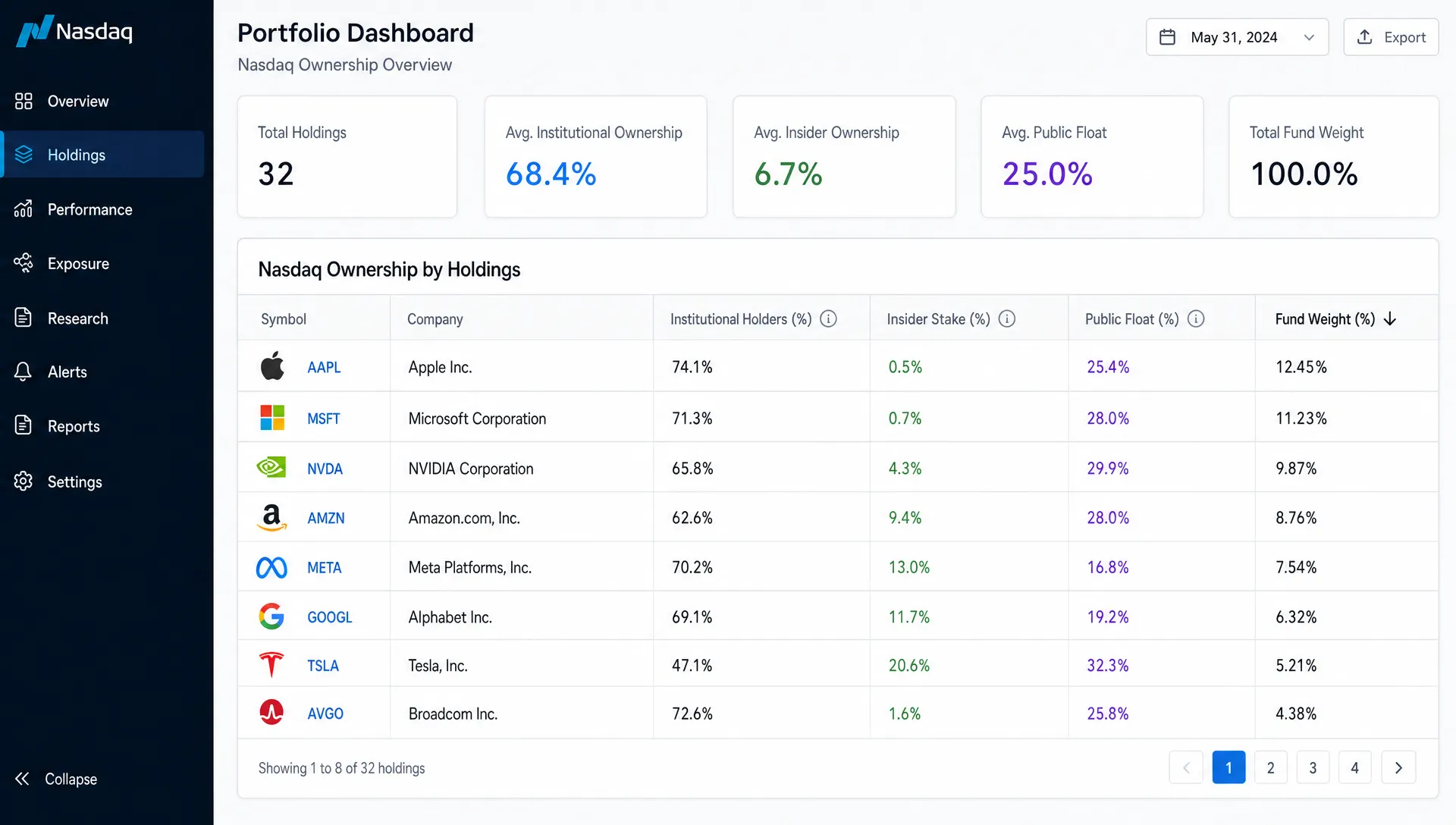
What Nasdaq-heavy funds make visible and what they hide
A Nasdaq-heavy index fund gives investors instant exposure to innovative, widely followed public companies. It can also hide the difference between owning an index and owning balanced exposure. The label may say broad technology or growth, but the fund can lean heavily toward a few dominant business models.
Look-through analysis solves that problem. Instead of stopping at the ETF name, review the underlying holdings, the top ten weight, sector exposure and overlapping positions across your portfolio. Many investors own a Nasdaq-100 fund, a large-cap growth fund and an S&P 500 fund at the same time, then discover the same mega-cap stocks appear in all three.
Nasdaq ownership becomes more useful when paired with this overlap check. If the same companies are owned by index funds, active funds, insiders and retail investors at scale, the upside can be powerful during momentum cycles. The downside is that disappointment in a few heavily owned stocks can ripple through multiple funds that looked separate on the surface.
Upside Invest covers the broader research process in its article on stock ownership data every investor should track, including insider stakes, institutional holders, dilution and short interest.
Reading ownership changes without chasing noise
Ownership data is useful, but timing matters. Institutional data can lag because many large managers report positions after quarter-end. Insider transactions may require context, such as compensation plans or tax needs. ETF holdings can update frequently, but a position increase may simply reflect index rules rather than a manager making a fresh judgment.
For index investors, the better question is not whether one holder bought or sold. It is whether the ownership trend changes the fund exposure you expected to own. If the top holdings are becoming more concentrated, your portfolio may be taking more single-stock risk. If new entrants are added after a strong rally, you may be buying into momentum created before the index fund owned the name.
A useful workflow is to compare ownership shifts with fundamentals, valuation and risk-adjusted performance. Nasdaq ownership can point you toward a question, but it should not be treated as the answer. If you want to trace the source documents, this Upside Invest guide explains how to find stock ownership changes in SEC filings.
A practical checklist before buying a Nasdaq index fund
Before adding a Nasdaq-focused fund, review it as a portfolio building block rather than a standalone ticker. The goal is not to avoid concentration entirely. Concentration can be intentional. The goal is to know whether the fund is giving you the exposure you actually want.
Use this checklist as a simple starting point:
- Identify the exact index, such as Nasdaq Composite or Nasdaq-100.
- Review the top holdings and how much of the fund they represent.
- Compare overlap with funds you already own.
- Check whether the strategy is market-cap weighted, modified market-cap weighted or equal weighted.
- Look at ownership signals alongside earnings quality, valuation and volatility.
Nasdaq ownership also belongs in your rebalancing process. If a few holdings grow from a reasonable position into the core driver of your returns, your total portfolio may become more aggressive without you placing a single new trade.
Governance, values and voting power
Index investing does not remove ownership responsibilities. When you own an ETF or mutual fund, the fund provider generally holds the shares and votes proxies according to its stewardship policies. That means ordinary investors may be economically exposed to corporate decisions without directly voting on every issue.
This can matter for governance, executive pay, board independence, climate policy, data privacy or other shareholder proposals. Investors who care about values-based allocation should read fund stewardship reports and understand whether the voting approach matches their preferences.
Some investors also connect portfolio choices with personal stewardship, including faith-based views on money and responsibility. Resources offering biblical insight for everyday faith can help frame that values side, while the investment work still requires understanding fees, holdings, risk and methodology.
Governance is another reason Nasdaq ownership is more than a technical metric. The more assets that flow into index products, the more voting influence can concentrate among large asset managers, even when the economic owners are millions of individuals.
How Upside Invest can help investors compare exposure
Ownership research becomes more actionable when you can compare your portfolio against real investor behavior. Upside Invest is built around anonymous, verified portfolio sharing, helping retail investors see what other investors are buying, holding and outperforming with.
That type of benchmarking can be useful for index investors because it adds context. If you own a Nasdaq-focused fund, you can compare your allocation with investors who hold more single stocks, more diversified funds, crypto exposure or different sector tilts. Return and Sharpe metrics can also help separate simple outperformance from risk-heavy concentration.
The point is not to copy another portfolio. It is to understand whether your Nasdaq exposure is intentional, diversified enough for your goals and supported by ownership trends rather than driven by habit.
Frequently Asked Questions
Does Nasdaq ownership mean ownership of Nasdaq Inc.? Not usually in this context. It refers to who owns the stocks inside Nasdaq-listed indexes or Nasdaq-focused funds, including institutions, insiders, retail investors and passive fund vehicles.
Why does ownership matter if I only buy index funds? Index funds still own underlying stocks. Ownership affects liquidity, concentration, voting power and how fund flows can interact with the market, especially around rebalancing or major index changes.
Is the Nasdaq-100 diversified enough on its own? It depends on your goals. The Nasdaq-100 holds many large companies, but it can be concentrated in technology and growth-oriented businesses. Investors should check top holdings and overlap with other funds.
Can institutional ownership be a bullish signal? It can suggest professional interest, but it is not automatically bullish. Some institutional ownership comes from passive funds that buy because of index rules, not because a manager has high conviction.
How often should I review Nasdaq index exposure? A quarterly review is reasonable for most long-term investors. Review more often if you make large contributions, change funds or notice that a few holdings have become a much bigger share of your portfolio.
Bottom line
Index investing works best when it feels simple but is not treated as blind. Nasdaq-focused funds can be powerful tools, especially for investors seeking exposure to large, innovative public companies. They also carry ownership-driven risks that are easy to miss if you only look at recent returns.
Use ownership data to see beneath the index label. Check who owns the underlying companies, how much influence the largest holdings have and whether your total portfolio is more concentrated than it appears. That is how Nasdaq exposure becomes a deliberate strategy rather than an accidental bet.