Using Value Research for Mutual Fund Insight on Indian Funds
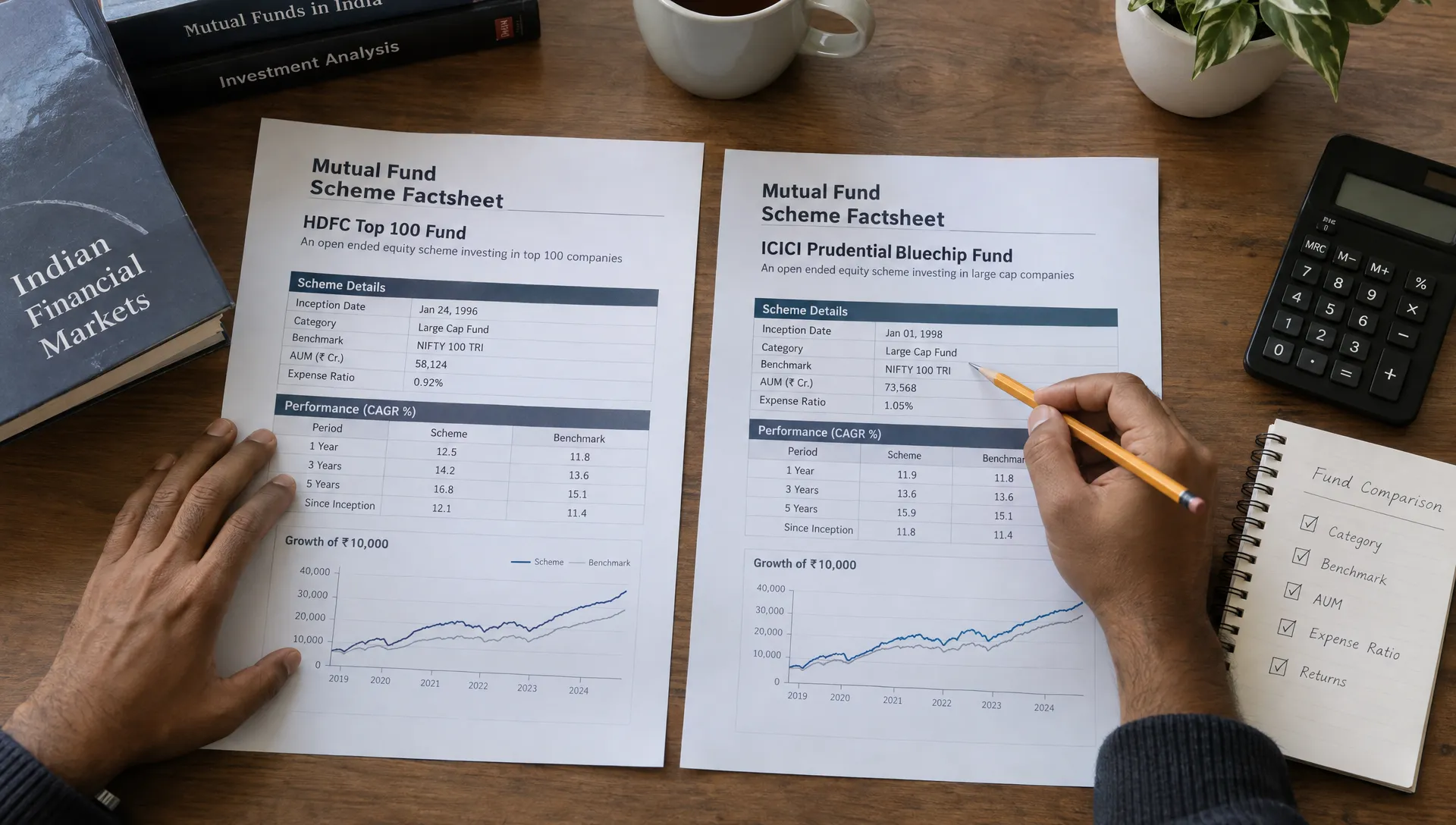
If your search for “mutual fund insight value research” brought you here, you are probably looking for either Value Research’s Mutual Fund Insight magazine or practical help evaluating Indian mutual funds. They are related needs, but they are not identical. A publication can explain a fund’s strategy; deciding whether that fund belongs in your portfolio requires another layer of work.
The useful approach is to combine editorial analysis with current scheme documents, comparable performance data and your own investment constraints. A favorable review or high star rating should start an investigation, not end it. Costs, overlapping holdings, liquidity and the investment horizon can change the conclusion.
This guide separates the magazine from the broader research platform, explains how to evaluate a subscription and provides a repeatable process for assessing Indian funds. It also covers legitimate digital access and the extra questions that matter if you invest from outside India.
What a “mutual fund insight value research” search leads to
Mutual Fund Insight is Value Research’s mutual fund magazine, while its website provides a broader research environment. Treat these as complementary resources rather than interchangeable products.
The magazine offers an editorial perspective: explanations, fund analysis and discussion of investor decisions. Review a recent contents page or authorized sample to see the current mix of portfolio guidance, reader questions and interviews. Do not assume every issue contains every department.
Online fund pages are more useful for checking changing information, such as returns, portfolio composition and expenses. Even then, individual fields may have different reporting dates. A recently updated page can still display holdings from an earlier reporting period.
The distinction matters because a magazine article captures an argument at a particular time. Before acting on it, establish whether the manager, mandate, costs or underlying portfolio have changed. Editorial insight is most valuable when you can connect its reasoning to current evidence.
Is a subscription worth paying for?
Value Research’s Mutual Fund Insight is most useful when you regularly read and apply fund research. It may be less valuable if you only need to check an expense ratio or look up a fund’s latest disclosed holdings.
Start with the official Value Research website and navigate to the current publication offer. Subscription prices, available formats and commercial terms can change, so use the checkout page and linked policies rather than an old review.
| Question to check | Why it matters |
|---|---|
| Which print or digital format is included? | Access rights may differ between offers. |
| What subscription period are you buying? | A promotional amount may cover a different period than expected. |
| Is renewal automatic or manual? | You need to understand any future billing commitment. |
| What are the cancellation and refund conditions? | Canceling renewal and receiving a refund are separate questions. |
| Are archives, downloads or offline access included? | Digital access does not automatically mean unrestricted PDF ownership. |
| Are delivery charges or geographic restrictions relevant? | Print availability may differ for readers outside India. |
Judge the purchase against your actual reading habits. As with discretionary spending on books or ant-keeping starter kits, the useful question is whether you will use what you buy. For a research subscription, define that use in advance: perhaps a monthly review and a written investment checklist, rather than collecting unread issues.
Finding legitimate PDFs, samples and older issues
Use publisher-authorized channels for digital editions and back issues. Check whether the official offer provides a sample, an archive or access through an explicitly authorized reading service.
A PDF appearing in search results does not establish that it was distributed legally. Avoid unauthorized file-sharing sites and messaging-group copies, which may also contain outdated material or unsafe downloads.
Before paying for Value Research’s Mutual Fund Insight, test an authorized sample against a real question. Can you identify the author’s reasoning, the evidence supporting it and the circumstances in which the conclusion would stop applying? That is a better subscription test than the number of pages available.
If cancellation or archive access is unclear, ask the publisher for written clarification before purchasing. Do not infer those rights from the word “digital.”
A practical workflow for evaluating Indian mutual funds
Read research with a specific decision in mind. The following workflow helps turn commentary into a documented fund assessment without treating the publication as personalized investment advice.
Start with the goal, category and exact plan
Write down the purpose of the investment before reviewing returns. A near-term spending requirement and a long-term retirement allocation need different risk characteristics. A systematic investment plan, or SIP, changes the contribution schedule; it does not make an unsuitable fund suitable.
Next, identify the scheme category and its mandate. Compare a large-cap equity fund with relevant large-cap alternatives, not with a small-cap fund simply because both invest in shares. Debt funds also require category-specific analysis because their duration and credit exposures can differ substantially.
Record the exact plan and option. Direct and regular plans generally hold the same underlying scheme portfolio but have different expense structures. Growth and income distribution cum capital withdrawal, or IDCW, options also require care when comparing returns.
Use Value Research’s Mutual Fund Insight to investigate why a strategy might fit a goal. Then verify that the particular plan you can buy matches the one discussed. Similar names are not sufficient evidence.
Compare performance on a consistent basis
One-year returns are easy to notice and easy to misuse. They can reflect a favorable market phase, concentrated exposure or a temporary style advantage rather than a durable process.
Use matching dates, categories and return conventions. For an equity fund, check the relevant total return benchmark where applicable, rather than comparing against a price index that excludes dividends.
| Measure | What it helps you assess | What it cannot establish alone |
|---|---|---|
| Trailing annualized return | Growth over one specified start-to-end period | Consistency across different entry dates |
| Rolling returns | Results across repeated investment windows | Future returns or guaranteed outcomes |
| Maximum drawdown | The largest observed peak-to-trough loss in the measured period | The worst loss that could ever occur |
| Sharpe ratio | Historical excess return relative to measured volatility | Whether the fund suits your goal |
| Tracking difference | An index fund’s return gap versus its benchmark | Every aspect of liquidity or execution quality |
Match the periods behind these measures. A Sharpe ratio calculated over one interval should not be casually ranked against another calculated over a different interval.
When Value Research’s Mutual Fund Insight discusses strong performance, ask how much occurred under the current manager and mandate. A long scheme history may include materially different investment processes. Treat star ratings as historical screening tools, not promises or instructions to buy.
Read the portfolio, not just the rating
Look through to the assets a fund owns. For equity funds, examine the largest positions, sector weights, market-cap exposure and any meaningful cash allocation. Ask what economic conditions would hurt those holdings together.
For debt funds, review credit quality, issuer concentration, maturity and interest-rate sensitivity. A higher portfolio yield is not a guaranteed investor return. It may accompany greater credit risk, longer duration or other exposures that need investigation.
Consult the scheme’s latest factsheet and relevant official documents. The Association of Mutual Funds in India is also a useful starting point for industry information and investor education, alongside the asset management company’s own disclosures.
Check dates explicitly. Portfolio holdings, expense ratios and performance figures may refer to different observation periods. A rating change cannot tell you everything that happened between those dates.
The strongest use of Value Research’s Mutual Fund Insight is to connect a qualitative explanation with this evidence. If an article praises diversification but current holdings show a concentrated sector bet, investigate the discrepancy rather than choosing whichever account sounds more reassuring.

Account for costs, liquidity and distributions
A sound investment thesis can still lead to a poor choice if implementation costs or access constraints are ignored.
Check the total expense ratio for the exact plan. Published NAV-based scheme returns generally already reflect ongoing scheme expenses, so do not subtract the expense ratio again when interpreting those historical returns. Other investor-level costs or taxes may still apply.
Direct plans generally have lower expense ratios than corresponding regular plans because they do not include distributor commissions in the same way. That does not mean every investor has the same need for advice or assistance. Separate the fund’s cost from the value and charging model of any service you use.
Before implementing an idea from Value Research’s Mutual Fund Insight, inspect exit loads, redemption conditions and any lock-in. With recurring investments, different installments can have different holding periods for relevant exit-load or tax calculations.
IDCW payments are not an additional return layered on top of unchanged fund value. Distributions reduce the scheme’s NAV to reflect the payout, all else equal, and their tax treatment needs separate consideration. Do not choose an option merely because the word “income” sounds safer.
Worked example: two funds can duplicate one portfolio bet
Suppose you already own two hypothetical Indian equity funds in equal amounts. Fund A allocates 30% to financial companies and Fund B allocates 20% to that sector.
Your combined financial-sector exposure through these two positions is:
50% × 30% + 50% × 20% = 25%.
These numbers are illustrative, not observations about actual schemes. The calculation shows why counting fund names is a weak measure of diversification. Different products can express similar underlying bets, especially when they hold many of the same large companies.
Security-level overlap requires another check. Two funds can have similar sector allocations while holding different companies, or different sector weights while sharing several large positions. Include any directly held shares when reviewing the overall exposure.
Value Research’s Mutual Fund Insight may give you a persuasive reason to consider another fund, but it cannot determine the effect on your portfolio without knowing what you already own. The appropriate action might be to add the fund, replace an existing allocation or do nothing.
Write a short decision note: what role would this fund fill, what evidence supports the choice and what development would trigger a review? Avoid creating a mechanical sell rule based solely on a rating downgrade or one weak quarter.
Where community portfolio data adds context
Editorial research explains an investment case. Community portfolio data offers a different perspective: how other investors allocate capital and what combinations they hold.
Upside provides verified investor holdings, anonymous profiles, portfolio comparisons and return and Sharpe metrics. Those features can support questions about concentration, investment themes and differences between your portfolio and other investors’ portfolios.
Used alongside Value Research’s Mutual Fund Insight, community benchmarking can help you challenge assumptions. For example, an attractive fund thesis may still leave your overall portfolio unusually exposed to one industry when combined with other holdings.
However, verified holdings do not establish that an allocation is suitable for you. Participants may have different time horizons, tax situations, outside assets or tolerance for losses. Top-performer rankings also describe a selected group, not necessarily a representative investor population.
Do not assume any platform supports every Indian mutual fund, plan or share class. Confirm instrument coverage, pricing currency, valuation dates and calculation methods before making comparisons. A mismatch in these details can produce misleading conclusions even when the underlying holdings are genuine.
Extra checks for investors outside India
Research access and investment eligibility are separate matters. Being able to read about an Indian scheme does not mean you can purchase it through your existing account.
Nonresident investors should verify scheme eligibility, account requirements, identity checks and any restrictions associated with their country of residence. The asset management company and the relevant intermediary should confirm the rules applicable to the specific investment.
For a U.S. taxpayer, non-U.S. pooled investments can raise passive foreign investment company, or PFIC, classification and reporting questions. The IRS guidance on Form 8621 explains the form’s purpose, but individual treatment requires qualified tax advice.
Value Research’s Mutual Fund Insight can help explain a fund’s investment merits; it does not resolve cross-border tax or eligibility questions. Also distinguish returns measured in Indian rupees from results in your spending currency. Exchange-rate movements can materially change the outcome for an overseas investor.
Frequently asked questions
Is Mutual Fund Insight worth subscribing to? It can be worthwhile if you regularly use detailed explanations and fund analysis to improve decisions. Compare an authorized sample with available free research, then assess how often you will actually read and apply it.
Is the magazine available in print and digital formats? Check the current official offer for available formats and delivery locations. Do not assume a print purchase includes digital access, downloadable PDFs or an archive unless the subscription terms explicitly say so.
Can I read a complete issue for free? Only treat a full issue as freely available when the publisher or an authorized distributor explicitly offers it that way. Free articles and sample pages do not establish that every issue is free to download.
Should I buy a fund because it has a high Value Research rating? No. A rating is one research input. Review the fund’s category, current portfolio, costs, downside behavior and fit with your existing allocations before deciding.
How often should I review a fund after reading a recommendation? Set a review schedule suited to your investment plan and revisit meaningful changes in mandate, management or personal circumstances. Frequent reading does not require frequent trading.
Turn research into a portfolio decision
Choose one fund you already own and apply the workflow before searching for another recommendation. Record its purpose, exact plan, benchmark, expenses, underlying exposures and the evidence that would change your assessment.
For a complementary view, explore Upside’s anonymous portfolio comparisons to examine verified holdings and allocation patterns, subject to supported instrument coverage. Use those comparisons to ask better questions, not to copy a stranger’s portfolio. Good research should leave you with a clearer decision, including when the right decision is to make no change.