What Share of Ownership Means for Everyday Investors
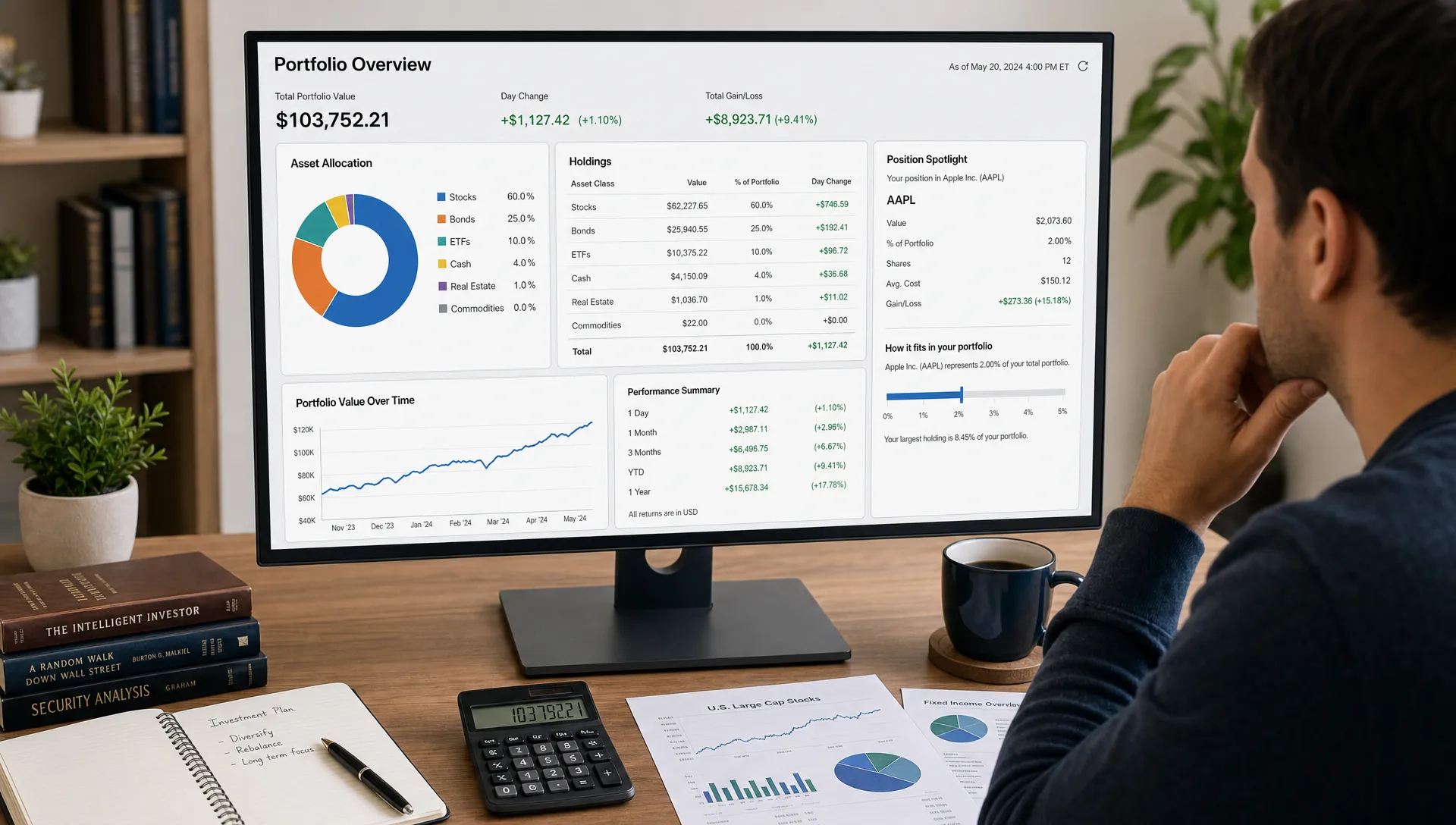
Buying a stock can feel like buying a symbol on a screen: a ticker, a price, a green or red percentage, and maybe a few headlines. But beneath that ticker is a simple idea with big implications: a share is a small claim on a business.
For everyday investors, understanding share of ownership helps turn investing from price guessing into business thinking. It clarifies what you actually own, what rights you may have, how your returns are generated, and why portfolio allocation matters more than the number of shares in your account.
This article is educational and not individualized investment advice. The goal is to help you understand the concept so you can evaluate investments more clearly.
Share of ownership, in plain English
A share of stock represents a unit of ownership in a company. If a company has 1 billion shares outstanding and you own 10 shares, your ownership stake is 10 divided by 1 billion, or 0.000001% of the company.
That percentage may look tiny, and for most retail investors it is. But the ownership claim still matters because it connects your return to the company’s performance, investor expectations, dividends, buybacks, and future growth.
The basic formula is:
Your ownership percentage = shares you own / total shares outstanding x 100
The SEC’s investor education site describes stocks as ownership interests in a company. In practice, most everyday investors own common stock, which may come with voting rights and potential participation in price appreciation and dividends. Some companies also issue preferred stock, which usually has different income and voting characteristics.
The key point is that owning one share is not just owning a price quote. It is owning a proportional claim, however small, on the company’s future economic outcomes.
The two ownership numbers investors often confuse
When people talk about share of ownership, they often mix together two different ideas:
| Ownership idea | What it means | Why it matters |
|---|---|---|
| Ownership of the company | The percentage of a business represented by your shares | Determines your proportional claim and voting power |
| Ownership inside your portfolio | The percentage of your portfolio invested in one asset | Determines how much that asset can affect your returns and risk |
For a retail investor, the second number is often more useful day to day.
You may own only a microscopic fraction of a public company, but that same stock could represent 15% of your portfolio. In that case, the stock’s movement can have a meaningful effect on your personal wealth even if your corporate ownership percentage is extremely small.
For example, owning 100 shares of a lower priced stock is not automatically more meaningful than owning 3 shares of a higher priced stock. What matters is the dollar value of the position, the quality and risk of the business, and how much of your portfolio it represents.
This is why platforms that show portfolio context can be useful. If you are researching an individual stock such as Ford Motor Company on Upside, looking beyond the price and into community holding patterns can help you think in terms of allocation, conviction, and investor behavior rather than share count alone.
What you actually get when you own shares
Owning shares does not mean you control the company in a practical sense. It does mean you may receive certain economic and governance benefits, depending on the stock, share class, broker, and jurisdiction.
Price participation
The most visible benefit is price participation. If the market value of the company rises and the stock price increases, your shares may become worth more. If the stock price falls, your position declines in value.
Stock prices move for many reasons: earnings, interest rates, industry trends, investor sentiment, balance sheet risk, competition, and broader market conditions. Your share of ownership gives you exposure to those forces.
Dividends
Some companies distribute a portion of profits to shareholders through dividends. If you own shares before the relevant dividend dates and meet the requirements set by the company and your broker, you may receive cash payments proportional to your share count.
For instance, if a company pays a $1 annual dividend per share and you own 20 shares, your gross dividend would be $20 before taxes and any applicable fees or withholding. Dividend policies can change, and dividends are never guaranteed.
Dividend-focused investors often care less about owning a large percentage of the company and more about the dependability, growth, and sustainability of the cash flows. A stock profile like Realty Income on Upside can be a useful starting point for seeing a dividend-oriented company alongside market and community ownership context.
Voting rights
Many common shares include voting rights. Shareholders may vote on board directors, executive compensation, auditor approval, mergers, and other matters. The exact voting power depends on the company’s share structure.
Some public companies have multiple share classes. One class may have one vote per share, while another may have ten votes per share or no votes at all. This means two investors can have similar economic exposure but very different governance influence.
Retail investors should not dismiss voting completely. A small investor will not usually swing a vote alone, but proxy voting is one way shareholders participate in corporate governance. The SEC explains the basics of proxy voting through Investor.gov.
Limited liability
For most common stock investors, losses are generally limited to the amount invested. If a company fails, shareholders can lose the value of their shares, but they are not typically responsible for the company’s debts.
This is one reason stocks became such a powerful tool for public investing. They allow everyday investors to participate in business ownership without taking on the same obligations as founders, lenders, or operators.
What share of ownership does not mean
A share gives you an ownership claim, but it does not give you unlimited rights.
You cannot walk into a company’s headquarters and claim a desk, product inventory, or a piece of its cash balance. You do not directly decide hiring, pricing, product strategy, or acquisitions. Management and the board run the company on behalf of shareholders, subject to laws, governance rules, and market discipline.
Ownership also does not guarantee returns. A company can grow revenue and still deliver poor stock returns if expectations were too high, margins shrink, debt becomes a problem, or shareholders are diluted. Conversely, a struggling company’s stock can rise if expectations were too pessimistic and results improve.
The meaning of ownership also changes when you invest through funds. If you buy an ETF or mutual fund, you generally own shares of the fund, while the fund owns the underlying stocks or bonds. You still get economic exposure, but you usually do not directly own each underlying company in the same way you would by buying individual shares.
Crypto assets require even more caution. A token does not automatically represent legal ownership of a business or cash flow. Some tokens may provide governance rights within a network, but that is not the same thing as owning common stock in a corporation.

Why tiny ownership stakes can still matter
It is easy to look at a 0.000001% ownership stake and think it is meaningless. But investing does not require control to be valuable. It requires exposure to productive assets at reasonable prices, held with an appropriate level of risk.
Public markets allow investors to buy small slices of large businesses. That means an everyday investor can build a diversified portfolio across industries, geographies, and asset types without needing to start or acquire entire companies.
Tiny ownership stakes can matter because they are scalable. One share can become a larger position. A diversified set of holdings can compound over time. Dividends can be reinvested. Portfolio weights can be adjusted as your goals, income, and risk tolerance change.
The mental shift is important. Instead of asking, “How many shares can I buy?” a better question is, “What role should this ownership stake play in my portfolio?”
How ownership changes over time
Your share of ownership is not fixed forever. Companies can issue new shares, repurchase shares, split shares, or pay dividends. Each action affects shareholders differently.
| Corporate action | What happens | Effect on your ownership stake |
|---|---|---|
| Stock split | Each share is divided into more shares, and the price adjusts mechanically | Your percentage ownership usually stays the same |
| Reverse split | Multiple shares are combined into fewer shares, and the price adjusts mechanically | Your percentage ownership usually stays the same |
| New share issuance | The company sells or grants additional shares | Your percentage ownership may be diluted |
| Stock-based compensation | Employees receive equity as part of compensation | Can dilute existing shareholders if not offset |
| Share buyback | The company repurchases shares, sometimes retiring them | Can increase remaining shareholders’ proportional ownership |
| Dividend | The company pays cash or stock to shareholders | Cash dividends do not increase your ownership percentage |
Dilution deserves special attention. If a company increases its share count, each existing share may represent a smaller percentage of the business. That is not always bad. New shares can fund growth, acquisitions, debt reduction, or employee incentives. But investors should ask whether the company is creating enough value to justify the dilution.
Buybacks are the reverse in theory. If a company repurchases and retires shares, each remaining share may represent a larger claim on the business. But buybacks only create value when done at sensible prices and when the company has better uses covered, such as reinvestment, balance sheet strength, and operational needs.
Stock splits are often misunderstood. A split can make the share price look cheaper, but it does not make the business cheaper by itself. If you owned 1 share at $100 and a 2 for 1 split occurs, you may own 2 shares at about $50 each. Your total value is still about $100 before market movements.
Share count is not the same as conviction
Many new investors feel better owning 50 shares of one company than 1 share of another. This is understandable, but it can be misleading.
A $500 position is a $500 position whether it is made up of 1 share, 10 shares, or fractional shares. What matters is the percentage of your portfolio, expected return, risk, and how the asset interacts with your other holdings.
Fractional shares have made this easier for retail investors. They allow investors to buy less than one full share of certain stocks or ETFs. The economic exposure is proportional, although voting, transferability, and other rights can vary by broker. FINRA provides a helpful overview of fractional shares and the questions investors should ask.
This matters because a focus on share count can push investors toward lower priced stocks for the wrong reason. A lower share price does not automatically mean a stock is cheaper or better. Valuation depends on the company’s earnings, cash flow, assets, growth prospects, debt, and the total number of shares outstanding.
How to think about ownership inside your portfolio
For everyday investors, the most practical use of share of ownership is portfolio construction. Every holding represents a claim on something: a company, a fund, a sector, a theme, a currency, a commodity, or a network.
A useful ownership review asks:
- What percentage of my portfolio is in this asset?
- What business, sector, or theme am I exposed to through this holding?
- Do I own the same exposure elsewhere through ETFs or funds?
- How much would my portfolio fall if this position dropped 30%?
- Am I buying because I understand the ownership claim, or because the price recently moved?
This is where comparison can improve decision-making. Seeing what verified investors hold, how allocations differ, and which positions appear across portfolios can help you separate your own thesis from market noise. It should not replace due diligence, but it can add context.
With Upside Invest, investors can compare portfolios, explore verified anonymous holdings, and spot trends across stocks, funds, and crypto views while keeping profiles private. That kind of context can make “ownership” feel less abstract and more measurable.
A simple example of ownership thinking
Imagine three investors all buy the same stock.
| Investor | Position size | Portfolio size | Portfolio ownership |
|---|---|---|---|
| Investor A | $500 | $50,000 | 1% |
| Investor B | $5,000 | $25,000 | 20% |
| Investor C | $500 through an ETF | $10,000 | 5% fund position, with indirect stock exposure |
All three may have exposure to the same business, but their ownership reality is very different.
Investor A has a small satellite position. If the stock falls sharply, the portfolio impact may be limited. Investor B has a concentrated bet. The same stock move could materially affect total wealth. Investor C may have indirect exposure through a fund, but the actual look-through exposure depends on how much of the ETF is invested in that company.
This is why share of ownership should be understood at multiple levels. You can own part of a company, part of a fund, and part of a broader theme all at the same time.
Common mistakes everyday investors make
The first mistake is assuming a low share price means a better opportunity. A $10 stock is not automatically cheaper than a $200 stock. The total value of the company, earnings power, and share count matter.
The second mistake is ignoring dilution. If a company regularly issues new shares without creating enough value, existing shareholders may own a shrinking piece of the business.
The third mistake is confusing popularity with quality. A stock held by many investors may still be overvalued, risky, or unsuitable for your goals. Community data is helpful when it adds context, not when it replaces independent thinking.
The fourth mistake is overlooking concentration. A position that began as 5% of your portfolio can become 25% after a large gain. That may be a good problem, but it is still a risk decision.
The fifth mistake is forgetting taxes and time horizon. Selling shares, receiving dividends, or rebalancing positions can have tax implications. The right ownership decision often depends on whether you are investing for months, years, or decades.
A practical checklist before buying a share
Before buying a stock, ETF, fund, or crypto asset, pause and define what ownership means in that specific case.
Ask yourself whether you understand the asset, how it could generate returns, what rights you have, what risks could impair value, and how much of your portfolio you are willing to allocate. Then compare that position against what you already own.
A share is not just a trade. It is a decision to tie part of your capital to an asset’s future. When you treat it that way, you are more likely to size positions thoughtfully, avoid emotional buying, and build a portfolio that matches your goals.
Frequently Asked Questions
Is share of ownership the same as the number of shares I own? No. The number of shares is only part of the equation. Your actual ownership percentage depends on how many total shares the company has outstanding.
How do I calculate my ownership percentage in a company? Divide the number of shares you own by the company’s total shares outstanding, then multiply by 100. For example, 100 shares out of 1 billion shares outstanding equals 0.00001% ownership.
Do fractional shares count as ownership? Fractional shares generally provide proportional economic exposure, but voting rights, transfers, and other details can vary by brokerage. Always review your broker’s terms.
Does owning an ETF mean I own the companies inside it? You typically own shares of the ETF, and the ETF owns the underlying securities. You receive indirect exposure to those companies, but the fund structure affects voting and ownership mechanics.
Can my ownership percentage go down even if I do not sell? Yes. If a company issues additional shares, your percentage ownership may be diluted unless you buy more shares or the company offsets dilution through buybacks.
Does owning stock make me responsible for a company’s debts? Common stockholders generally have limited liability, meaning they can lose their investment but are not typically personally responsible for corporate debts.
Put your ownership in context
Understanding share of ownership helps you think like an investor instead of a ticker watcher. You are not just buying “a stock.” You are deciding how much of your portfolio to tie to a specific business, fund, theme, or asset.
If you want better context for those decisions, Upside Invest helps you compare your portfolio with verified anonymous investors, discover allocation trends, and see how real portfolios are positioned. Use that insight as a starting point for deeper research, smarter sizing, and more intentional ownership decisions.