7 Stocks With High Hedge Fund Ownership to Research
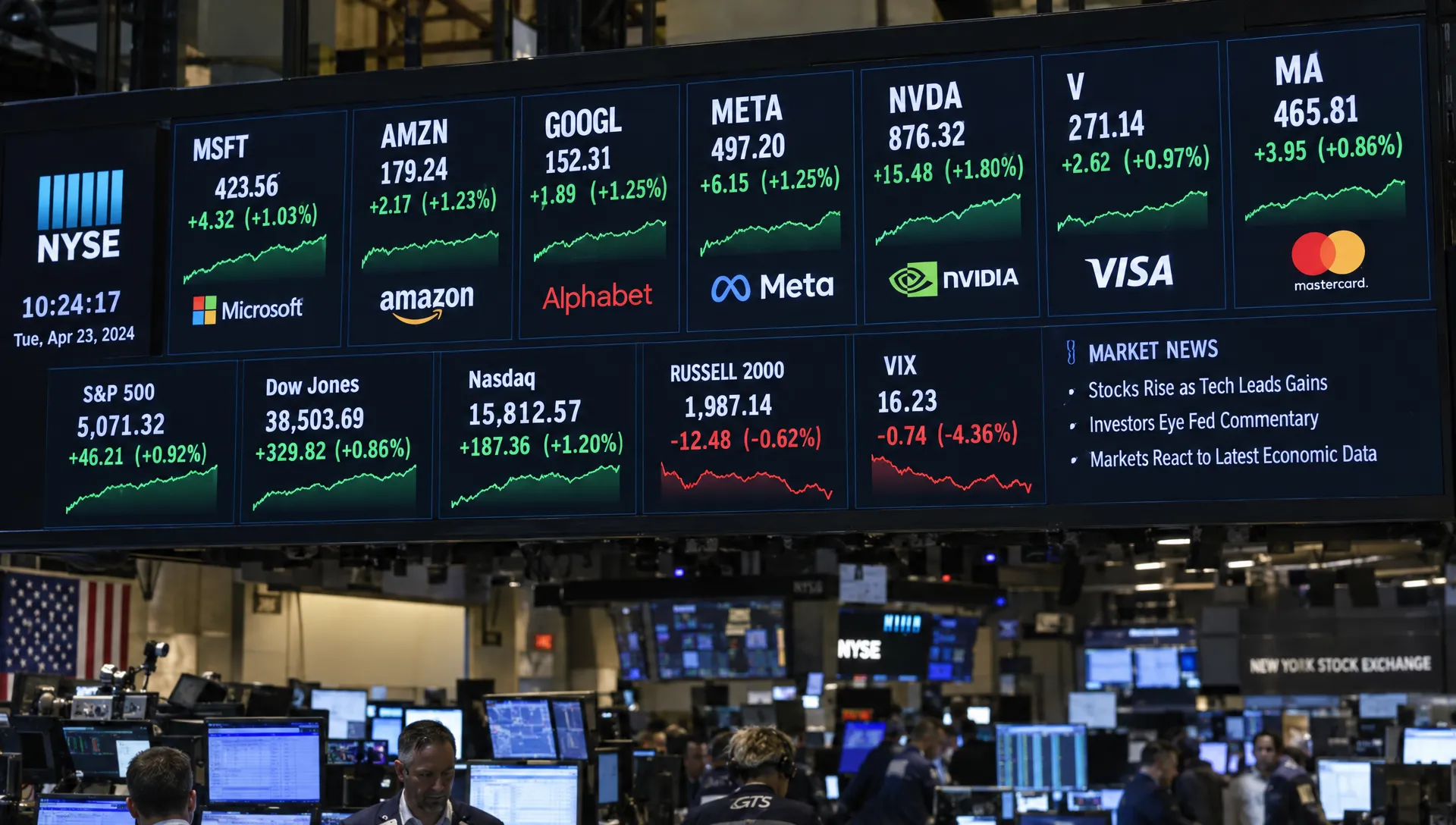
Stocks with high hedge fund ownership can provide useful research leads, but popularity is not an investment thesis. Microsoft, Amazon, Alphabet, Meta Platforms, Nvidia, Visa and Mastercard are established large-cap names that have appeared repeatedly in hedge-fund portfolios.
This shortlist focuses on broad hedge-fund interest, not the percentage of each company’s shares owned by hedge funds. It is not a live ownership ranking. Before treating any name as a current screening result, verify its latest holder count, position changes and valuation.
What counts as high hedge fund ownership?
Three measurements often get confused: the number of hedge funds holding a stock, the percentage of outstanding shares they collectively own and the weight that stock represents in individual funds’ portfolios. A company can rank highly on one measure and not the others.
Institutional ownership is broader still. It includes index funds, pension managers and other institutions, so a high institutional percentage does not establish hedge-fund conviction. Our guide to interpreting institutional ownership explains that distinction.
Reporting dates matter too. As of October 19, 2026, June 30 holdings represent the latest quarterly Form 13F reporting cycle whose regular filing deadline has passed. September 30 filings generally are not due until mid-November. The SEC’s Form 13F guidance explains the reporting requirements and their limitations.
7 stocks with high hedge fund ownership to research
These companies offer different business models to investigate, although the list remains heavily exposed to technology, digital advertising and consumer spending. The order below is not a ranking by current ownership or expected returns.
| Company | Ticker | Business exposure | Main research question |
|---|---|---|---|
| Microsoft | MSFT | Enterprise software and cloud | Will AI investment produce attractive returns? |
| Amazon | AMZN | E-commerce, cloud and advertising | How much cash remains after infrastructure spending? |
| Alphabet | GOOGL / GOOG | Search, advertising and cloud | Can search economics hold up as user behavior changes? |
| Meta Platforms | META | Social advertising | Can monetization outpace rising infrastructure costs? |
| Nvidia | NVDA | Accelerated computing | How durable is demand for AI infrastructure? |
| Visa | V | Global payments | Can transaction growth support the valuation? |
| Mastercard | MA | Global payments and services | Does its growth justify its price relative to alternatives? |
1. Microsoft: test the economics behind the AI thesis
Microsoft combines enterprise software, cloud infrastructure and a substantial installed customer base. Those characteristics can appeal to managers seeking recurring revenue alongside exposure to AI adoption.
The central research task is separating a strong business from an attractively priced stock. Review Azure growth, operating margins and capital expenditures in Microsoft’s investor materials. Then examine whether AI-related revenue can generate sufficient returns on the infrastructure required to deliver it.
For stocks with high hedge fund ownership such as Microsoft, multiple fund positions can reflect the same underlying thesis rather than independent sources of diversification.
What would weaken the case: Infrastructure spending rising faster than monetization for an extended period, weaker cloud economics or a valuation that assumes unusually strong growth far into the future. Check your existing index-fund exposure before adding a separate position.
2. Amazon: separate operating progress from spending demands
Amazon requires analysis of several businesses rather than one headline growth rate. Its retail operations, Amazon Web Services and advertising activities have different margins, investment needs and competitive pressures.
Start with segment operating income and cash-flow disclosures in Amazon’s financial reports. A stronger retail margin does not automatically offset weaker cloud economics, while higher operating cash flow does not necessarily translate into higher free cash flow after infrastructure investment.
For ownership research, compare reported share counts across quarters. An increase in a fund’s dollar position could simply reflect a higher share price. It does not establish that the manager bought more shares.
What would weaken the case: Deteriorating retail efficiency, slower cloud growth or capital spending that fails to produce adequate subsequent cash generation. Build a valuation using several operating scenarios rather than assuming every segment improves simultaneously.
3. Alphabet: aggregate share classes without confusing voting rights
Alphabet illustrates why stocks with high hedge fund ownership require careful share-class checks. GOOGL represents Class A shares with voting rights, while GOOG represents nonvoting Class C shares. Both provide economic exposure to Alphabet, but an ownership screen may display them separately.
When measuring how many managers own the company, count each manager once even if it holds both classes. When measuring shares or market value, combine the classes appropriately and keep the methodology consistent.
The business analysis centers on search advertising, YouTube, Google Cloud and the spending needed to support AI services. Alphabet’s investor disclosures provide segment results and discussion of material risks.
What would weaken the case: Search competition reducing monetization, higher costs to serve queries or regulatory remedies that materially affect distribution and economics. A modest-looking earnings multiple is not enough if the earnings outlook is deteriorating.
4. Meta Platforms: examine advertising returns and spending discipline
Meta’s investment case depends heavily on its ability to monetize attention across its applications. Research should connect advertising revenue growth to changes in ad impressions, pricing and the costs required to sustain engagement.
Review operating expenses, capital expenditures and Reality Labs losses alongside the advertising business in Meta’s financial disclosures. Buybacks also deserve scrutiny: compare repurchases with stock-based compensation and changes in diluted shares outstanding.
A company can generate substantial cash while still producing disappointing shareholder returns if investors pay too much or future spending exceeds expectations. Among stocks with high hedge fund ownership, Meta is a useful reminder to assess capital allocation alongside revenue growth.
What would weaken the case: Advertising growth failing to cover a rising expense base, weaker returns on infrastructure investment or product and privacy changes that impair ad effectiveness. Model spending explicitly rather than treating it as a temporary inconvenience.
5. Nvidia: distinguish business strength from expectations risk
Nvidia provides exposure to accelerated computing through processors, networking and its software ecosystem. Its research challenge is not simply deciding whether AI demand exists. Investors must assess how much future demand and profitability the share price already assumes.
Use Nvidia’s financial reports to examine data-center revenue, gross margins, customer concentration and supply commitments. Consider export restrictions, competition from other suppliers and customers’ development of internal chips without assuming any single risk determines the outcome.
Ownership analysis should also account for portfolio overlap. A fund holding Nvidia alongside cloud providers and other semiconductor companies may have several positions tied to the same infrastructure-spending cycle.
What would weaken the case: Slower customer spending, margin pressure or earnings growth falling short of expectations embedded in the valuation. Stress-test a less favorable scenario rather than extending a strong growth period indefinitely.

6. Visa: research payment economics, not bank lending
Visa operates a payments network rather than a conventional bank loan book. Its economics depend on payment activity, cross-border transactions, pricing and the incentives needed to maintain relationships with financial institutions and other partners.
Review payment volume, processed transactions, cross-border activity and client incentives in Visa’s investor disclosures. Revenue growth should be evaluated alongside the costs of supporting that growth, not assumed to track transaction activity automatically.
Among stocks with high hedge fund ownership, Visa offers a different operating exposure from the AI-focused businesses above. It still carries risks tied to consumer activity, regulation and valuation.
What would weaken the case: A price that leaves little room for slower spending growth, rising competitive costs or changes to payment rules that affect network economics. Compare the expected return with other quality businesses, not just with weaker payments companies.
7. Mastercard: compare its incremental portfolio contribution
Mastercard shares some economic drivers with Visa, but the two should not be treated as interchangeable. Geographic exposure, cross-border activity, services revenue and valuation can create meaningful differences.
Use Mastercard’s investor materials to evaluate transaction growth, operating margins and cash generation. Then compare those measures with Visa using the same reporting period and consistent valuation assumptions.
The ownership question is especially useful at the portfolio level. If several funds own both companies, that may show a shared preference for payment networks rather than two unrelated investment ideas. Owning both can diversify company-specific execution risk without removing exposure to common industry pressures.
What would weaken the case: A valuation premium unsupported by business performance, weaker-than-expected cross-border activity or services growth that contributes less profitability than anticipated. Assess what Mastercard adds to your existing holdings before deciding whether another payments position is necessary.
How to verify the ownership signal before investing
To compare stocks with high hedge fund ownership consistently, hold the reporting date, manager universe and ownership definition constant. Otherwise, a change in your data provider’s coverage can look like a change in investor conviction.
Check filings rather than relying on a popularity label
Use the SEC’s EDGAR search to inspect managers’ Form 13F filings and information tables. Record the quarter-end date separately from the filing date, and check for amendments.
Form 13F is not a complete portfolio statement. It generally does not reveal short positions, cash or the full range of derivatives and overseas holdings. Reported options should not be treated as ordinary common shares. A disclosed long position may also sit alongside a hedge that is invisible in the filing.
Manager classification matters: a database of all 13F filers is not automatically a database of hedge funds.
Separate buying activity from changes in market value
Compare share counts as well as reported dollar values. Adjust for stock splits and other corporate actions before interpreting a large change. Where managers share investment discretion, examine reporting relationships before summing positions across filings.
An illustrative calculation shows the difference: if a manager holds the same number of shares and the price rises 20%, the reported position value rises 20% without any additional purchase.
A new position in a quarterly filing means it was newly reported relative to the comparison period. It does not tell you the exact purchase date, entry price or whether the manager still owns it today.
Test conviction, valuation and your own exposure
Stocks with high hedge fund ownership deserve the same valuation discipline as any other investment. Estimate a reasonable range of future earnings or cash flows, test less favorable assumptions and decide what price would offer an acceptable return.
Also distinguish a large position from a meaningful portfolio weight. A sizable dollar holding can still be small relative to a manager’s disclosed assets. Even that weight is imperfect because Form 13F does not show the entire portfolio.
Build a repeatable record using an ownership profile for each stock. Include the source, reporting date, share-class treatment, valuation assumptions and exposure you already hold through funds.
Frequently asked questions
Which stocks are hedge funds buying now? Quarterly filings cannot establish real-time buying. Compare share counts across the latest available periods to identify reported additions, then check filing dates and amendments. The seven companies above are research candidates, not a verified list of current purchases.
Does high hedge fund ownership make a stock safer? No. Stocks with high hedge fund ownership can become crowded, and managers may reduce similar positions at the same time. Business quality, balance-sheet strength and purchase price remain important regardless of who else owns the shares.
Is hedge fund ownership the same as insider ownership? No. Hedge-fund ownership refers to investment positions held by funds. Insider ownership generally concerns shares held by company executives, directors and certain other insiders. The incentives and disclosures differ.
Can I copy a successful hedge fund’s portfolio? You can study its disclosed holdings, but you cannot reliably reproduce its full strategy from Form 13F alone. Your entry prices, liquidity needs, tax situation and ability to absorb losses may also differ substantially.
Compare the shortlist with your own portfolio
Use Upside Invest to compare allocations across verified investor portfolios through anonymous profiles. That provides a separate perspective from hedge-fund filings, not a substitute for them.
Before adding a stock, identify the business exposure you are buying, the valuation you can justify and the evidence that would change your mind. Ownership data should help frame those decisions, not make them for you.