Berkshire Hathaway Stock Ownership: A Guide to Major Holdings
Berkshire Hathaway stock ownership is unusual because it means two things at once: who owns Berkshire Hathaway shares and what Berkshire Hathaway itself owns. For investors, both sides matter. Berkshire’s shareholder base explains control, governance and market demand for BRK.A and BRK.B, while its major holdings reveal how Warren Buffett, Greg Abel and the investment team allocate capital across public stocks, operating businesses and cash.
How Berkshire Hathaway Stock Ownership Is Structured
Berkshire Hathaway has two publicly traded share classes: Class A shares, which trade under BRK.A, and Class B shares, which trade under BRK.B. The Class B shares were created to make Berkshire ownership more accessible, but they do not carry the same voting power per dollar of economic interest.
A Class B share represents 1/1,500 of the economic interest of a Class A share. Its voting power is lower, at 1/10,000 of a Class A share vote. That matters because Berkshire Hathaway stock ownership is not just about market value. It is also about voting control, board influence and the long-term culture shareholders choose to support.
For most retail investors, BRK.B is the practical way to own Berkshire. BRK.A is often held by long-time shareholders, insiders, foundations and institutions that need direct exposure to the original share class.
Major Owners of Berkshire Hathaway Shares
The ownership of Berkshire itself generally falls into four groups: Warren Buffett and related entities, institutional investors, long-term individual shareholders and index-linked funds. The exact rankings change as filings update, so any serious review should use current proxy statements and SEC filings rather than a static list.
| Owner type | Why it matters | What to watch |
|---|---|---|
| Warren Buffett and insiders | Shows alignment, voting influence and succession context | Annual proxy filings, charitable donations and insider transactions |
| Index fund managers | Reflects Berkshire’s role in major benchmarks | Passive flows, BRK.B liquidity and institutional concentration |
| Active institutions | Can signal deliberate conviction or portfolio positioning | Changes across 13F filings and manager commentary |
| Retail investors | Reinforces Berkshire’s long-term shareholder culture | Harder to measure directly, but visible through community sentiment and broker data |
Institutional ownership can be easy to misread. A large position held by an index manager does not mean the firm is making an active bullish call. It may simply be replicating an index. If you want a deeper framework for separating passive ownership from true conviction, Upside’s guide on how to read institutional ownership of a stock is a useful companion.
Berkshire’s Major Public Stock Holdings
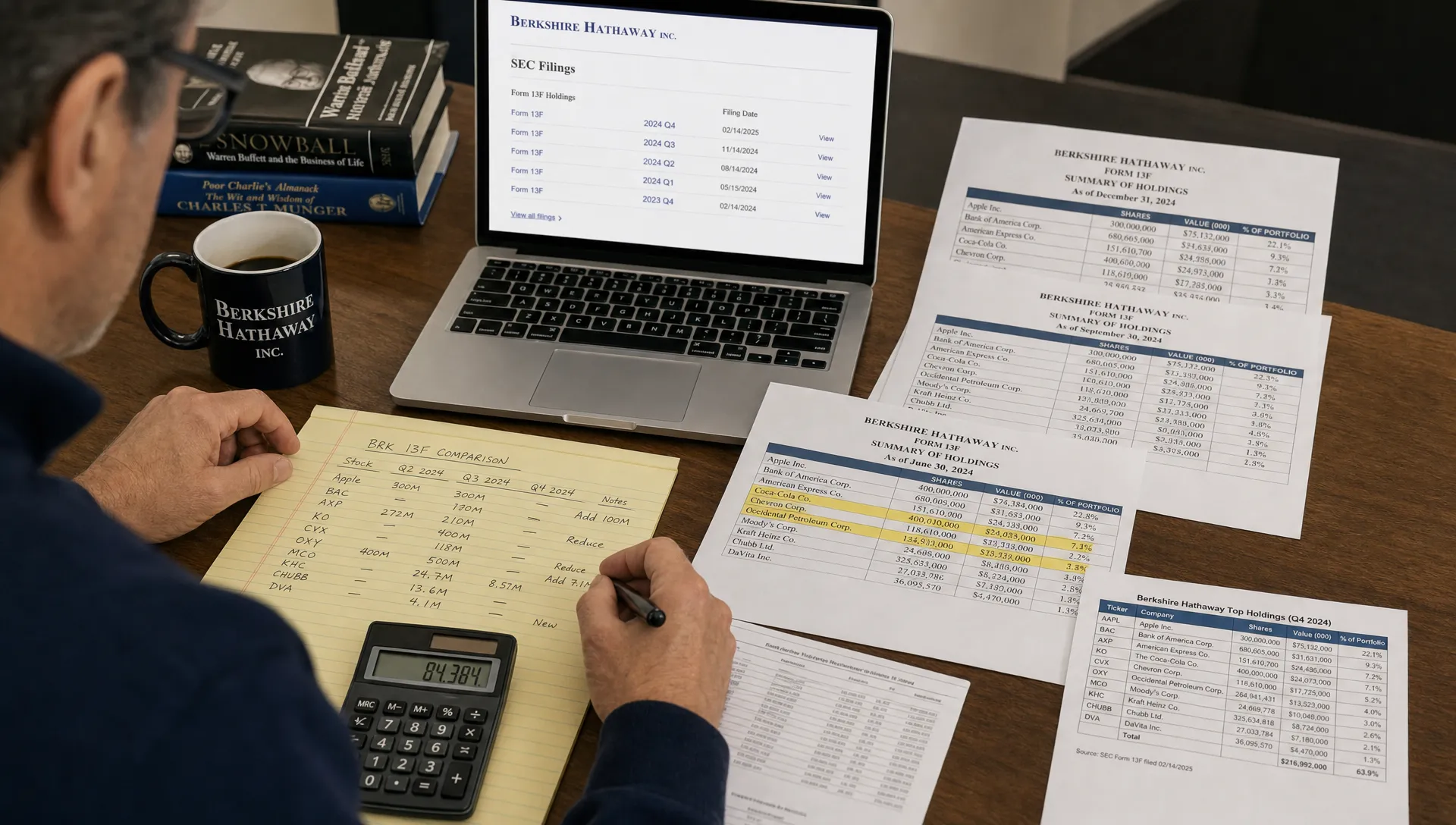
The other side of Berkshire Hathaway stock ownership is Berkshire’s own investment portfolio. Berkshire reports its US-listed equity holdings in Form 13F filings, which are usually published within 45 days after each quarter ends. Those filings are valuable, but they are not perfect real-time signals.
Berkshire’s major public holdings have historically clustered around durable franchises, financial companies, consumer brands, energy assets and businesses with pricing power. The exact weights change, yet several names have been central to Berkshire’s public equity identity for years.
| Holding or category | Why investors follow it | Key interpretation |
|---|---|---|
| Apple | One of Berkshire’s most important public equity investments in recent years | A consumer technology platform position, not just a hardware bet |
| American Express | Long-held financial and payments exposure | Shows preference for brand, network effects and affluent customer economics |
| Coca-Cola | Classic Buffett compounding example | Demonstrates the value of global distribution and consumer habit |
| Bank of America | Large banking exposure | Sensitive to credit cycles, rates and regulation |
| Chevron and Occidental Petroleum | Energy and commodity-linked exposure | Adds inflation sensitivity and cyclical cash flow exposure |
| Moody’s | Data, ratings and financial infrastructure | Reflects asset-light economics and high switching costs |
| Kraft Heinz | Consumer staples exposure | A reminder that brand value alone does not eliminate execution risk |
| Japanese trading companies | International conglomerate exposure outside the usual 13F lens | Shows Berkshire can make large global allocation decisions |
This is not a live ranking. Berkshire can trim, add or exit positions before outside investors know. The portfolio is best treated as a map of capital allocation preferences, not a shopping list.
The Holdings You Will Not See Clearly in a 13F
Berkshire’s 13F is only one part of the picture. Some of Berkshire’s most important assets are wholly owned operating businesses that do not appear as public equity positions. These include insurance operations, BNSF Railway, Berkshire Hathaway Energy and a broad mix of manufacturing, service and retail businesses.
That distinction is central to Berkshire Hathaway stock ownership analysis. If you only study the public stock portfolio, you miss the operating engine that generates float, cash flow and acquisition capacity. Berkshire is not a mutual fund wrapped in a corporation. It is a conglomerate with a large securities portfolio attached to a set of operating companies.
The insurance business is especially important because it produces float, money held from premiums before claims are paid. Buffett has long emphasized that float can be powerful when it is low-cost and invested prudently.
Where to Find Reliable Berkshire Ownership Data
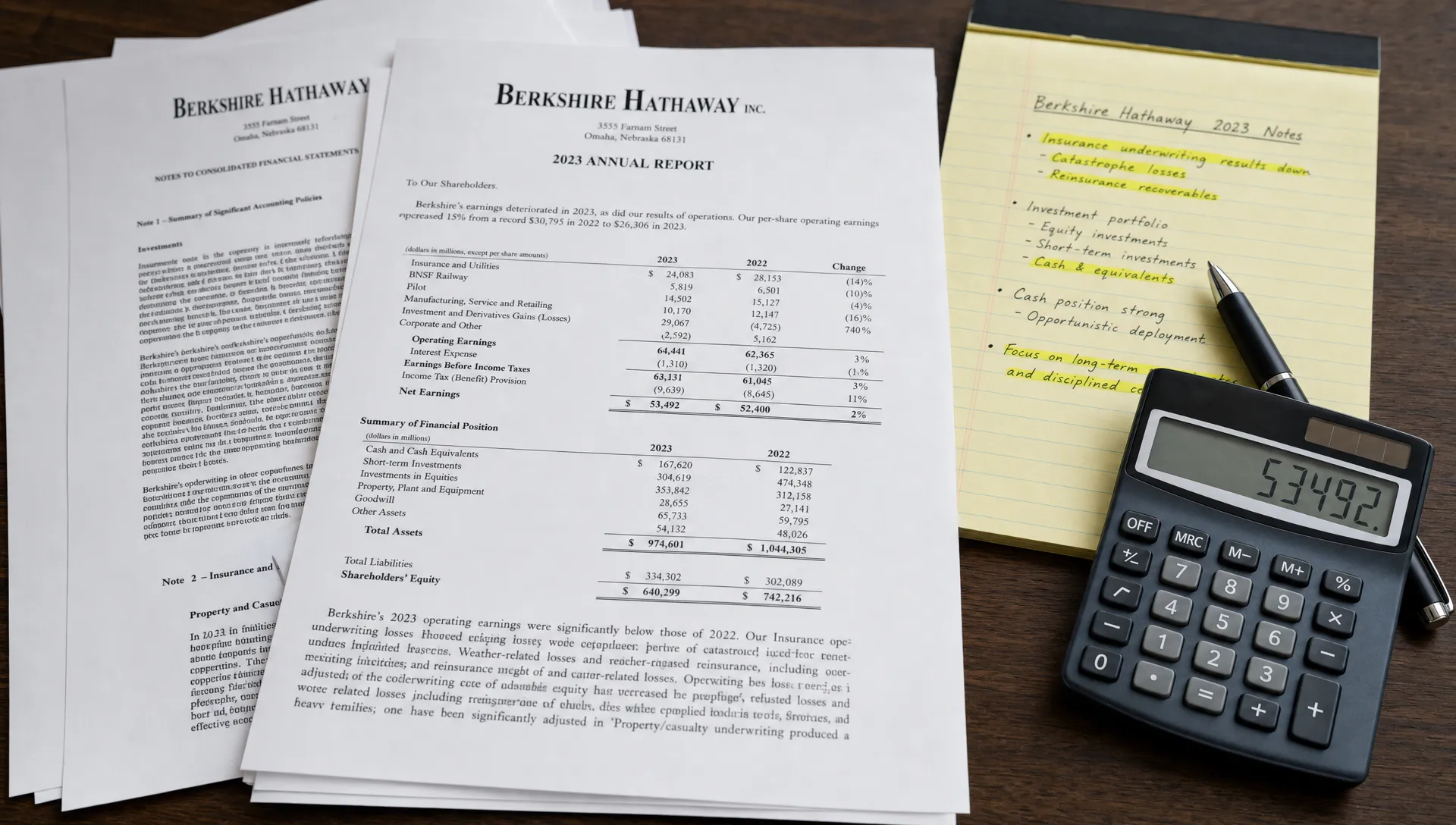
The best Berkshire Hathaway stock ownership research starts with primary documents. SEC filings, Berkshire’s annual report and proxy statements are more reliable than screenshots circulating on social media.
Use these sources in combination:
- Berkshire’s annual report and shareholder letter for operating results, capital allocation commentary and broad investment context.
- SEC Form 13F filings for US-listed public equity positions held by Berkshire entities.
- Proxy statements for Berkshire’s own major shareholders, voting structure, directors and executive compensation.
- Forms 3, 4 and 5 for insider transactions when applicable.
- 13D and 13G filings when an investor crosses relevant beneficial ownership thresholds.
For a repeatable process, start with share count, insider ownership, institutional holders, major ownership changes and retail signals. Upside’s framework for building an ownership profile for any stock can help you apply the same method to Berkshire, Apple, banks or smaller companies.
How to Interpret Berkshire’s Portfolio Without Copying It Blindly
Many investors look at Berkshire’s portfolio and ask, “Should I buy what Berkshire owns?” That is the wrong first question. Berkshire’s time horizon, tax position, capital base and opportunity set are different from yours.
A position can remain in Berkshire’s portfolio for reasons that do not apply to a new buyer today. Low cost basis, deferred taxes, liquidity constraints, strategic relationships and portfolio-level balance can all affect decisions. Berkshire may hold a stock because selling would create a large tax bill, not because the stock is the best new investment at today’s price.
Berkshire Hathaway stock ownership should be read as evidence of a capital allocation style. Look for the underlying traits: strong cash generation, resilient competitive position, trusted management, understandable economics and a price that makes sense relative to future earnings.
What Berkshire’s Major Holdings Say About Its Investment Style
Berkshire’s public holdings tell a consistent story. The company often favors businesses that can endure stress without relying on perfect conditions. It is willing to concentrate when conviction is high, but it also maintains huge liquidity when attractive opportunities are scarce.
The consumer holdings show a preference for brand durability. The financial holdings show comfort with regulated businesses when the economics and balance sheets are understandable. Energy exposure shows flexibility, especially when cash returns, asset quality and commodity dynamics align.
This same sector discipline can help everyday investors classify their own portfolios. A position in a bank is not the same kind of risk as a position in a consumer brand, a software platform or an activewear retailer like Cavalcade. The label “stock” hides very different drivers underneath.
Key Risks in Reading Berkshire Ownership Signals
Berkshire is widely respected, but its filings can still mislead investors who read them too casually. The most common mistake is assuming that every holding reflects Buffett’s personal view. Berkshire has other investment managers, and responsibility for some positions may not be publicly obvious.
Another risk is timing. A 13F is delayed. By the time you see an increase or reduction, Berkshire may already have changed the position again. The filing tells you what was true at quarter-end, not what the company is doing today.
Investors should also separate ownership size from portfolio conviction. A large dollar value may reflect Berkshire’s scale and long holding period rather than a fresh purchase decision. Percentage of Berkshire’s portfolio, percentage ownership of the target company and recent buying or selling activity all need to be considered together.
| Signal | Useful question | Common mistake |
|---|---|---|
| Large position size | Is this large because of recent buying or long-term appreciation? | Treating old gains as new conviction |
| Rising share count | Is Berkshire accumulating across multiple quarters? | Overreacting to a one-quarter change |
| Reduced position | Is this risk management, valuation discipline or a full thesis change? | Assuming every sale is a negative call |
| High ownership percentage | Does Berkshire influence governance or capital allocation? | Ignoring liquidity and regulatory limits |
How Retail Investors Can Use Berkshire Ownership Data
Retail investors can use Berkshire’s disclosures to improve research discipline, not to outsource judgment. Start by asking why Berkshire might own a company. Then compare that reason with your own time horizon, risk tolerance and portfolio needs.
For example, if Berkshire owns a bank, evaluate credit risk, deposit costs, capital ratios and sensitivity to interest rates. If it owns an energy company, evaluate commodity exposure, reserves, capital spending and shareholder returns. If it owns a consumer franchise, study pricing power, volume growth and brand relevance.
Berkshire Hathaway stock ownership is most useful when it becomes a research prompt. It can point you toward high-quality businesses, but your return depends on the price you pay, the size of your position and whether the business still matches the original thesis.
If you want to compare ownership signals more broadly, Upside’s overview of stock ownership data every investor should track explains how to combine insider holdings, institutional activity, float, short interest and shareholder concentration.
A Practical Checklist for Tracking Berkshire Holdings
A simple workflow can keep your analysis grounded. Review Berkshire’s latest annual report first, then compare recent 13F filings across several quarters. Look for additions, reductions, exits and positions that remain stable through different market conditions.
Then separate the data into three buckets: Berkshire’s own shareholder base, Berkshire’s public stock portfolio and Berkshire’s operating businesses. Each bucket answers a different question. The shareholder base explains control and demand for Berkshire stock. The public portfolio shows investment choices. The operating businesses explain underlying earnings power.
Finally, compare Berkshire’s moves with your own portfolio. If you already own large-cap technology, banks and energy companies, copying Berkshire may increase concentration rather than diversification.
Frequently Asked Questions
Who owns the most Berkshire Hathaway stock? Warren Buffett has historically been Berkshire’s most important individual shareholder and voting influence, though his ownership changes over time because of charitable giving and other transactions. Large institutions also own meaningful positions, especially in BRK.B, often through index funds.
What is the difference between BRK.A and BRK.B ownership? BRK.A carries far more voting power and a much higher share price. BRK.B provides a smaller economic interest per share and lower voting power, making it more accessible for most retail investors.
Where can I see Berkshire Hathaway’s latest stock holdings? Berkshire’s US-listed public stock holdings are disclosed in quarterly Form 13F filings. For the fullest picture, also read Berkshire’s annual report, shareholder letter and proxy statement.
Does Berkshire’s portfolio show what Warren Buffett is buying now? Not always. 13F data is delayed, and some positions may be managed by Berkshire investment managers other than Buffett. The filings are useful, but they are not a real-time trading feed.
Should I copy Berkshire Hathaway’s major holdings? Copying blindly is risky. Berkshire has a unique tax position, time horizon, capital base and access to opportunities. Use its holdings as research leads, then decide whether each stock fits your own goals and valuation standards.
Turn Berkshire Ownership Research Into Better Portfolio Decisions
Berkshire’s filings are valuable because they force investors to think about ownership, incentives and capital allocation. The goal is not to mimic every position. The goal is to understand what major owners are doing, why it might matter and whether those signals improve your own process.
Upside Invest helps investors compare portfolios, spot ownership trends and see what verified investors are buying, holding and outperforming with. If Berkshire Hathaway stock ownership is part of your research process, use it alongside broader portfolio comparison, trend tracking and private benchmarking so your decisions are based on evidence, not imitation.