How to Analyze ESOP Companies Before Investing
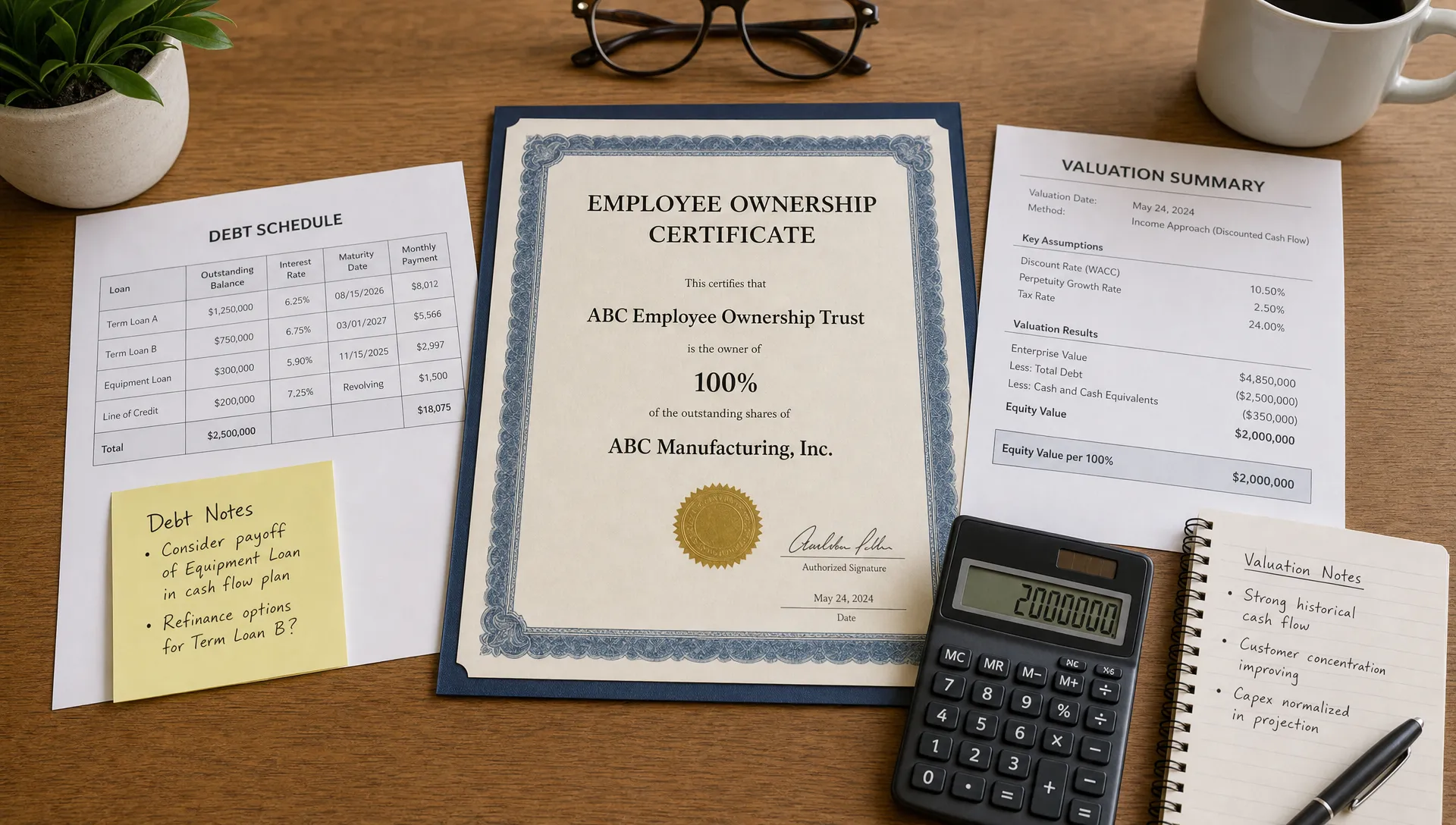
Employee ownership can be a powerful investing signal, but it is not an investment thesis by itself. Some ESOP companies build durable cultures, retain skilled employees, and compound value over long periods. Others use the employee ownership label while carrying too much leverage, weak governance, or a valuation that already prices in the best-case scenario.
For investors, the goal is not to ask, “Is this company employee owned?” The better question is, “Does the ESOP structure improve the company’s economics, risk profile, and long-term return potential at today’s price?”
This guide walks through a practical diligence framework for analyzing ESOP companies before investing, whether you are looking at a public company with an employee stock ownership plan, a private company offering shares, or a business where employee ownership is central to the story.
Start by understanding what kind of ESOP company you are analyzing
“ESOP company” can mean several things in practice. A company may be 100% owned by an ESOP trust, partially owned by an ESOP, publicly traded with an ESOP as one shareholder, or broadly employee owned through a mix of ESOP shares, stock options, RSUs, and other equity plans.
That distinction matters because each structure creates different incentives, liquidity needs, governance rights, and valuation risks. If you want a refresher on the basics, Upside has a deeper primer on what ESOP employee owned means before you invest.
Before looking at the financials, identify the ownership structure clearly:
| Question | Why it matters | Where to look |
|---|---|---|
| What percentage of the company is owned by the ESOP? | A 5% ESOP is very different from a 100% employee-owned business. | Annual reports, plan documents, offering materials |
| Is the company public or private? | Public shares have market pricing and disclosure; private ESOP shares rely on appraisals. | SEC filings, company disclosures, Form 5500 data |
| Was the ESOP leveraged? | Borrowed money used to buy shares can create material debt service and cash flow pressure. | Balance sheet, debt footnotes, ESOP notes |
| Who controls voting rights? | Economic ownership and control may not be identical. | Trust documents, proxy statements, bylaws |
| How are shares allocated to employees? | Broad participation supports alignment; narrow participation may weaken the ownership culture argument. | Summary plan description, HR disclosures |
The key is to separate the branding from the mechanics. “Employee owned” sounds attractive, but the details determine whether it is actually meaningful for shareholders.
Analyze incentives, not slogans
The strongest argument for ESOP companies is incentive alignment. When employees benefit from long-term value creation, they may think more like owners, focus on productivity, reduce waste, and stay with the business longer.
Research from organizations such as the National Center for Employee Ownership has shown that ESOPs are a meaningful part of the U.S. business landscape, with millions of participants across thousands of plans. But investors should avoid turning that broad observation into an automatic buy signal. The question is whether the specific company you are analyzing has built a real ownership culture.
Look for evidence that employees understand the plan, receive regular communication about business performance, and have meaningful participation. A true ownership culture usually shows up in operating behavior, not just recruiting materials.
Positive signs include lower-than-peer turnover, high employee tenure, decentralized decision-making, strong safety records in industrial businesses, and evidence that employees participate in process improvement. Weak signs include vague language, no disclosure about participation, high turnover, or an ESOP that mainly served as a tax-efficient ownership transition for the seller.
A useful test is simple: would employees behave differently because of the ESOP? If the answer is unclear, do not give the company much credit for being employee owned.
Evaluate core business quality first
Investors sometimes over-focus on the ESOP structure and under-focus on the business. That is backwards. A great ownership model cannot fix a structurally weak company.
Start with the same fundamental questions you would ask of any investment:
- Is revenue growing because of durable demand, pricing power, or market share gains?
- Are margins stable or improving across economic cycles?
- Does the business convert accounting profit into free cash flow?
- Is customer concentration manageable?
- Does the company have a defensible niche, brand, regulatory position, or cost advantage?
- Can management reinvest capital at attractive returns?
For public ESOP companies, use 10-Ks, 10-Qs, proxy statements, and investor presentations. The SEC’s EDGAR database is the primary source for company filings. For private ESOP companies, disclosure may be more limited, so investors need to be more demanding about audited financials, valuation reports, debt schedules, and customer concentration.
Do not let employee ownership distract you from basic business economics. If the company has shrinking revenue, low returns on capital, poor working capital discipline, or weak industry positioning, the ESOP label will not protect your downside.
Study ESOP debt and repurchase obligations
ESOPs often become especially complex when they are used for ownership succession. In a leveraged ESOP transaction, the ESOP trust borrows money, directly or indirectly, to purchase shares from existing owners. Over time, company contributions help repay that debt, and shares are released to employee accounts.
This structure can be beneficial, but it can also create financial strain. Investors should pay close attention to three areas: debt service, repurchase obligations, and valuation assumptions.
Debt service affects cash flow available for reinvestment, acquisitions, dividends, or balance sheet flexibility. Repurchase obligations matter because private ESOP companies typically need to buy back shares from employees when they retire, leave, or diversify their accounts. If many long-tenured employees approach retirement at the same time, the cash needs can become significant.
The U.S. Department of Labor notes that ESOPs are retirement plans governed by ERISA rules, which means fiduciary oversight and plan administration are central to how they operate. Investors can review the DOL’s overview of employee stock ownership plans to understand the regulatory context.
When analyzing a leveraged ESOP, ask whether the company’s cash flow comfortably covers both operating needs and ESOP-related obligations. A company can look profitable on paper while still being constrained by required contributions, repurchases, or debt amortization.

Scrutinize valuation assumptions
Valuation is where many ESOP investment mistakes happen. Employee ownership can improve culture and retention, but that does not mean any price is reasonable.
For public companies, the valuation process is familiar: compare the stock against peers, historical trading ranges, growth expectations, margins, and free cash flow. For private ESOP companies, valuation often depends on an independent appraisal, which may use discounted cash flow analysis, comparable company multiples, and precedent transactions.
The issue is not whether appraisals are legitimate. The issue is that small changes in assumptions can have large effects on value. Revenue growth, margin expansion, discount rates, terminal multiples, and working capital needs all deserve scrutiny.
| Valuation area | What to test | Investor concern |
|---|---|---|
| Revenue assumptions | Are forecasts consistent with industry growth and historical performance? | Overly optimistic growth can inflate value. |
| Margin assumptions | Are margins already near peak levels? | Cyclical peaks can make a company look cheaper than it is. |
| Discount rate | Does it reflect company size, leverage, cyclicality, and liquidity? | A low discount rate can overstate private company value. |
| Peer multiples | Are the peers truly comparable? | Better peers can make a weaker company look attractive. |
| Repurchase liability | Is the liability modeled realistically? | Future cash needs can reduce equity value. |
For private ESOPs, be cautious if the valuation report is not available, if assumptions are described only vaguely, or if the company’s valuation has increased faster than its cash flow. A rising share price is not proof of value creation if it is driven mainly by aggressive assumptions.
Understand governance and control
ESOP ownership does not automatically mean employees control the business. In many cases, the ESOP trust holds shares on behalf of employees, and a trustee votes those shares. Employees may vote directly only on major corporate events, depending on the company and plan rules.
For investors, governance matters because it determines who makes capital allocation decisions, who negotiates related-party transactions, and who protects minority shareholders.
Look closely at board composition, trustee independence, management incentives, and any ongoing role for selling shareholders. In founder-transition ESOPs, the former owner may remain CEO, board chair, landlord, lender, or key customer relationship holder. None of that is automatically bad, but it does require diligence.
Red flags include related-party leases at above-market rates, consulting agreements with former owners, limited board independence, weak financial reporting, or management teams that use the ESOP as a shield against outside accountability.
Governance is especially important in private ESOP companies because there is no daily market price and often limited liquidity. If you cannot understand who controls the company and how conflicts are managed, you probably cannot underwrite the investment confidently.
Check whether the ESOP creates a liquidity problem
Liquidity is one of the most overlooked risks in ESOP companies. Public investors can usually sell their shares in the market, but employees in private ESOPs depend on the company’s ability to repurchase shares according to plan rules.
A mature ESOP with an aging workforce may face rising repurchase obligations. If the company has not planned for those obligations, it may need to use cash that would otherwise support growth, debt reduction, or resilience during downturns.
Ask for a repurchase obligation study if you are evaluating a private ESOP opportunity. This analysis should estimate future cash needs based on workforce demographics, retirement assumptions, diversification elections, share price growth, and employee turnover.
A healthy ESOP company should be able to explain how it will fund repurchases without weakening the business. Possible funding sources include operating cash flow, sinking funds, internal markets, insurance strategies, or plan design changes. The specific method matters less than whether management has a credible, stress-tested plan.
Compare ESOP companies within their industry context
An ESOP structure can be more valuable in some industries than others. It often fits well in businesses where employee skill, customer relationships, safety, and operational discipline drive results. Engineering firms, specialty contractors, professional services companies, distribution businesses, manufacturers, and community banks are common examples.
But each industry has different risks. A construction ESOP may face bonding capacity and project execution risk. A manufacturing ESOP may be sensitive to input costs and capital expenditures. A professional services ESOP may depend heavily on talent retention and client relationships. A bank ESOP must be assessed through credit quality, deposit stability, and regulatory capital.
If a company owns meaningful real estate, do not ignore asset quality. Real estate-heavy businesses may have hidden value or hidden risk depending on location, debt, lease terms, and market conditions. Investors can triangulate assumptions by reviewing appraisals, local transaction data, and market listing practices, including resources such as flat-fee MLS listing plans that illustrate how property exposure and comparable market information can shape real estate decision-making.
The broader point is that ESOP analysis should not happen in a vacuum. Compare the company’s returns, margins, leverage, and growth against direct peers. If the company claims employee ownership creates superior performance, the numbers should show at least some evidence of that advantage.
Look for measurable ownership advantages
The best ESOP companies tend to translate ownership into measurable outcomes. Investors should look for proof that the structure improves business performance over time.
Useful indicators include employee retention, productivity per employee, revenue per employee, safety incidents, customer retention, quality metrics, operating margins, and return on invested capital. The most persuasive evidence is a multi-year track record across different market conditions.
For public companies, you can also compare shareholder returns, volatility, margins, and leverage against peers. For private companies, you may need to request internal KPIs and compare them with industry benchmarks.
Be skeptical of companies that talk extensively about culture but provide no operating evidence. Culture is valuable, but investors need a way to connect it to cash flow.
Use investor behavior as context, not a substitute for diligence
Seeing how other investors position around ESOP companies can be useful, especially when you are trying to understand market sentiment, concentration risk, or whether a stock is gaining attention from strong performers. But copying other investors is not analysis.
Upside Invest is built around verified investor holdings, anonymous portfolio sharing, portfolio comparison, trend tracking, return and Sharpe metrics, and community benchmarking. That kind of data can help you understand whether a company is widely held, whether top-performing investors are adding exposure, and how your allocation compares with others. You can compare your portfolio with verified investors on Upside Invest while still doing your own fundamental work.
The right way to use portfolio intelligence is as a second layer. First, decide whether the company is financially sound and reasonably valued. Then use investor behavior to challenge your assumptions, spot overlooked risks, and avoid unintentionally crowding into the same idea as everyone else.
Red flags and green flags when evaluating ESOP companies
A disciplined checklist can help you avoid being overly influenced by the employee ownership narrative.
| Green flags | Red flags |
|---|---|
| Broad-based employee participation | ESOP ownership is small or poorly disclosed |
| Strong free cash flow after ESOP obligations | Debt service consumes most available cash |
| Clear repurchase obligation planning | No credible plan for future share repurchases |
| Independent trustee and transparent governance | Related-party transactions with limited disclosure |
| Valuation supported by conservative assumptions | Valuation rising faster than operating performance |
| Evidence of retention, productivity, or margin advantage | Culture claims with no supporting metrics |
| Management explains ESOP mechanics clearly | Investors are asked to trust the story without documents |
No single red flag automatically disqualifies an investment, but multiple red flags should raise your required return or cause you to walk away.
A practical pre-investment checklist
Before investing in an ESOP company, make sure you can answer these questions with evidence rather than assumptions:
- What percentage of the company does the ESOP own?
- Is the ESOP leveraged, and what are the repayment terms?
- How much cash will be needed for future repurchases?
- Who controls voting rights and board decisions?
- Are employees broadly participating or is ownership mostly symbolic?
- Does the company outperform peers on margins, retention, growth, or returns on capital?
- Is valuation based on conservative assumptions?
- Are related-party transactions disclosed and reasonable?
- Does the balance sheet remain flexible during a downturn?
- Would you still consider the investment attractive if it were not employee owned?
That last question is especially useful. If the only reason to invest is the ESOP label, the thesis is probably too thin.
Frequently Asked Questions
Are ESOP companies good investments? Some ESOP companies can be strong investments because employee ownership may support retention, productivity, and long-term thinking. However, the structure does not guarantee good returns. Investors still need to analyze valuation, cash flow, leverage, governance, and industry quality.
Can retail investors buy shares in ESOP companies? Retail investors can buy public companies that have ESOPs or other employee ownership programs if the shares trade on public markets. Many ESOP companies are private, which means outside investment access may be limited or unavailable.
What is the biggest risk in a private ESOP company? One major risk is liquidity. Private ESOP companies often need to repurchase shares from employees who retire or leave. If repurchase obligations are not planned well, they can strain cash flow and limit reinvestment.
How is ESOP stock valued? Public company ESOP shares are generally tied to market prices. Private ESOP shares are typically valued through independent appraisals that consider financial performance, comparable companies, discounted cash flow, and other factors. Investors should review the assumptions behind any valuation.
Does employee ownership mean employees control the company? Not always. In many ESOPs, a trust holds shares on behalf of employees, and a trustee votes those shares. Employees may have voting rights only for certain major decisions, depending on the plan and company structure.
Bottom line
ESOP companies deserve attention because employee ownership can create real alignment. But investors should treat it as one input, not a shortcut. The best opportunities combine a durable business, conservative balance sheet, credible governance, thoughtful ESOP design, and a valuation that leaves room for future returns.
Before investing, analyze the company as a business first and as an ESOP second. If the ownership structure strengthens already attractive economics, it can be a meaningful advantage. If it is being used to distract from debt, weak disclosure, or an inflated valuation, step back.
Use fundamentals, ESOP-specific diligence, and portfolio context together. That combination gives you a better chance of identifying employee-owned companies that are not just admirable, but investable.