What ESOP Employee Owned Means Before You Invest
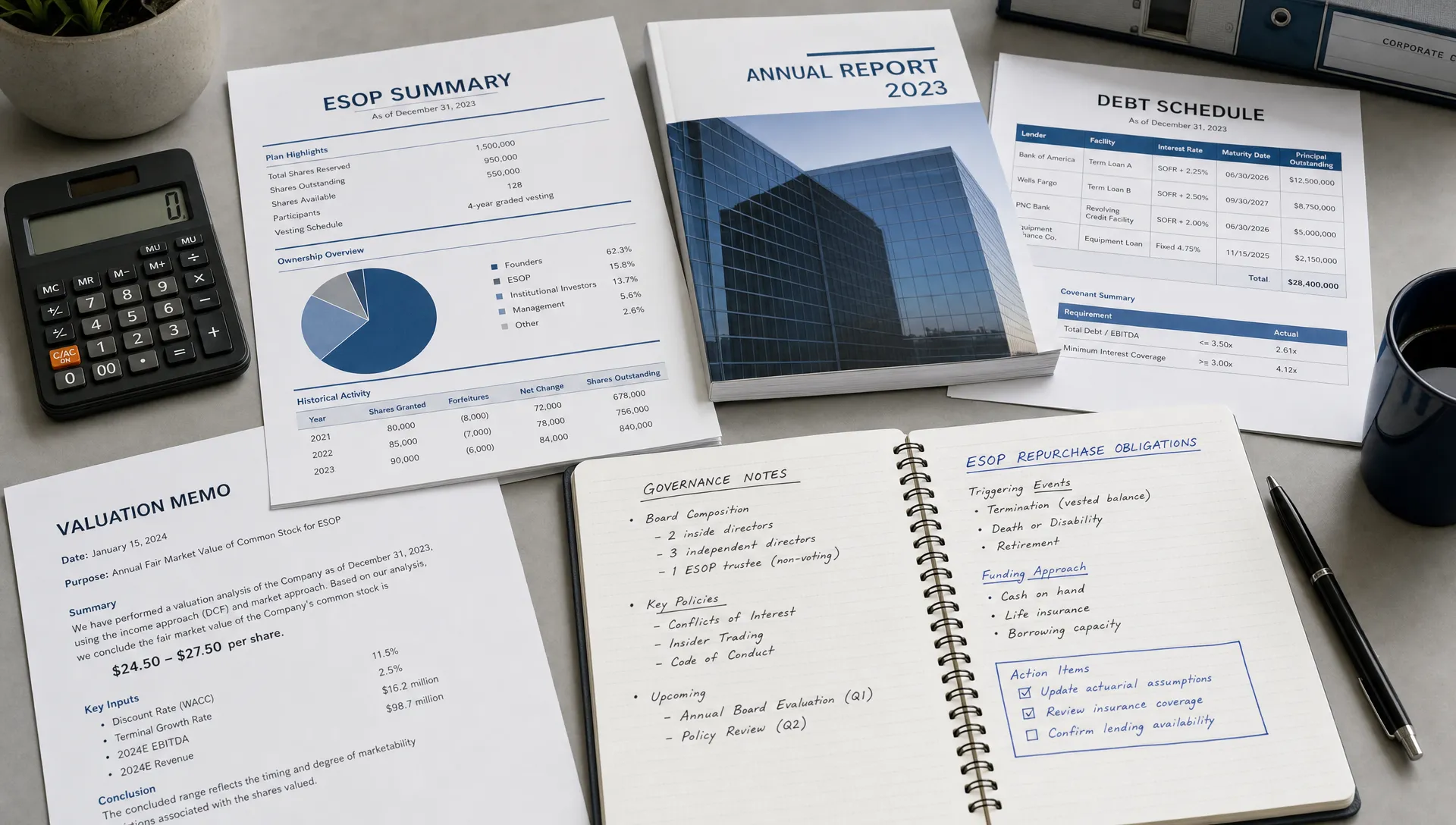
Seeing a company described as ESOP employee owned can make it feel different from a typical business. The phrase suggests employees have skin in the game, management may think long term, and the workforce could benefit directly when the company grows.
Those can be real advantages. But for investors, employee ownership is not a shortcut for due diligence. An ESOP can strengthen a company’s culture and capital structure, or it can introduce debt, liquidity obligations, governance questions, and valuation complexity.
Before you invest in a public company with an ESOP, a private employee-owned business, or a fund that highlights employee ownership as part of its thesis, you need to understand what the structure actually means. The goal is not to decide that ESOPs are good or bad. The goal is to know what questions to ask before you put capital at risk.
What “ESOP employee owned” actually means
An ESOP is an Employee Stock Ownership Plan. In the United States, it is a tax-qualified retirement plan that invests primarily in the employer’s stock. The IRS describes ESOPs as stock bonus plans, or stock bonus and money purchase plans, designed to invest mainly in qualifying employer securities.
That definition matters because an ESOP is not simply a motivational slogan. In a typical ESOP structure, a trust owns company shares on behalf of eligible employees. Employees receive allocations in their retirement accounts over time, often based on compensation, tenure, or plan formulas. They usually benefit when the company’s share value rises, but they do not necessarily hold shares directly in a personal brokerage account while employed.
The phrase ESOP employee owned can describe several situations. A company might be 100% owned by an ESOP trust, majority employee-owned, or only partially owned by an ESOP. A public company can have an ESOP while still having outside shareholders. A private company can be closely held, with the ESOP trust as the largest or only shareholder.
If you want the plan-level basics first, Upside’s guide to ESOPs explained for investors and employees walks through how these plans work, how employees participate, and how they differ from other forms of equity compensation. This article focuses on the investor lens: what the ESOP label should make you investigate before buying.
Why companies choose ESOP ownership
Companies adopt ESOPs for different reasons. For a founder or family owner, an ESOP can create a succession path that keeps the business independent instead of selling to a strategic acquirer or private equity buyer. For employees, it can create a wealth-building mechanism tied to the company’s future. For management, it can reinforce retention and align incentives.
There can also be tax advantages. Contributions to an ESOP may be deductible, and S corporation ESOPs can receive special tax treatment on the ESOP-owned portion of earnings. The details are complex and depend on the entity type, ownership percentage, and compliance with tax and retirement plan rules.
For investors, the reason behind the ESOP matters. A well-planned ownership transition can be healthy. A rushed ESOP transaction designed mainly to cash out sellers at a high valuation can create pressure for the company and its future cash flows. The same structure can produce very different outcomes depending on price, leverage, governance, and execution.
What employee ownership can signal to investors
Employee ownership can be a positive signal when it is paired with strong operating discipline. If employees understand how their work affects company value, an ESOP may support productivity, lower turnover, and a longer-term mindset. The National Center for Employee Ownership estimates that thousands of ESOPs operate in the U.S., covering millions of participants, so this is not a niche structure.
The investor case is usually built around alignment. Employees are not just wage earners. They have a financial stake in the business. In theory, that can reduce friction between labor and owners, encourage employees to think like stakeholders, and preserve institutional knowledge.
But alignment is not automatic. Employees may not understand the plan. The ESOP may own only a small stake. The company may have weak communication, poor governance, or a balance sheet burdened by ESOP transaction debt. A business can be employee-owned and still be overvalued, poorly managed, or exposed to secular decline.
The best way to treat employee ownership is as a qualitative factor that can support an investment thesis, not as the thesis itself.
The key ESOP risks investors should underwrite
The risks depend on whether the company is public or private, how much of the company the ESOP owns, and whether the ESOP was funded with debt. The biggest mistake is assuming that employee ownership removes normal investment risks. It does not.
A leveraged ESOP is especially important to analyze. In a leveraged transaction, the ESOP borrows money, often with company support, to buy shares from existing owners. The company then makes contributions to the ESOP, which are used to repay the loan. This can work well if the business generates stable cash flow. It can become a problem if revenue declines, margins compress, or the purchase price was too high.
Private ESOP companies also face repurchase obligations. When employees retire or leave, the company may need to buy back shares distributed from the plan. If the workforce is aging or the company has grown significantly, future repurchase needs can become a meaningful cash requirement.
| ESOP factor | Why it matters | Investor question |
|---|---|---|
| Ownership percentage | A small ESOP stake has different implications than majority or 100% employee ownership | How much of the company is actually owned by the ESOP trust? |
| Leverage | Debt used to fund the ESOP can affect cash flow, covenants, and financial flexibility | Was the ESOP transaction financed with debt, and on what terms? |
| Valuation | Private ESOP shares are typically valued through periodic appraisals, not daily markets | Was the transaction price reasonable relative to earnings, assets, and peers? |
| Repurchase obligation | Departing employees may need to be paid out over time | Has management planned for future liquidity needs? |
| Governance | Employees may not control daily decisions even if they benefit economically | Who votes the shares, appoints directors, and oversees fiduciary decisions? |
| Communication | Employee ownership works better when participants understand it | Does the company educate employees about the ESOP and business performance? |
A strong ESOP company should be able to explain these issues clearly. If management relies only on the feel-good story of employee ownership and avoids questions about debt, valuation, or governance, that is a warning sign.
Public versus private employee-owned companies
For retail investors, the distinction between public and private ESOP companies is critical. If a public company has an ESOP, you may be able to buy the publicly traded stock just like any other investor. The ESOP is one ownership component inside the broader shareholder base. You can review filings, compare valuation multiples, assess margins, and study whether employee ownership appears material.
In public companies, ESOP information may appear in annual reports, proxy statements, benefit plan filings, or notes about employee ownership and retirement plans. You should also separate ESOP ownership from other stock-based compensation, such as stock options, restricted stock units, and employee stock purchase plans. These can all affect dilution and incentives, but they are not the same structure.
Private ESOP companies are different. Many are not investable by ordinary retail investors because their shares do not trade publicly. If you are offered access through a private placement, fund, or secondary transaction, diligence becomes more important, not less. You may have limited liquidity, less frequent reporting, and fewer market-based valuation signals.
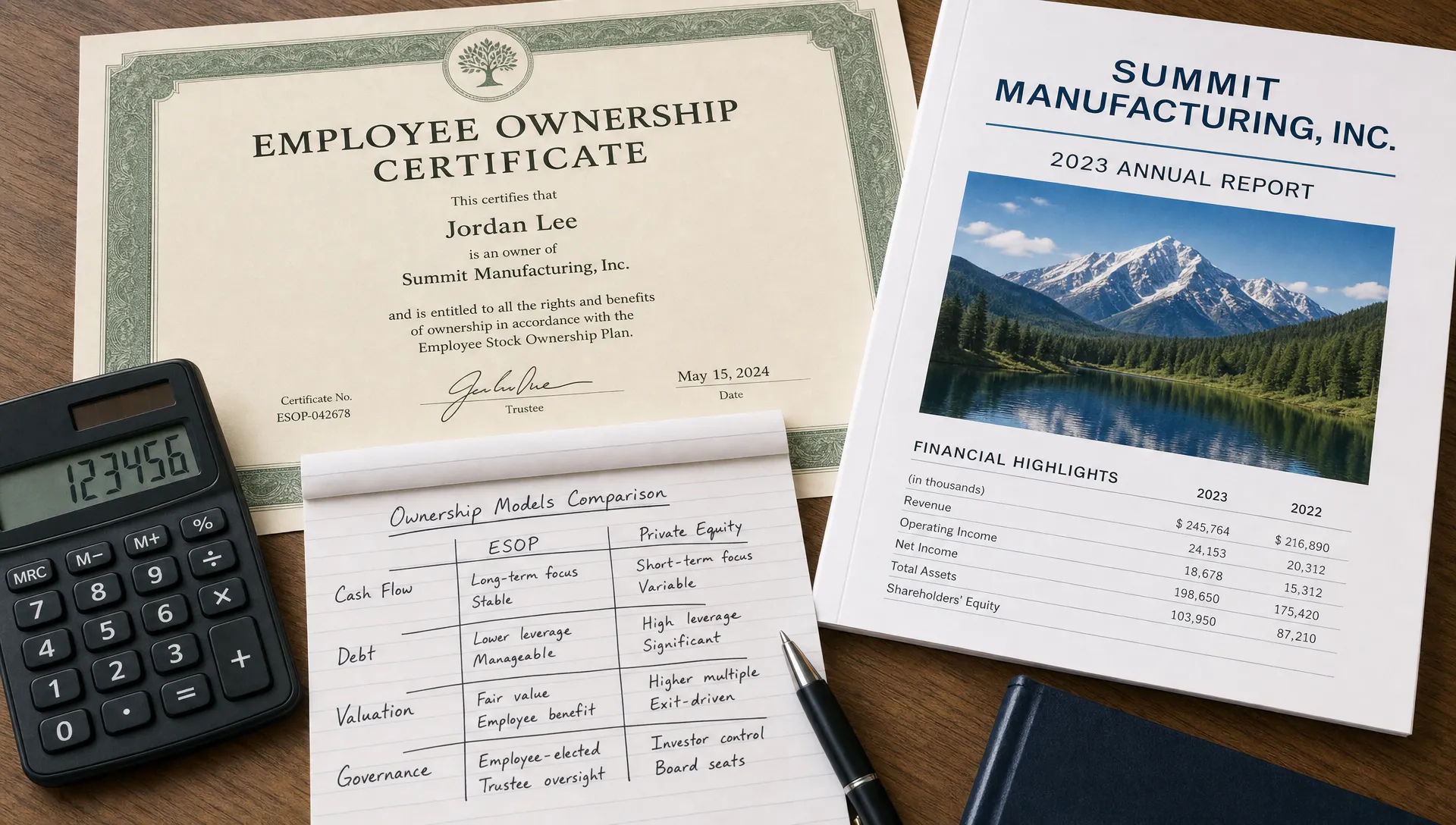
A private company being employee-owned can be attractive, but you still need to ask whether outside investors have fair rights, clear exit paths, and reliable financial information. Employee ownership does not automatically protect minority investors.
How to evaluate an ESOP employee-owned company before investing
Start with the business, not the structure. A company with durable demand, recurring revenue, pricing power, conservative leverage, and competent management is more attractive than a weak company with an appealing ownership story. The ESOP should enhance an already sound business model.
Then analyze the ownership structure. Determine whether the ESOP owns a minority, majority, or full stake. Ask whether shares are allocated broadly across employees or concentrated among a small group. A broad-based plan may create stronger cultural alignment than one that technically qualifies but feels distant to most workers.
Next, review the financial impact. In a leveraged ESOP, debt service can reduce flexibility. In a mature ESOP, repurchase obligations can compete with capital expenditures, acquisitions, dividends, or reinvestment. In a public company, stock-based compensation and benefit plan activity can affect share count and per-share value.
| Research area | What to review | What it tells you |
|---|---|---|
| Core business quality | Revenue durability, margins, customer concentration, competitive position | Whether the company can compound value regardless of ownership structure |
| Balance sheet | Debt levels, interest coverage, maturities, covenant headroom | Whether ESOP-related or other debt could pressure operations |
| Cash flow | Free cash flow, capital expenditure needs, working capital swings | Whether the company can fund growth and plan obligations |
| Ownership documents | ESOP ownership percentage, trustee role, voting rights, vesting terms | How economic benefit and control are actually distributed |
| Valuation approach | Public market price, independent appraisal, peer multiples, transaction price | Whether investors or employees may be exposed to an inflated valuation |
| Liquidity | Trading volume, redemption requirements, exit rights, lockups | How easily investors and participants can convert value into cash |
This is also where ordinary share ownership concepts matter. If you are comparing an ESOP stake with public market equity or another investment, it helps to understand what share of ownership means for everyday investors, including voting power, economic claim, dilution, and control.
How ESOP ownership can affect valuation
Employee ownership can deserve a valuation premium if there is evidence that it improves the company’s performance. Examples might include unusually low employee turnover, strong customer retention due to experienced staff, stable margins through cycles, or a culture that supports operational excellence.
However, investors should be careful about paying for culture twice. If the market already values the company at a premium multiple, the ESOP story may already be priced in. If the company is private, the valuation may rely on appraisals and assumptions rather than active market trading. That does not make it wrong, but it does make transparency essential.
A practical approach is to compare the company with peers first, then adjust your view based on ESOP-specific evidence. Does employee ownership show up in better productivity, lower turnover, stronger margins, or more resilient cash flow? Or is it simply a brand message with little measurable impact?
The same principle applies to downside risk. A company with strong employee ownership can still suffer from high customer concentration, obsolete products, commodity exposure, weak capital allocation, or excessive leverage. The ESOP may influence culture, but it does not repeal economics.
Green flags and warning signs
The best ESOP companies tend to combine employee participation with financial clarity. They do not treat employee ownership as a substitute for performance. They use it to reinforce a business system that already works.
| Green flag | Why it helps |
|---|---|
| Clear disclosure about ESOP ownership and obligations | Investors can assess the actual economic impact rather than guessing |
| Conservative leverage after the ESOP transaction | The company has more flexibility if business conditions worsen |
| Strong employee education and participation | The ownership culture is more likely to influence behavior |
| Evidence of durable cash generation | The company can fund growth, debt service, and repurchase needs |
| Independent governance and fiduciary oversight | The ESOP is less likely to become a tool for insider benefit |
Warning signs include vague ownership claims, aggressive transaction valuations, heavy debt, weak free cash flow, limited disclosure, and governance structures that give employees economic exposure without meaningful transparency. You should also be cautious when a company markets itself as employee-owned but the ESOP owns only a very small stake.
Another warning sign is a mismatch between culture narrative and financial reality. If management talks constantly about alignment but employee turnover is high, margins are deteriorating, or insiders are selling, the ESOP label may be doing more marketing work than economic work.
Where ESOPs fit in a retail investor’s process
For retail investors, ESOP analysis belongs alongside standard investment research. You still need to understand valuation, revenue drivers, margins, balance sheet strength, insider ownership, industry conditions, and portfolio fit.
Employee ownership can be a useful screen, especially for investors who care about governance and long-term incentives. But it should not replace diversification. An ESOP-heavy company in a cyclical industry can still be risky. A well-run non-ESOP company can still be a better investment if its price, prospects, and balance sheet are superior.
This is where benchmarking can help. On Upside Invest, investors can compare portfolios, explore verified investor holdings, track trends, and see what other investors are buying and holding while keeping profiles private. ESOP status is one potential research angle, but the broader question is whether a security improves your portfolio’s risk and return profile.
Frequently Asked Questions
Is an ESOP employee owned company always 100% employee owned? No. An ESOP can own a minority stake, a majority stake, or 100% of a company. Always verify the actual ownership percentage before drawing conclusions.
Can retail investors buy shares in an ESOP company? Sometimes. If the company is publicly traded, retail investors may be able to buy its stock on the open market. If it is a private ESOP company, shares are usually not broadly available to retail investors unless offered through a specific private investment structure.
Does employee ownership guarantee better investment returns? No. Employee ownership can support alignment and culture, but returns still depend on valuation, growth, profitability, competition, capital structure, and management execution.
How is an ESOP different from stock options or RSUs? An ESOP is a qualified retirement plan that holds employer stock for employees through a trust. Stock options and RSUs are equity compensation tools that usually grant employees the right to receive or buy shares under specific vesting terms.
What is the biggest ESOP risk for investors? The biggest risks are often leverage, valuation, and liquidity. A leveraged ESOP can strain cash flow, a high transaction valuation can reduce future returns, and private ESOP companies may face repurchase obligations when employees leave or retire.
Who controls an ESOP employee-owned company? Control depends on the plan documents, ownership percentage, trustee role, board structure, and whether the company is public or private. Employees may benefit economically without controlling everyday decisions.
Make employee ownership part of the evidence, not the whole thesis
An ESOP employee owned company can be worth serious attention. Broad employee ownership may improve alignment, retention, and long-term thinking. In the right business, those advantages can matter.
But before you invest, treat the ESOP as one part of the evidence. Confirm how much of the company is employee-owned, how the plan was financed, what obligations it creates, how governance works, and whether the business itself is attractive at the current valuation.
The strongest investment thesis is not simply that employees own shares. It is that the company has a durable business, disciplined finances, fair governance, and an ownership structure that helps people act like long-term partners.