What Makes an ESOP Business Different From Other Companies
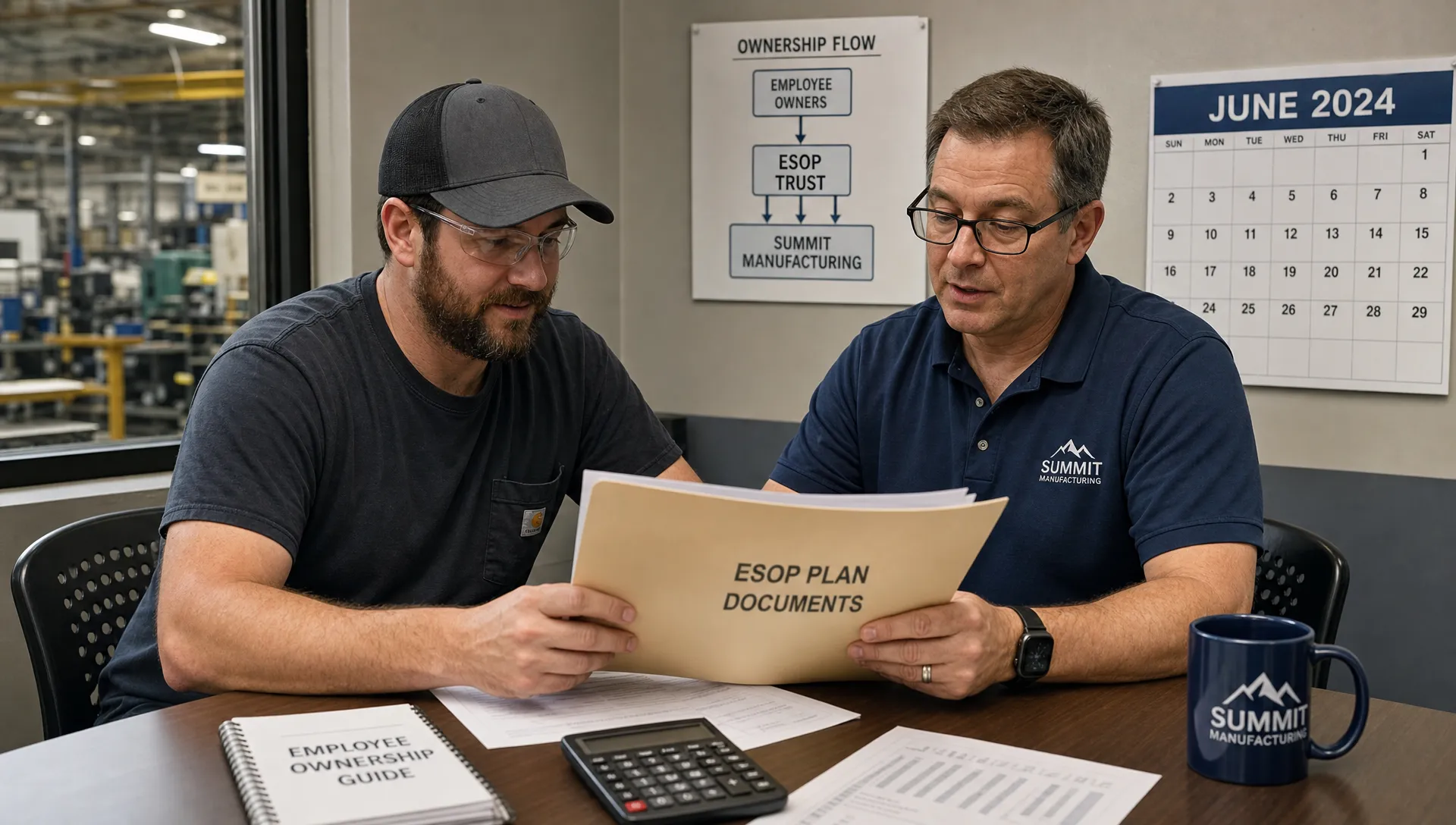
An ESOP business can look ordinary from the outside. It may sell software, manufacture components, run distribution centers or provide professional services like any other company. The difference is in who benefits from ownership and how that ownership affects incentives, cash flow, governance and valuation.
For investors, that difference matters. An employee stock ownership plan can create unusually strong alignment between workers and company performance, but it can also introduce obligations that do not show up in a simple revenue growth chart. If you compare an ESOP business with a founder-owned company, a private equity-backed company or a public corporation, you are not comparing only business models. You are comparing ownership systems.
What an ESOP Business Is, in Practical Terms
An ESOP business is a company that has created an employee stock ownership plan, a qualified retirement plan designed to hold company stock for employees. The U.S. Department of Labor describes ESOPs as plans that invest primarily in employer securities, which makes them different from a typical 401(k) that spreads savings across mutual funds or other investments.
The plan usually holds shares through an ESOP trust. Employees do not typically buy the stock directly. Instead, shares are allocated to eligible employees over time, often based on pay, tenure or a formula in the plan document. When employees leave, retire or meet other distribution requirements, the company generally has to provide liquidity for those shares.
If you want the mechanics before going deeper, Upside Invest has a separate guide that covers how an ESOP is explained for investors and employees. This article focuses on the business-level differences that matter when you are evaluating a company.
The Ownership Structure Changes the Incentives
In a traditional private company, ownership is often concentrated among founders, a family, venture investors, private equity sponsors or a small group of executives. In a public company, ownership is spread across institutional investors, insiders and retail shareholders who can buy or sell in the open market.
An ESOP business sits somewhere else. The shares are held by a trust for the benefit of employees. Employees are economic beneficiaries, but the trust and its fiduciaries play a central role in how the shares are held, valued and voted.
That structure can create a different mindset inside the company. Employees may see a clearer connection between company performance and their own long-term wealth. Management may emphasize retention and internal communication more heavily because employees are not just staff members, they are future claimants on company value.
That does not automatically make every ESOP company well run. Ownership alone does not fix weak margins, poor strategy or excessive debt. The difference is that the incentive system has a built-in employee wealth component that traditional companies may lack.
| Feature | ESOP business | Traditional private company | Public company |
|---|---|---|---|
| Main ownership base | ESOP trust for employees, sometimes alongside other owners | Founders, family, sponsors or private investors | Public shareholders, institutions and insiders |
| Employee participation | Broad-based retirement ownership | Usually limited to wages, bonuses or selective equity grants | Often limited to stock plans, RSUs or purchase programs |
| Liquidity path | Repurchase or distribution rules under the plan | Sale, dividend, recapitalization or private transaction | Daily market trading |
| Valuation reference | Independent appraisal for private ESOP shares | Negotiated or model-based private valuation | Market price |
| Key investor question | Can the company fund growth and ESOP obligations? | Can owners maximize enterprise value? | Can management deliver public shareholder returns? |
Employee Ownership Can Affect Culture, but Only if It Is Managed
A common claim is that ESOP companies have stronger cultures because employees act like owners. Sometimes that is true. The National Center for Employee Ownership has documented research and surveys on employee ownership, and it has long argued that ownership works best when paired with participation, transparency and education.
That last part is essential. If employees receive annual statements but do not understand how company value is created, the ownership plan can feel abstract. If management explains margins, customer retention, safety, productivity and cash flow in plain language, employees are more likely to connect daily decisions with company performance.
This is one place where ESOP companies differ from other businesses in a practical way. Communication is not just an HR exercise. It is part of the ownership model. Employees may need to ask formal questions about vesting, distributions, diversification rights or plan documents, and tools like a professional AI letter generator can help them write clear requests when they need polished communication with HR, plan administrators or company leadership.
For investors, culture still has to translate into numbers. Look for evidence of lower turnover, better productivity, durable customer relationships or higher operating consistency. A company saying it has an ownership culture is less useful than seeing that culture reflected in retention, execution and margins.
Capital Allocation Has an Extra Layer
A normal operating company allocates capital among hiring, working capital, debt service, acquisitions, dividends, buybacks and reinvestment. An ESOP business has those same decisions, but it may also have ESOP-specific cash needs.
The biggest difference is the repurchase obligation. In many private ESOP companies, employees eventually need to receive the value of their vested shares after retirement, termination or other distribution events. Since there is no public market for the stock, the company often needs to fund that liquidity.
That can be manageable for a healthy business with stable cash flow. It can become a pressure point if many employees retire at once, if valuations rise faster than cash reserves, if leverage is high or if growth requires heavy reinvestment.
This is why investors should not stop at EBITDA. Free cash flow after capital expenditures, debt service and ESOP-related liquidity needs is far more relevant. A company can look profitable and still face strain if it has underestimated future repurchase obligations.
Valuation Works Differently in Private ESOP Companies
Public companies have quoted stock prices. Private ESOP companies do not. Their ESOP share value is typically determined through an independent valuation process, often annually, with fiduciaries responsible for ensuring that the plan pays no more than fair market value when buying shares and receives fair value when shares are sold.
That creates a slower, appraisal-driven valuation system. It can reduce day-to-day volatility, but it also means investors need to understand the assumptions behind the valuation. Revenue growth, margin forecasts, discount rates, peer multiples, debt and company-specific risks all matter.
A rising ESOP share price is not automatically proof that the company is financially low risk. It may reflect stronger performance, but it may also reflect valuation assumptions that need scrutiny. For a deeper look at private company appraisal mechanics, see Upside Invest's guide to how ESOP stock price gets valued in private firms.

Governance Is Not the Same as Direct Employee Control
One misconception is that an ESOP business is run by employee vote. That is usually not how it works. Employees benefit economically through the plan, but day-to-day control often remains with management and the board.
The ESOP trustee has fiduciary responsibilities related to the plan's shares. Depending on the company, plan document and transaction type, employees may have voting rights on certain major corporate actions. Still, an ESOP is not the same as a worker cooperative where each member may have a direct governance vote.
This distinction matters when assessing accountability. In a founder-led business, the founder may control strategy directly. In a private equity-backed company, the sponsor may drive capital allocation and exit timing. In an ESOP business, governance depends on the board, management team, trustee, plan terms and any remaining non-ESOP shareholders.
For investors, the question is not simply whether employees own shares. The better question is whether the governance structure protects the plan, supports operational discipline and gives management enough flexibility to run the company well.
Taxes Can Influence Behavior
ESOPs have tax features that can make them attractive for owners, companies and employees. The IRS explains that ESOPs are qualified retirement plans, which means they operate under specific tax and retirement plan rules.
In many cases, company contributions to an ESOP can be tax deductible within applicable limits. In certain sale transactions, owners of qualifying C corporations may be able to defer capital gains under Section 1042 if strict requirements are met. S corporation ESOPs can also have distinctive tax treatment because the ESOP trust is a tax-exempt shareholder, although the details depend on structure and compliance.
These tax advantages can support cash flow and make ownership transitions easier. They can also lead sellers and boards to choose an ESOP when they want liquidity without selling to a competitor or private equity buyer.
Investors should avoid treating tax benefits as a substitute for business quality. Tax efficiency helps most when the underlying company has durable earnings, disciplined leverage and a realistic plan for employee liquidity.
How Investors Should Analyze an ESOP Business Differently
An ESOP company deserves the same fundamental analysis as any other company, plus a layer of ownership-specific diligence. You still care about revenue quality, margins, competitive position, debt, management and capital intensity. The ESOP adds questions about plan design, valuation, repurchase obligations and incentive alignment.
| Analysis area | What to examine in an ESOP business |
|---|---|
| Ownership percentage | Whether the ESOP owns a minority stake, majority stake or 100% of the company |
| Leverage | Whether debt was used to finance the ESOP transaction and how quickly it can be serviced |
| Repurchase obligation | Future cash needed to buy back or distribute vested shares from departing employees |
| Valuation assumptions | Discount rates, comparable companies, forecasts and control or marketability discounts |
| Workforce demographics | Retirement timing, turnover and concentration of vested balances |
| Governance | Trustee independence, board quality and management incentives |
| Culture | Whether employees understand the plan and can connect performance with ownership value |
For public market investors, ESOP exposure may be indirect. You might evaluate a public company that sponsors an ESOP, a fund holding companies with employee ownership characteristics or a private company that affects a public stock as a supplier, customer or acquisition target. For more detailed diligence steps, Upside Invest's guide on how to analyze ESOP companies before investing is a useful next read.
Green Flags and Red Flags
A strong ESOP business usually combines ownership alignment with financial discipline. The plan should support the company rather than drain it. Management should be able to explain how employee ownership improves execution, not only how it helped a former owner sell shares.
Green flags include consistent free cash flow, conservative leverage, transparent employee communication, credible valuation work, manageable repurchase forecasts and a leadership team that treats employee ownership as part of strategy.
Red flags include aggressive transaction debt, limited disclosure around plan obligations, valuation assumptions that seem disconnected from operating performance, weak governance, high employee turnover and a culture where employees technically own shares but do not understand what drives their value.
The most important point is balance. An ESOP business can be a high-quality compounder, a stable cash generator or a risky leveraged structure. The label does not decide the outcome. The economics do.
Frequently Asked Questions
What makes an ESOP business different from a regular company? An ESOP business has an employee stock ownership plan that holds company stock for employees through a retirement plan structure. This changes incentives, liquidity needs, valuation methods and sometimes the way ownership transitions are financed.
Do employees directly own the company in an ESOP business? Usually, employees are beneficial owners through the ESOP trust rather than direct shareholders. They receive allocated shares or account value under the plan, subject to eligibility, vesting and distribution rules.
Is an ESOP business always 100% employee owned? No. Some ESOPs own a minority stake, some own a majority stake and some own 100% of the company. The ownership percentage is one of the first details investors should verify.
Are ESOP companies safer investments? Not automatically. Employee ownership can improve alignment and retention, but investors still need to evaluate leverage, cash flow, valuation, competition, governance and repurchase obligations.
Why does repurchase obligation matter? In a private ESOP business, departing or retiring employees often need liquidity for their vested shares. The company may need to fund those payments, which can affect free cash flow and capital allocation.
Bringing ESOP Analysis Into a Broader Portfolio View
An ESOP business is different because ownership is embedded in the workforce, not just the cap table. That can create powerful alignment, but it also creates financial obligations and governance questions that investors should understand before making comparisons with traditional companies.
Upside Invest helps retail investors compare portfolios, discover trends and see what verified investors are holding through anonymous portfolio intelligence. When employee ownership, governance quality or capital allocation themes matter to your investing process, a broader view of real investor behavior can help you pressure-test your own assumptions before you act.