What Retail Ownership of Stocks Can Reveal Early
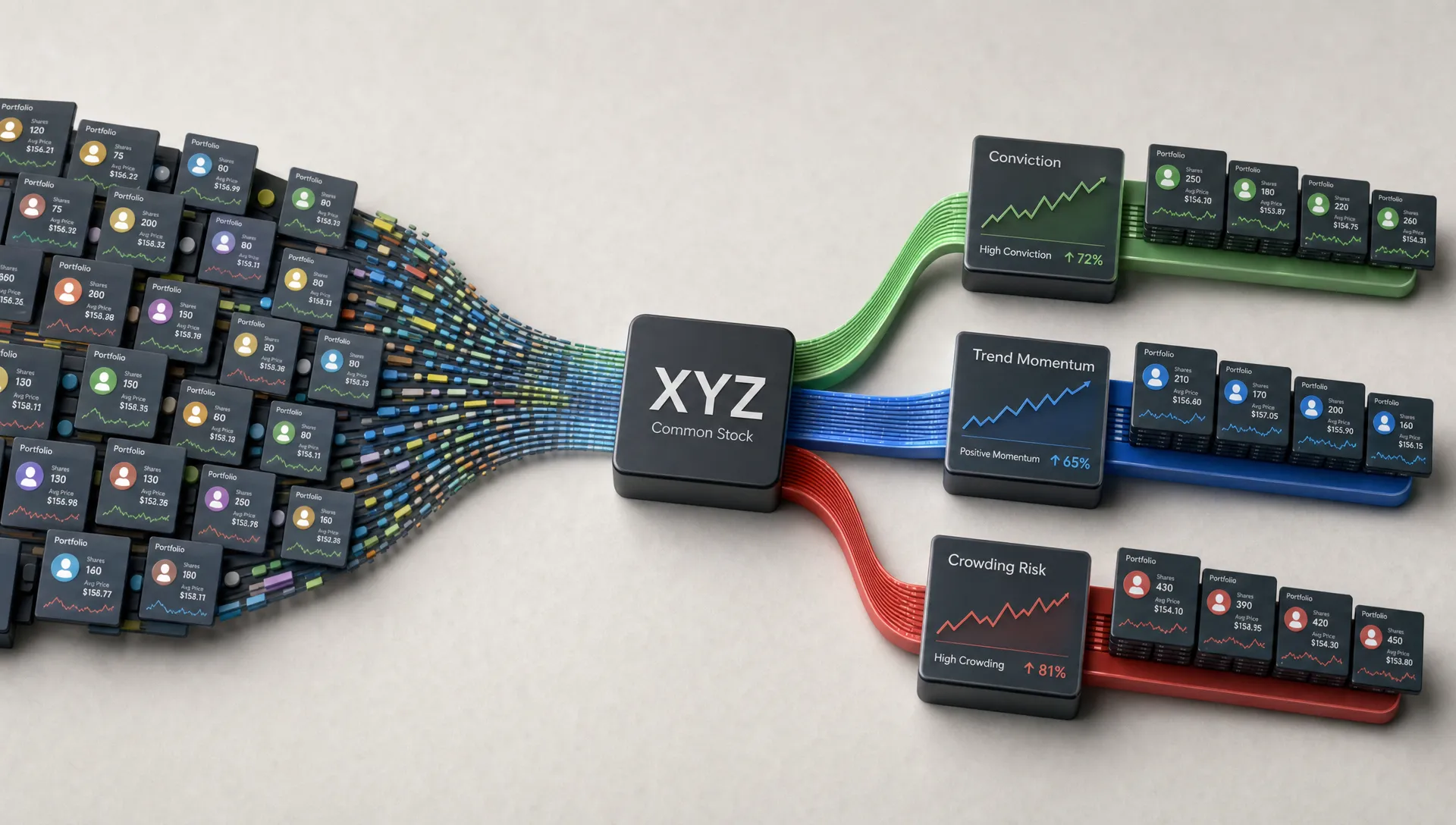
Retail ownership of stocks is often treated as background noise, something to check after earnings, analyst notes, and institutional filings. That is a mistake. While institutions still control large pools of capital, retail ownership can reveal early changes in attention, conviction, risk appetite, and even real-world demand before those signals become obvious in headlines.
The key is not to assume that individual investors are always early or always late. Retail positioning is useful when you know what it measures, where the data comes from, and how to separate actual ownership from simple online buzz. Used correctly, it can become part of a broader ownership mosaic that helps investors spot emerging opportunities and crowded risks sooner.
What retail ownership of stocks actually means
Retail ownership of stocks refers to shares held by individual investors rather than institutions, insiders, corporations, or funds. In practice, it can include shares held in taxable brokerage accounts, retirement accounts, fractional share programs, direct registration systems, and sometimes app-based investing platforms.
That sounds simple, but the data is not always clean. Most U.S. public companies know who their registered shareholders are, but many retail investors hold shares in “street name” through a broker. That means the broker or clearing firm appears on company records, while the underlying investor does not. As a result, retail ownership is often estimated from broker data, shareholder analytics, transfer agent data, platform-level portfolio data, or market structure proxies.
This is why retail ownership should not be read as a single perfect number. It is better understood as a directional signal. If more verified individual investors are adding the same stock, holding it through volatility, or concentrating around the same theme, that behavior may reveal something worth investigating.
For a fuller view of the ownership puzzle, it helps to combine retail data with stock ownership data every investor should track, including insider ownership, institutional holdings, short interest, float, and dilution.
Why retail ownership can reveal early information
Retail investors are not a monolith. Some are short-term traders. Some are index fund allocators. Some are employees, customers, industry specialists, or long-term investors who follow a business closely because they use its products every day. That diversity is exactly why retail ownership can be useful.
A portfolio is a revealed preference. Someone can post about a stock without owning it, but allocating capital is different. When actual ownership rises across many verified investors, the signal can point to early conviction, not just conversation.
Retail ownership can reveal several early dynamics:
- Narrative formation: Individual investors often react quickly to new technologies, consumer products, policy changes, and cultural trends.
- Grassroots demand: Retail investors may notice products, services, or local economic shifts before Wall Street coverage catches up.
- Theme rotation: Clusters of retail portfolios can show money moving toward sectors like AI infrastructure, energy, health care innovation, housing affordability, or digital assets.
- Crowding risk: If too many investors hold the same volatile name, the stock may become more sensitive to bad news, margin pressure, or momentum reversal.
- Conviction quality: Ownership that persists through drawdowns can mean something different from ownership that spikes after a price move.
This does not mean retail ownership automatically predicts returns. It means it can reveal where attention and capital are migrating before traditional research fully reflects it.
The early signals retail ownership can show
Retail ownership becomes most useful when you study change over time. A high retail ownership percentage by itself may simply mean the stock is popular. A sharp change in ownership, especially among investors with strong track records or similar portfolio themes, can be more informative.
| Retail ownership signal | What it may reveal early | What to verify next |
|---|---|---|
| Rising ownership before major news coverage | Emerging interest in a company or theme | Revenue trends, product demand, valuation, liquidity |
| Rising ownership after a large price move | Momentum participation or fear of missing out | Volume quality, options activity, crowding risk |
| Ownership concentrated among top-performing investors | Potential informed conviction | Holding periods, position sizing, sector exposure |
| Broad retail selling while fundamentals improve | Possible sentiment disconnect | Balance sheet strength, insider buying, institutional behavior |
| Heavy ownership in a low-float stock | Fragile supply and demand balance | Short interest, borrow costs, lockups, dilution risk |
One of the most valuable signals is not “retail owns this stock.” It is “retail investors with similar goals, risk profiles, or performance histories are adding this stock before the broader market has repriced the story.”
Retail ownership is especially useful for theme discovery
Many large investment themes start as lived experiences. Consumers notice rising grocery prices before inflation reports dominate headlines. Gamers notice hardware cycles before every analyst model reflects demand. Patients, developers, homeowners, creators, and small business owners often see shifts in the real economy before they appear in quarterly financial statements.
Retail portfolios can capture these observations. If a growing number of investors begin allocating to companies tied to housing affordability, for example, that may be worth comparing against mortgage rates, building permit trends, household formation, rental pressure, and local options like manufactured homes in San Antonio. The point is not that one local market determines a stock thesis. The point is that retail ownership can lead you toward real-world demand signals that deserve deeper research.
This is where portfolio-level data is more useful than social media sentiment. Social posts show what people are talking about. Verified holdings show what people are willing to own.
Separate actual ownership from attention
A common mistake is to treat every retail signal as the same. Search trends, forum mentions, brokerage leaderboards, options flow, and verified portfolios can all be useful, but they do not measure the same thing.
Social attention can move faster than ownership. Options activity can exaggerate directional exposure. Broker popularity lists can be biased toward large platforms. Transfer agent data can miss shares held through brokers. Institutional filings such as Form 13F are useful context, but they reflect professional managers and arrive with a reporting lag.
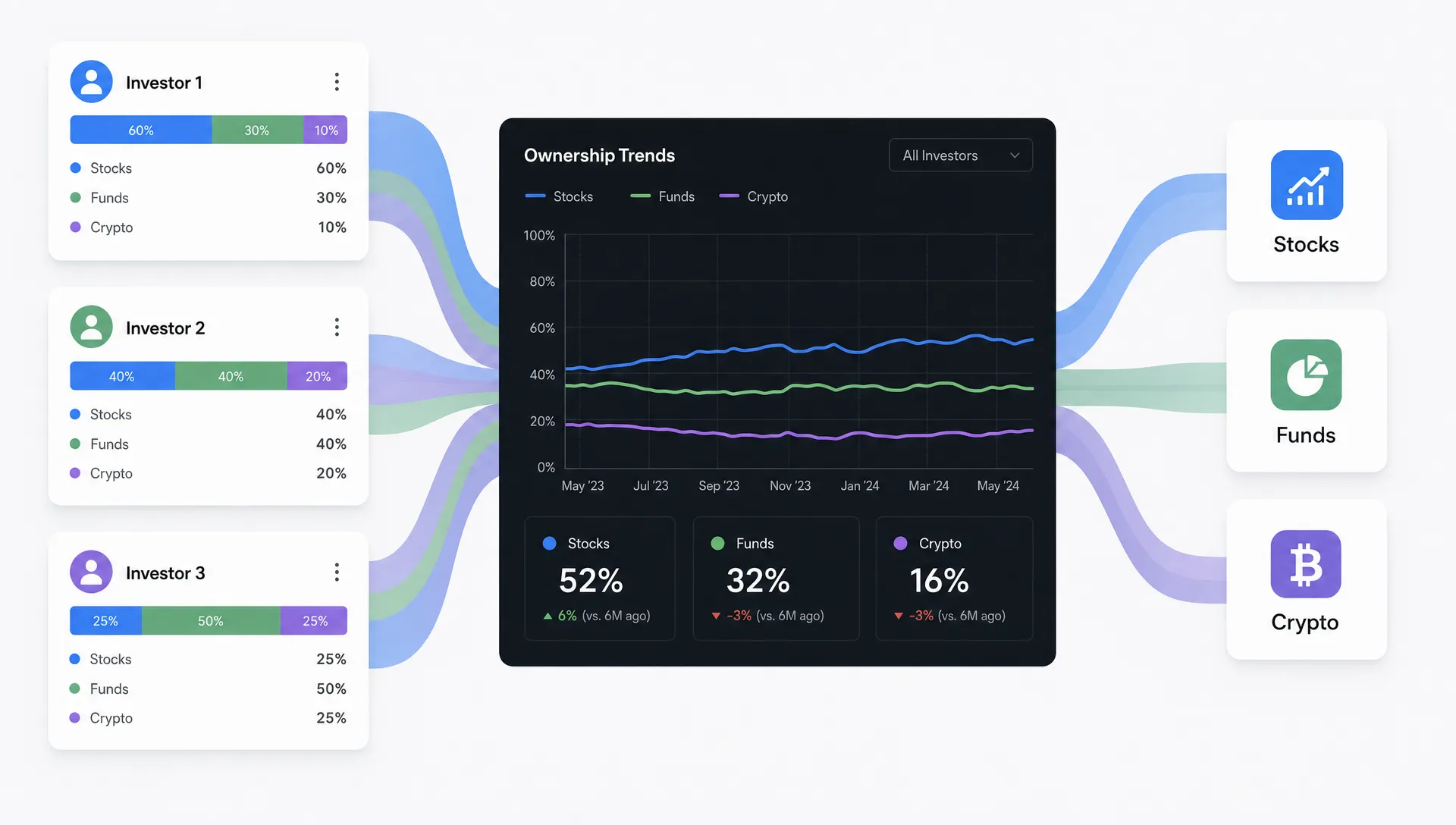
The strongest approach is to compare multiple signals. If retail ownership is rising, social attention is rising, volume is expanding, and fundamentals are improving, the signal is stronger. If retail ownership is rising only after a huge price move while fundamentals are flat, the signal may point more to momentum risk than early opportunity.
How to interpret retail ownership without overreacting
Retail ownership data can be powerful, but it should not be used in isolation. The goal is to understand what the ownership shift might mean, then test the hypothesis.
Focus on direction, not just level
A stock can have high retail ownership for years because it is a household name. That does not necessarily make it attractive or dangerous. The more useful question is whether ownership is rising, falling, or changing hands between different types of investors.
Look at the rate of change. A slow increase over several months can suggest durable accumulation. A sudden spike after a viral event may be less reliable. A decline in ownership after weak news can be normal, but a decline while the stock is rising may suggest that retail investors are taking profits into strength.
Segment the investors behind the move
Not all ownership changes carry the same weight. If first-time traders pile into a high-volatility stock after a price surge, that has a different meaning from experienced investors gradually adding a profitable company after a selloff.
Useful segmentation can include investor return history, risk level, sector specialization, holding period, portfolio concentration, and whether investors are buying a stock as a core position or a small speculative trade. This is one reason verified portfolio data can be more useful than generic popularity lists.
Compare retail with institutional and insider behavior
Retail ownership becomes more informative when it diverges from or confirms other ownership groups. If retail investors are buying while institutions are selling, the signal might be contrarian, or it might mean professional investors see risks that retail investors are underestimating. If retail ownership and institutional accumulation are both rising, it may suggest broader conviction.
To build that context, investors should know how institutional holdings can signal market conviction and how to interpret the limits of those signals. Insider activity matters too, because executives and directors often have a different information set than outside investors. When retail enthusiasm, institutional accumulation, and insider alignment all point in the same direction, the setup deserves attention.
Adjust for float and liquidity
Retail ownership has a different impact in a mega-cap stock than in a small-cap stock with limited float. A relatively small amount of retail buying can affect price more in a thinly traded company. It can also create more downside risk if investors rush for the exit at the same time.
Float matters because not all outstanding shares are freely tradable. Shares held by insiders, strategic investors, or long-term holders may reduce the effective supply available in the market. A retail ownership spike in a low-float stock can create powerful short-term moves, but it can also make the stock fragile.
A practical workflow for using retail ownership data
Retail ownership data works best as a research trigger, not a final answer. A disciplined workflow keeps you from chasing every popular stock while still helping you catch early signals.
- Start with a baseline: Compare current retail ownership with the stock’s own history, not just with other stocks.
- Confirm it is ownership, not chatter: Prioritize verified holdings, portfolio allocations, and position changes over mentions or watchlist additions.
- Identify the cohort: Ask whether the buying is coming from long-term investors, momentum traders, sector specialists, or broad retail participation.
- Cross-check fundamentals: Look for evidence in revenue growth, margins, customer demand, balance sheet quality, competitive position, and valuation.
- Compare other owners: Review insiders, institutions, short sellers, and major shareholders to see whether retail is leading, following, or diverging.
- Define the risk: Consider liquidity, float, leverage, options activity, and how quickly sentiment could reverse.
This process turns retail ownership from a vague popularity metric into a structured investment input.
What retail ownership can reveal about risk
Retail ownership is not only useful for finding potential upside. It can also highlight risk before it becomes obvious.
A stock with extremely concentrated retail ownership may become vulnerable if the investor base is highly momentum-driven. If many holders bought recently at similar prices, a break below those levels can trigger selling pressure. If much of the exposure is tied to options, the stock may be sensitive to dealer hedging, implied volatility shifts, and expiration dates.
Retail ownership can also show when a stock has become too consensus within a certain community. When everyone in a niche portfolio cluster owns the same name, incremental buyers may be harder to find. In that case, even good news may not move the stock much if expectations are already high.
On the other hand, low retail ownership is not automatically positive or negative. It may mean the company is overlooked. It may also mean the business is too complex, illiquid, cyclical, or risky for most individual investors. The signal needs context.
How Upside Invest helps make the signal more useful
Upside Invest is built around the idea that investors can learn from real portfolios while preserving privacy. Instead of relying only on headlines or unverified opinions, users can compare allocations, see what verified investors are buying and holding, track trends and momentum, and benchmark against top performers.
That matters for retail ownership analysis because the best insights often come from patterns across portfolios. A single investor buying a stock may not mean much. A cluster of verified investors adding exposure to the same company, sector, or theme can be more meaningful, especially when paired with return and Sharpe metrics, alerts on investor moves, and anonymous portfolio comparison.
For everyday investors, the goal is not to copy anyone blindly. The goal is to understand what informed peers are doing, where your own portfolio differs, and whether a new signal deserves research. If you want to compare your own allocations with verified investor behavior, Upside Invest gives you a private way to explore those patterns across stocks, funds, and crypto.
Frequently Asked Questions
Is high retail ownership bullish or bearish? It depends on the context. High retail ownership can show strong conviction and broad interest, but it can also signal crowding. The key is to look at the change in ownership, the investor cohort behind it, valuation, float, liquidity, and whether fundamentals support the move.
How is retail ownership of stocks measured? It is usually estimated from sources such as broker data, verified portfolio platforms, shareholder analytics, transfer agent information, and market structure proxies. Because many retail investors hold shares through brokers, no single source captures the full picture perfectly.
Can retail investors spot trends before institutions? Sometimes, yes. Retail investors may notice product adoption, consumer behavior, local economic shifts, or emerging technologies early. However, early attention only becomes useful when it is supported by actual ownership data and confirmed through fundamental research.
What is the biggest mistake investors make with retail ownership data? The biggest mistake is confusing popularity with quality. A stock can be widely owned because it is a great business, because it has already moved sharply, or because it became a short-term narrative trade. Ownership data should start research, not replace it.
Should I buy a stock just because top retail investors own it? No. Top performer ownership can be a useful clue, but you still need to evaluate your own time horizon, risk tolerance, position size, valuation, and diversification. Copying without context can lead to poor decisions.
Use retail ownership as an early clue, not a shortcut
Retail ownership of stocks can reveal early signals that traditional research may miss: emerging themes, real-world demand, changing conviction, crowding, and sentiment shifts. But the signal is only valuable when it is verified, segmented, and tested against fundamentals.
The best investors do not dismiss retail behavior, and they do not blindly follow it. They study it as one layer of market intelligence. With anonymous verified portfolio data, portfolio comparison, trend tracking, and performance context, Upside Invest helps turn retail ownership from noisy market chatter into a clearer research signal.