What the Employee Stock Ownership Association Does for ESOPs
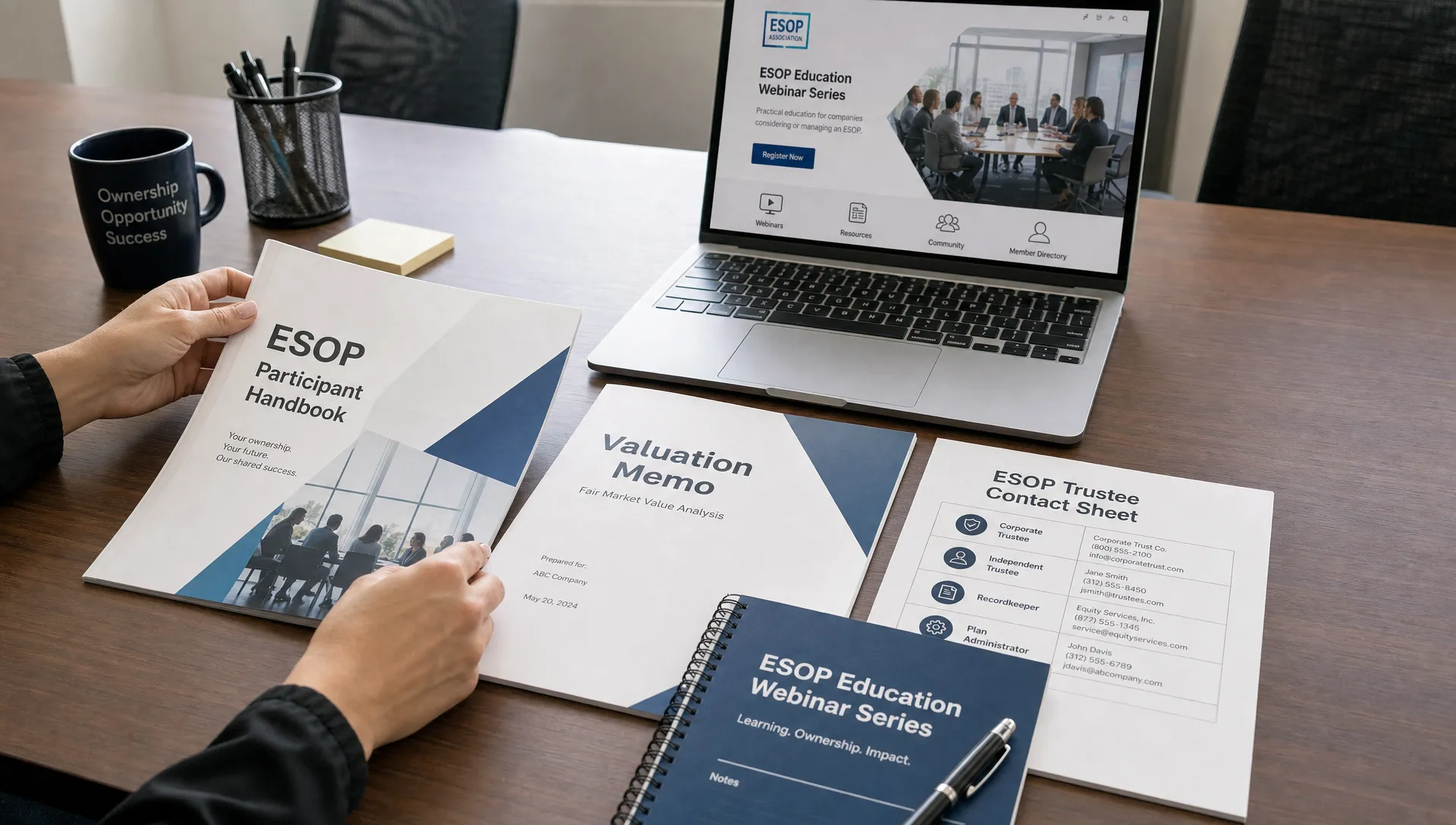
If you are trying to understand ESOPs as an employee, founder or public market investor, the employee stock ownership association is best understood as the ecosystem body around the plan, not the plan itself. It supports the ESOP community through policy advocacy, education, events, research access and professional networking that help companies run employee ownership more responsibly.
That distinction matters because an ESOP can affect valuation, cash flow, culture, governance and succession planning. An association can help improve the quality of those conversations, but it does not replace plan documents, fiduciary review or investment due diligence. If you need a foundation first, Upside Invest has a deeper primer on how ESOPs work for investors and employees.
What the employee stock ownership association does for ESOPs
In the United States, people often use this phrase to refer to The ESOP Association, a national membership organization serving ESOP companies and the professionals who advise them. More broadly, it can also describe the network of employee ownership groups that advocate for ESOP-friendly policy, educate plan sponsors and connect companies with experienced trustees, valuation firms, lenders, attorneys and administrators.
An ESOP is a qualified retirement plan that invests primarily in employer stock. That means it sits at the intersection of corporate finance, retirement law, tax planning and employee communications. According to the U.S. Department of Labor, ESOPs are governed by federal retirement plan rules, including fiduciary obligations under ERISA.
The association’s role is not to make every ESOP company a good investment. Its practical value is that it helps the market around ESOPs function with more shared knowledge and clearer expectations.
Advocacy: defending and refining the ESOP policy framework
ESOPs exist because tax and retirement rules make it possible for workers to accumulate ownership through a qualified plan. Changes to those rules can affect how companies finance buyouts, how selling shareholders are taxed, how S corporation ESOPs operate and how regulators evaluate fiduciary conduct.
When the employee stock ownership association advocates in Washington, it usually focuses on preserving the legal and tax framework that allows employee ownership to scale. That can include educating legislators about succession planning, rural and middle-market business continuity, retirement security and the effect of employee ownership on company culture.
For investors, the advocacy role is worth watching because ESOP economics often depend on stable policy. A highly leveraged ESOP with meaningful tax benefits, large repurchase obligations or a concentrated employee ownership structure may be sensitive to regulatory interpretation. Association advocacy cannot eliminate that risk, but it can give ESOP companies a collective voice when rules are debated.
Good advocacy also involves explaining tradeoffs. ESOPs can support long-term ownership and employee wealth creation, but they can create concentration risk for participants and cash flow pressure for the company if poorly designed.
Education: helping companies operate plans correctly
Running an ESOP is not a one-time transaction. The company must manage annual valuation, participant statements, vesting rules, distributions, repurchase obligations, trustee oversight and internal communication. Mistakes in any of those areas can weaken employee trust and create legal or financial risk.
For management teams, the employee stock ownership association often serves as a practical education hub. Conferences, chapter meetings, webinars and peer discussions can help leaders learn how other ESOP companies handle governance, communication, acquisitions, layoffs, leadership transition and capital allocation.
That education is especially useful because ESOPs are highly situational. A 100 percent employee-owned manufacturer with a mature workforce faces different issues than a services firm using an ESOP for partial founder liquidity. A company with bank debt from a leveraged ESOP transaction also has different constraints than a debt-free ESOP company with predictable cash flow.
The best educational programs do not sell ESOPs as automatically superior. They help leaders understand where the model works, where it strains the balance sheet and what must be communicated to employee participants.
What an association does not do
An association is not a regulator, plan trustee, appraiser, auditor or investment rating agency. It can publish best practices and bring credible professionals into the same room, but it does not approve a company’s share price, guarantee compliance or certify that an ESOP company is financially healthy.
That distinction is central for anyone using ESOP status as an investment signal. Membership in an employee ownership group may suggest that a company is engaged with the ecosystem, but it does not prove that its debt load is manageable, its valuation is conservative or its governance is strong.
| Association function | How it helps ESOPs | What it does not prove |
|---|---|---|
| Policy advocacy | Gives ESOP companies a voice in tax and retirement policy debates | Future law will remain unchanged |
| Education | Helps leaders understand fiduciary, valuation and communication issues | The company is fully compliant |
| Peer networking | Lets ESOP companies compare practical operating challenges | The company has superior economics |
| Public awareness | Explains employee ownership to policymakers, workers and the market | The ESOP is a good investment by itself |
| Professional access | Connects companies with attorneys, trustees, lenders and valuation specialists | Every adviser involved is the right fit |
Why ESOP associations matter to investors
An ESOP can change how a company thinks about time horizon. Employee-owned companies may emphasize retention, reinvestment and operational durability rather than short-term optics. Those traits can be positive, but investors should still test them against financial statements, governance documents and cash flow obligations.
For outside investors, the employee stock ownership association is most useful as a context source. It can help you understand the language ESOP companies use, the policy issues they care about and the operational problems that experienced operators discuss repeatedly. That context makes it easier to separate real employee ownership discipline from marketing.
The same governance lens applies beyond ESOPs. Investors evaluating co-owned assets, joint ventures or private vehicles often need to understand voting rights, distribution rules, control protections and exit mechanics. Those same themes appear in real asset investing, where partnership structures that protect investors can determine whether ownership is economically attractive or legally fragile.
If you are assessing an employee-owned business, Upside’s checklist on what to check in an employee-owned ESOP company is a useful next step because it turns the concept into a due diligence process.

What employees and company leaders get from participation
Employees often hear that they are owners, but ownership can feel abstract if nobody explains valuation, vesting, distributions or the difference between economic ownership and day-to-day control. Associations help companies communicate those ideas more clearly by sharing examples, templates and peer practices.
A healthy employee stock ownership association can also help leaders avoid treating the ESOP as a purely technical benefit plan. The strongest employee-owned companies usually build operating habits around ownership, including open communication, financial literacy and accountability for performance. Those habits are not automatic. They require training, repetition and leadership commitment.
Company leaders also gain access to peers who have already navigated hard moments. That can include a repurchase obligation spike, the retirement of a founder, a refinancing, a down year in profitability or a debate over whether to remain private. Learning from similar companies can reduce the odds that management treats the ESOP as an isolated HR matter.
Employees should still read their own plan materials. Association resources can explain the model, but your actual benefits depend on your company’s plan rules, share value, vesting schedule and distribution policy.
How to use association activity as a due diligence signal
Treat employee stock ownership association involvement as one signal among many. It may tell you that a company is engaged with the employee ownership community, but it should never replace a review of plan mechanics and financial quality.
A practical investor review should focus on evidence, not labels. Start with the percentage owned by the ESOP, whether the plan was leveraged, how annual valuation is handled and how future repurchase obligations are funded. Then connect those answers to the company’s operating performance and capital needs.
Useful questions include:
- Does the company explain whether the ESOP owns a minority stake or a controlling stake?
- Is there meaningful debt connected to the ESOP transaction?
- Are employees receiving clear communication about valuation and distributions?
- Does management describe how repurchase obligations are forecast and funded?
- Are trustees, valuation advisers and board members independent enough for the situation?
- Does employee ownership appear to support retention, productivity and capital discipline?
If you want to understand the mechanics behind those questions, Upside also explains how ESOP stock is created, allocated and distributed. That detail matters because ESOP value is not just about owning shares. It is about how those shares are valued, financed and eventually paid out.
For portfolio investors, ESOP signals are most useful when combined with broader comparison. Upside Invest is built around verified investor holdings, portfolio comparison, trend tracking and privacy-first benchmarking, which can help users study how other investors allocate capital without relying only on headlines or company narratives.
Frequently Asked Questions
Is the employee stock ownership association the same as an ESOP trustee? No. An association may educate trustees or connect companies with ESOP professionals, but it does not act as the fiduciary for a specific plan unless a separate professional engagement exists. The trustee is responsible for acting in the interest of plan participants within that plan’s legal structure.
Does association membership mean an ESOP company is financially safe? No. Membership or event participation can indicate engagement with employee ownership, but it does not validate the company’s valuation, debt level, repurchase planning or competitive position. Investors still need to review the business fundamentals.
Why would an employee care about ESOP advocacy? Advocacy can influence the laws and tax rules that make ESOPs practical for employers. If those rules change, the availability, structure or attractiveness of ESOPs may change for future companies and participants.
Can ESOP associations help public market investors? Indirectly, yes. Public investors may not get private plan documents, but association materials can help them understand ESOP terminology, common governance issues and the financial questions to ask when a public or private company emphasizes employee ownership.
Turning ESOP context into better investment decisions
An ESOP is not just a feel-good ownership label. It is a financial structure with governance duties, tax implications, employee communication needs and long-term cash flow consequences. Associations matter because they help the ESOP ecosystem share knowledge, defend workable policy and improve operating standards.
The investor takeaway is simple: use association activity as context, not proof. It can help you ask better questions about ownership quality, incentives and governance, but the investment case still depends on financial performance, valuation discipline and risk-adjusted returns.
For retail investors comparing companies, funds and themes, that context becomes more powerful when paired with real portfolio data. Upside Invest helps users see what verified investors are buying, holding and outperforming with, so ESOP-related signals can be weighed alongside broader market behavior rather than viewed in isolation.