When a Business ESOP Supports Succession Planning
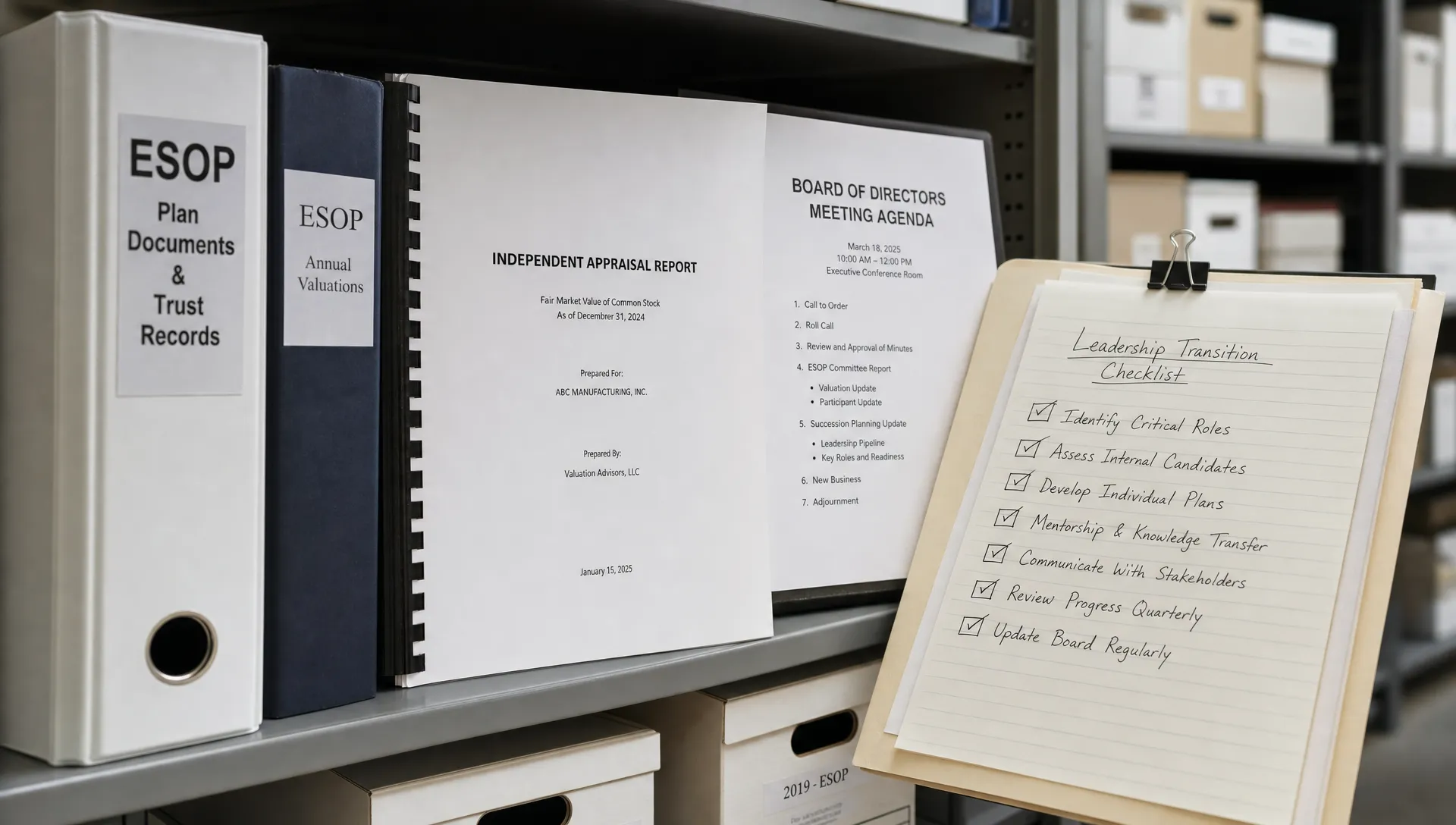
A business ESOP can be more than an employee benefit. In the right situation, it can give a founder liquidity, preserve a company’s independence and create a practical path for leadership transition without forcing a sale to a competitor or private equity buyer.
For investors, succession planning matters because ownership transitions often expose hidden strengths and weaknesses. A company with a retiring founder, concentrated customer relationships or an unclear next generation of leaders may look stable until control changes. An employee stock ownership plan can reduce that risk, but only when the structure, financing and culture support the business rather than strain it.
Why succession is difficult in founder-led businesses
Many private businesses reach a point where the owner wants to step back but does not want the company dismantled, relocated or merged into a larger platform. Family succession may not be available. A management buyout may be too expensive. A third-party sale may maximize headline price but change the company’s culture, customers and workforce.
That is where a business ESOP sometimes becomes relevant. Instead of selling to an outside buyer, the owner sells some or all of the company to an ESOP trust for the benefit of employees. The transaction can be partial or full, immediate or staged. The appeal is not just financial. It can also be emotional, operational and strategic.
Succession is rarely solved by ownership alone, though. The company still needs durable cash flow, capable managers, clean governance and a realistic valuation. If those pieces are missing, an ESOP can turn a succession problem into a leverage problem.
When a business ESOP supports succession planning
An ESOP tends to fit succession planning best when the company is already profitable, has predictable cash generation and has a leadership team that can run the business without daily founder intervention. The plan should transfer ownership without creating a vacuum in decision-making.
A business ESOP is strongest when the seller wants continuity as much as price. The owner may accept a structured payout over time because employees keep their jobs, management remains in place and the company avoids a disruptive auction. This is especially common in businesses where reputation, customer trust and institutional knowledge are central to value.
It can also work well when the founder wants to sell gradually. A staged ESOP gives the company time to build internal leadership, manage debt service and teach employees what ownership means. That learning curve matters because employee ownership does not automatically create owner-like behavior.
How the ESOP transaction changes incentives
In a typical ESOP transaction, a trust buys shares from the existing owner. If the company borrows to finance the purchase, it makes contributions to the trust over time, and those contributions are used to repay the debt. Employees receive allocations in their retirement accounts according to plan rules, usually tied to compensation or tenure.
For a business ESOP, the succession benefit comes from alignment. Employees may become more aware of profitability, cash discipline and long-term value creation because their retirement benefit is linked to company performance. Management can use that ownership framework to reinforce retention during a sensitive transition.
That said, alignment is not automatic. Employees need communication, financial education and confidence that the plan is being managed fairly. Investors studying the structure should understand the basics of how an ESOP works for investors and employees before treating employee ownership as a simple bullish signal.
| Succession issue | How an ESOP may help | What investors should verify |
|---|---|---|
| Founder needs liquidity | Creates an internal buyer through the ESOP trust | Sale price, financing terms and seller note obligations |
| Company wants continuity | Keeps ownership tied to employees and existing operations | Management depth and customer retention |
| Culture is a major asset | Rewards employees who helped build the company | Participation rules and communication quality |
| Third-party sale is unattractive | Avoids forced strategic or private equity sale | Whether the company can fund the transaction safely |
| Leadership transition is gradual | Allows staged ownership transfer | Governance, board independence and succession timeline |
The financial conditions that make it work
The company’s cash flow is the center of the analysis. A leveraged ESOP can be an elegant succession tool, but debt service competes with reinvestment, hiring, dividends and future repurchase obligations. If the company is cyclical or margin-thin, the transaction may reduce flexibility exactly when the next leadership team needs it most.
A business ESOP also needs a credible valuation. ESOP shares in private companies are typically valued through an independent appraisal process, but appraisal value is still based on assumptions about earnings, growth, discount rates and comparable companies. Small changes in those assumptions can materially affect the transaction economics.
The seller’s role after closing should be clear. Some founders remain as chair, adviser or CEO for a transition period. Others exit quickly. Neither model is automatically better, but ambiguity can damage accountability. Investors should ask whether the next leadership team has real authority or only inherits the founder’s responsibilities after the hardest decisions have already been deferred.

What investors should read beyond the ownership label
Employee ownership can be a positive signal, but it should not replace fundamental analysis. A company can be employee-owned and still have weak margins, excessive debt or poor capital allocation. Conversely, a well-run ESOP company may be attractive because the structure supports retention and disciplined operating behavior.
For investors, a business ESOP deserves the same scrutiny as any other ownership transition. Review the percentage owned by the ESOP, whether the transaction was leveraged, how repurchase obligations are funded and whether the company has a credible plan for future liquidity. Upside readers can go deeper with this guide on how to analyze ESOP companies before investing.
Governance also matters. The ESOP trust has fiduciary responsibilities, but employees do not always vote directly on ordinary business decisions. Control may remain with management, the board or a trustee depending on the structure. A succession plan that claims to empower employees should still explain who actually makes capital allocation, acquisition and compensation decisions.
When an ESOP is the wrong succession tool
A business ESOP can disappoint when it is used to solve the seller’s problem but not the company’s. If the valuation is too high, the buyer is effectively the company itself, which means employees and future cash flows carry the burden. That can create resentment if wages stagnate or investment is delayed to service the transaction.
It is also risky when the founder is the business. If customers, suppliers and key employees depend heavily on one person, an ESOP does not magically institutionalize those relationships. The company needs documented processes, delegated authority and a leadership bench before ownership transfer becomes credible.
Another warning sign is vague employee communication. Workers do not need to understand every legal detail, but they should know how value is created, how accounts vest and what could affect future payouts. If the plan is marketed as a guaranteed wealth-builder, investors should be cautious. ESOP value can rise or fall with business performance.
Practical succession checklist for owners and investors
Before treating a business ESOP as a clean succession solution, examine the business like a lender, a buyer and an employee. The best structures balance seller liquidity with company durability. They do not drain the operating company just to complete the ownership transfer.
A useful checklist includes:
- Is the company consistently profitable after normal owner compensation?
- Can the business service ESOP debt without cutting necessary investment?
- Has the founder identified and empowered a real successor or leadership team?
- Are repurchase obligations forecast under conservative assumptions?
- Does the board include people who can challenge management and protect the plan?
- Are employees educated on both the upside and the risks of ownership?
Succession planning should also include the company’s go-to-market engine. If growth depends on the founder’s relationships, the next team needs repeatable sales and marketing systems. For smaller companies preparing for transition, a practical resource like this 12-week SEO plan for small businesses can help management strengthen local visibility, lead generation and measurement before the founder steps away.
How to interpret ESOP succession as a market signal
For public market investors, ESOP structures are often one data point among many. The bigger question is whether employee ownership supports operating quality. Does the company retain talent better than peers? Does it reinvest prudently? Are margins improving because employees behave like owners or because management is underinvesting?
A business ESOP may be most interesting when it appears alongside other signs of durable execution: stable returns on capital, reasonable leverage, insider discipline, transparent governance and a culture that survives leadership changes. Upside Invest’s focus on verified holdings, portfolio comparison and investor behavior can help retail investors see whether sophisticated or consistently strong performers are paying attention to companies with those traits.
If you are building a watchlist, start by separating true ESOPs from looser employee equity programs. This guide on identifying companies that offer ESOP plans can help you avoid mixing retirement-plan ownership with stock options, RSUs or broad employee purchase plans.
Frequently Asked Questions
What makes an ESOP useful for succession planning? An ESOP can create an internal buyer for a founder’s shares, preserve company independence and give employees a financial stake in long-term performance. It works best when the company has strong cash flow, management depth and a realistic valuation.
Is a business ESOP always good for employees? No. Employees may benefit if the company performs well and the plan is responsibly funded, but ESOP accounts are tied to business value. Excessive debt, weak communication or poor succession execution can reduce the benefit.
Can an ESOP replace a management succession plan? No. Ownership transfer and leadership transfer are related but different. The company still needs capable executives, clear authority, customer continuity and governance that can function after the founder exits.
What should investors check first in an ESOP succession story? Start with leverage, valuation, cash flow, repurchase obligations and leadership depth. Then look at whether employee ownership appears to improve retention, culture and operating discipline.
Bring ESOP signals into better portfolio research
A succession story can make an employee-owned company more attractive, but only if the numbers and governance support the narrative. Use the ESOP label as a starting point, not a conclusion.
With Upside Invest, you can compare your portfolio with verified investor holdings, monitor trends and see how other investors position around themes like employee ownership, governance quality and succession risk. That makes it easier to turn a business ESOP from a vague positive signal into a research question you can actually test.