Commodity Trend Following: Rules for Managing Volatility
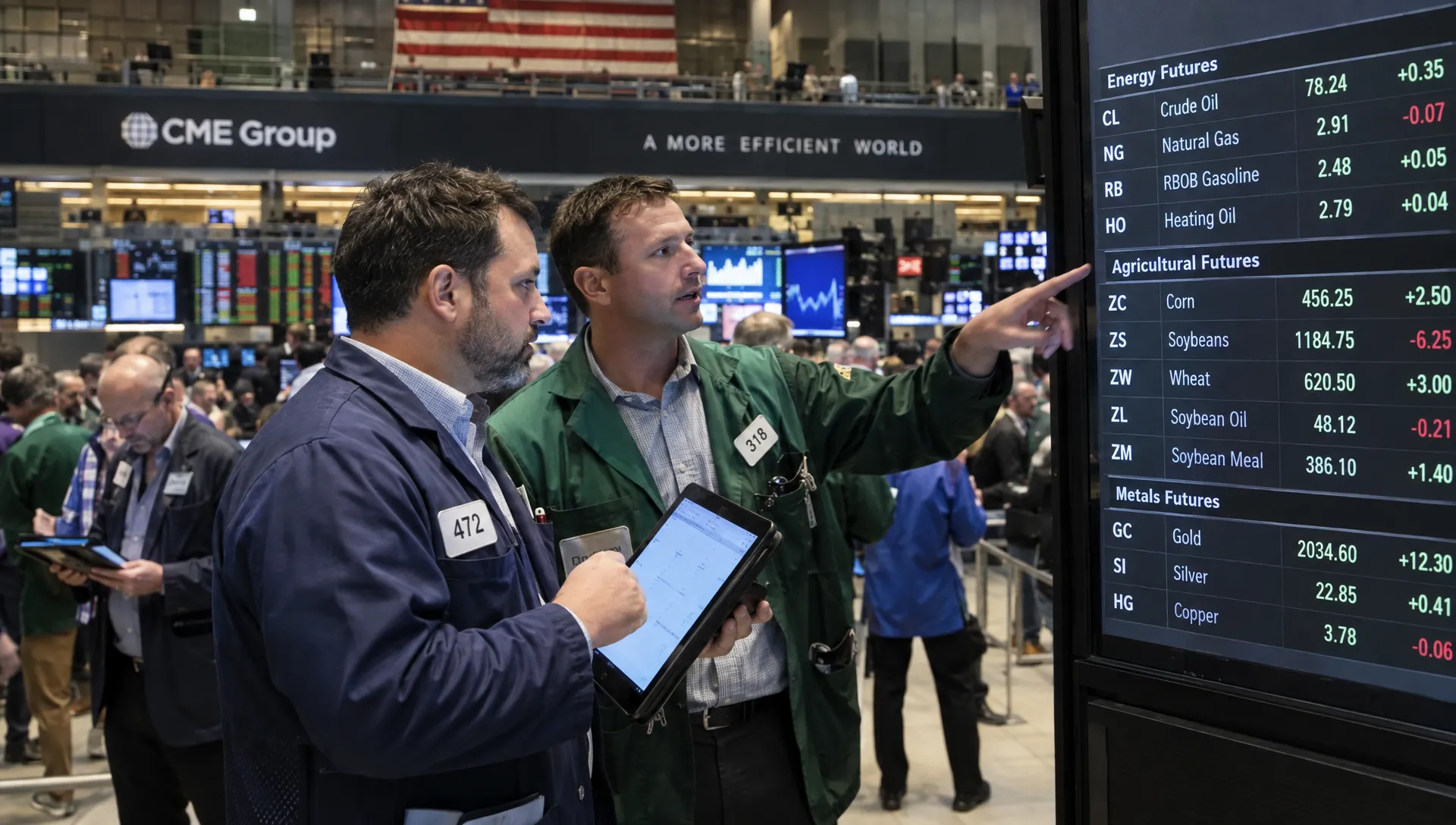
Commodity trend following means trading persistent price moves rather than predicting where oil, gold or agricultural markets should trade. The difficult part is keeping exposure manageable when volatility changes. A position that looked modest last week can become much riskier after a supply disruption, weather surprise or sharp shift in market liquidity.
A workable approach separates three decisions: what confirms the trend, how much exposure you can carry and what forces you to reduce or exit it. This guide focuses on the second and third decisions, including contract sizing, margin reserves, correlated positions and futures rolls. The numerical rules below are illustrations, not personalized recommendations or guarantees against loss.
Why commodity volatility needs a different framework
Commodities respond to physical constraints as well as financial conditions. Storage capacity matters for energy. Weather and harvest schedules matter for agricultural products. Industrial demand and financing conditions affect metals. These forces can produce abrupt moves that a smooth historical chart understates.
The instrument also changes the risk. A futures contract, a commodity fund and a producer's stock may all reference the same market, but they do not deliver identical exposure.
| Instrument | What drives the position | Risk to check before trading |
|---|---|---|
| Commodity futures | The price of a particular contract month | Contract multiplier, margin, expiration and settlement |
| Commodity funds | The fund's holdings and investment structure | Futures rolls, fees, tracking differences and any leverage |
| Producer stocks | Commodity prices plus business performance | Debt, operating costs, management decisions and equity-market risk |
For commodity trend following, choose the instrument before calibrating the signal. A breakout in spot oil does not automatically justify buying an oil producer or a fund whose returns depend on rolling futures.
Use a price series that matches the exposure you can actually trade, then test the rules on that instrument.
Start with a planned-loss budget, not a margin allowance
Before entering, define a maximum planned loss per trade as a fraction of account equity. That budget determines position size; the broker's buying-power figure does not.
For a futures position, a useful starting calculation is:
Planned loss per contract = stop distance in price units × contract multiplier.
Contracts = planned-loss budget ÷ planned loss per contract, rounded down.
Include estimated commissions and slippage when deciding whether the trade fits. The calculation assumes an exit near the intended stop, so it is a sizing tool rather than a maximum-loss guarantee.
A contract-size example
Assume a hypothetical $100,000 account limits planned loss on one trade to 0.5%, or $500. A crude-oil setup requires a stop $6 per barrel away from entry.
CME's standard WTI crude-oil contract specifications list a contract size of 1,000 barrels. The planned loss on one contract would therefore be $6,000 before trading costs.
The permitted size is zero contracts. Available margin does not change that answer.
Good commodity trend following includes rejecting trades that cannot fit the account. A smaller contract or a different instrument may be appropriate, but its multiplier, liquidity and tracking behavior need a separate assessment. Do not tighten an otherwise justified stop solely to make a large contract affordable.
Keep margin and cash reserves separate
Futures margin is collateral, not the purchase price of the underlying commodity and not a cap on losses. As explained in CME's introduction to futures margin, margin requirements govern the funds needed to support a position.
Maintain a separate cash test alongside the stop-based sizing test. Ask whether the account can meet adverse variation-margin payments and higher margin requirements without forced liquidation or selling unrelated investments.
For example, stress the account against an adverse move larger than the intended stop, then check the remaining liquidity. A position can satisfy a planned-loss rule yet still create unacceptable cash pressure during a gap.
A commodity trend following plan needs both tests: affordable market risk and enough liquidity to remain operational. Neither substitutes for the other, and unused buying power is not a reason to increase exposure.
Make commodity trend following responsive to changing volatility
Average true range, or ATR, measures recent price ranges while accounting for gaps from the previous close. It can help scale a stop to market movement, but it does not predict the next shock or measure every form of downside risk.
Suppose a strategy uses a stop three times ATR from entry. If ATR rises from $1 to $2 per price unit, the stop distance rises from $3 to $6. With the same loss budget and contract multiplier, the permitted position size approximately halves.
The key is to specify when resizing happens. Daily recalculation can create excessive turnover, while infrequent reviews can leave exposure too large after a volatility jump. One possible framework is a scheduled weekly sizing review plus an additional review after a predefined volatility increase or margin change.
Also define whether you reduce an existing position when its measured risk exceeds the budget. Do not quietly widen a long position's protective stop because ATR increased; that can increase the loss you originally accepted.
For a refresher on the difference between measuring volatility and confirming direction, Upside's guide to trend-following indicators explains how ATR differs from moving averages and breakout signals.
Plan for gaps, price limits and execution failures
A stop price is an instruction, not an insurance policy. A stop-market order generally prioritizes execution after triggering, but the fill may be substantially worse than the trigger price. A stop-limit order constrains the acceptable price but may remain unfilled.
Some commodity contracts have exchange price limits or trading interruptions. When trading is constrained and buyers or sellers disappear, you may not be able to exit when your model assumes you can. Check the specific contract's rules rather than applying one assumption across every commodity.
Execution risk belongs inside commodity trend following, not in a footnote after the backtest. Test what happens if a position exits well beyond its stop, especially around scheduled inventory reports, crop reports or weekends.
Predefine your response to impaired liquidity. That might mean avoiding thin contract months, reducing size before a known event or declining a trade when the spread is unusually wide. Whatever you choose should be part of the strategy before the event occurs.
Avoid treating low recent volatility as permission for unlimited leverage. A volatility floor and a hard exposure cap can prevent a quiet market from generating an oversized position.
Limit correlated bets across the portfolio
Several individually modest positions can become one large economic bet. Long crude oil, heating oil and gasoline positions share energy exposure. Long copper and producer equities may both depend on industrial demand. Different tickers do not necessarily mean different risks.
Group positions by their dominant drivers, then set limits for each group as well as the whole portfolio. A hypothetical rule might cap combined planned loss across an energy cluster at 1.5% of equity and across all open trades at 3%.
These are examples, not universal thresholds. They also describe planned losses at assumed exits, not worst-case losses during simultaneous gaps.
Portfolio-level commodity trend following should account for correlations becoming stronger during stress. Compare actual return behavior as well as sector labels, then test scenarios in which related positions move adversely together.
Watch gross exposure too. Long and short positions may appear to offset each other, yet differences between contract months, grades or regions can leave substantial spread risk. Net exposure alone can hide that risk.
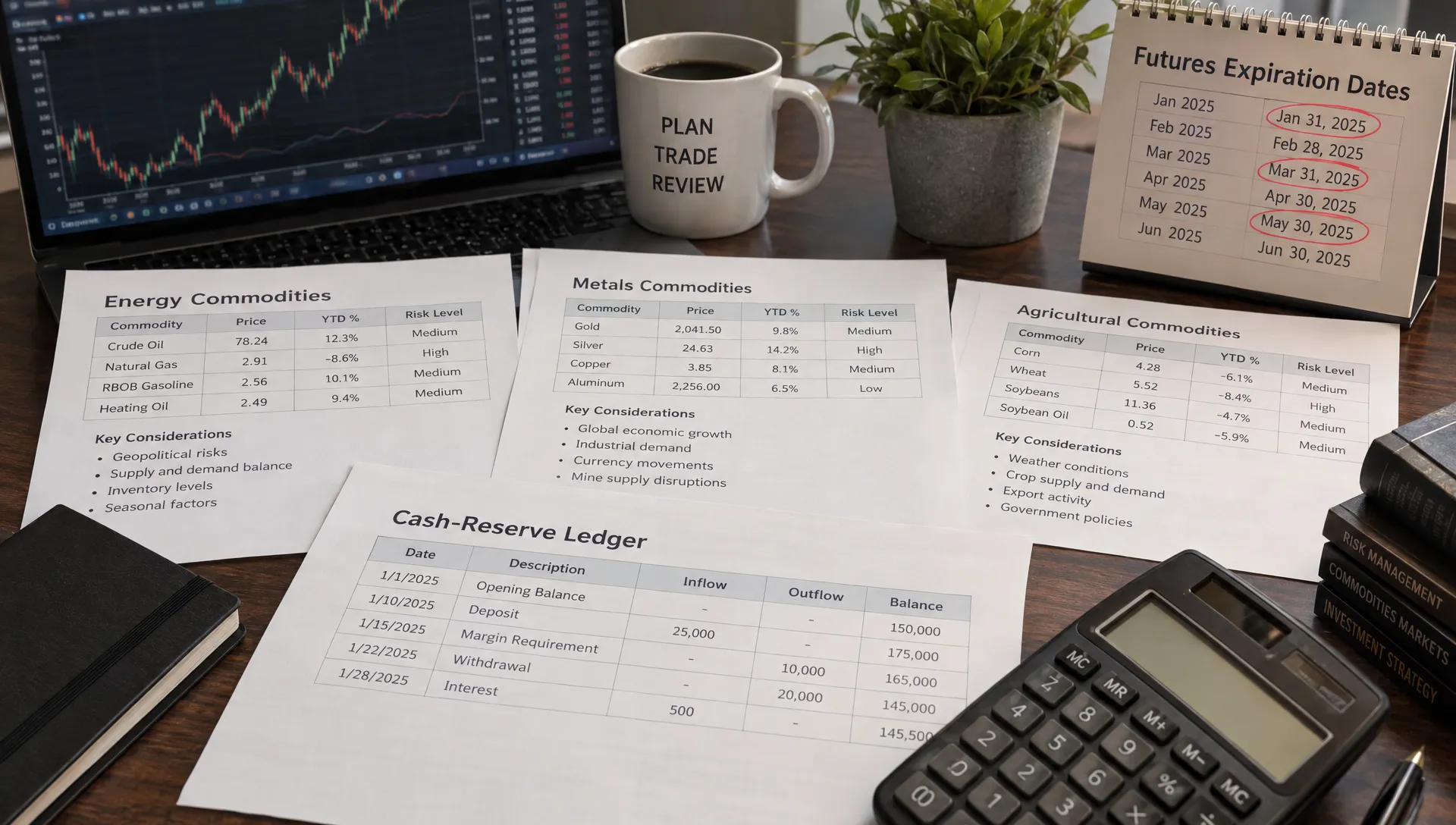
Treat futures rolls and expiration as trading rules
A futures trend can persist longer than the life of the contract you hold. That makes the roll process part of the strategy rather than an administrative afterthought.
Specify which contract month you trade, when you move to the next one and how you assess liquidity. Monitor volume, open interest and bid-ask spreads rather than assuming the nearest expiration always offers the best execution.
For physically delivered contracts, understand first notice day where applicable and the broker's required exit deadlines. For cash-settled contracts, understand the settlement process. Retail traders should not discover these obligations after an expiration alert arrives.
Commodity trend following also requires separating a continuous research chart from executable contract prices. Back-adjusted charts can help analyze historical trends, but adjusted price levels may not be valid order levels in today's contract.
The futures curve matters as well. Contango means deferred contracts trade above nearer contracts; backwardation means they trade below them. These structures can affect the returns of rolling exposure relative to spot prices, but they do not determine total returns by themselves.
If you use a commodity fund, read its stated exposure and roll methodology. A correct view on the commodity's direction can still produce a disappointing fund return because of rolling costs, fees or structural differences.
Put the rules into a repeatable review process
A usable system needs fewer discretionary exceptions, not more indicators. Document the decision frequency, signal, sizing calculation and exit process before putting capital at risk.
| Review item | What to record | What requires action |
|---|---|---|
| Trend status | Signal calculated from the chosen price series | A confirmed exit or reversal under the written rule |
| Position risk | Units, multiplier, stop distance and estimated costs | Exposure above the predefined budget |
| Cash capacity | Available liquidity and stressed margin needs | Insufficient reserves under the chosen stress test |
| Portfolio concentration | Related positions and combined planned loss | A cluster or portfolio limit breach |
| Contract lifecycle | Roll date, liquidity and settlement deadlines | Approaching the strategy's required roll or exit date |
Review commodity trend following results after commissions, slippage and roll effects. Track drawdowns, turnover and rule adherence alongside returns. A strong return achieved by ignoring position limits is not evidence that the process is sound.
When assessing Sharpe ratios, use consistent return frequencies and recognize that the metric does not fully describe gap risk or extreme losses. Include stress scenarios and the largest realized losses in your review.
Upside's broader guide to technical trend trading risk rules provides a complementary framework for documenting invalidation and position sizing. The commodity-specific layer adds contract mechanics, margin liquidity and roll management.
Keep accounting records separate from trading signals
Record fills, fees, realized gains and losses, cash movements and any currency conversions. Margin transfers are not the same thing as trading profits or deductible expenses. Tax treatment depends on jurisdiction, account type and instrument, so do not assume futures, commodity funds and producer stocks receive identical treatment.
If you trade through a business or have Canadian reporting obligations, professional accounting support can help organize these records. Oakville and GTA businesses can discuss bookkeeping and tax planning with Reach Professional Accounting. That support addresses financial reporting and compliance, not whether a particular trade is suitable.
Clear records make it easier to distinguish strategy performance from deposits, withdrawals and currency effects.
Frequently asked questions
What is the best volatility indicator for commodity trend following? There is no universally best indicator. ATR is useful for price-based stop distances, while realized volatility can support return-based exposure targeting. Choose a measure that fits the instrument and decision frequency, then test it with realistic costs and stress scenarios.
Does a stop-loss order limit the most I can lose? No. Gaps, slippage, thin liquidity and exchange restrictions can produce an exit beyond the stop price. A stop-limit order can fail to execute altogether. Size positions with these possibilities in mind.
Can I use commodity funds instead of futures? Yes, but the strategy must reflect the fund's actual exposure. Futures-based funds, physically backed funds and producer-equity funds have different return drivers. Leveraged products introduce additional risks and should not be treated as interchangeable substitutes.
Should I reduce size whenever volatility rises? Follow a predefined rule rather than reacting to every fluctuation. A scheduled review, volatility threshold and hard exposure cap can balance risk control against trading costs. If exposure exceeds your written limit, specify how and when you will reduce it.
Compare portfolios without outsourcing your risk decisions
Upside Invest lets you compare allocations and explore verified investor holdings through private, anonymous profiles. Its trend tracking and portfolio metrics can add context to your research, but another investor's allocation is not a position-size recommendation for your account.
Use community data to identify questions worth investigating. Keep contract selection, cash reserves and execution rules under your own written plan. In commodity trend following, the useful comparison is not simply who earned more, but what exposure and risk they carried to earn it.