How Employee Owned Stock Can Affect Company Risk
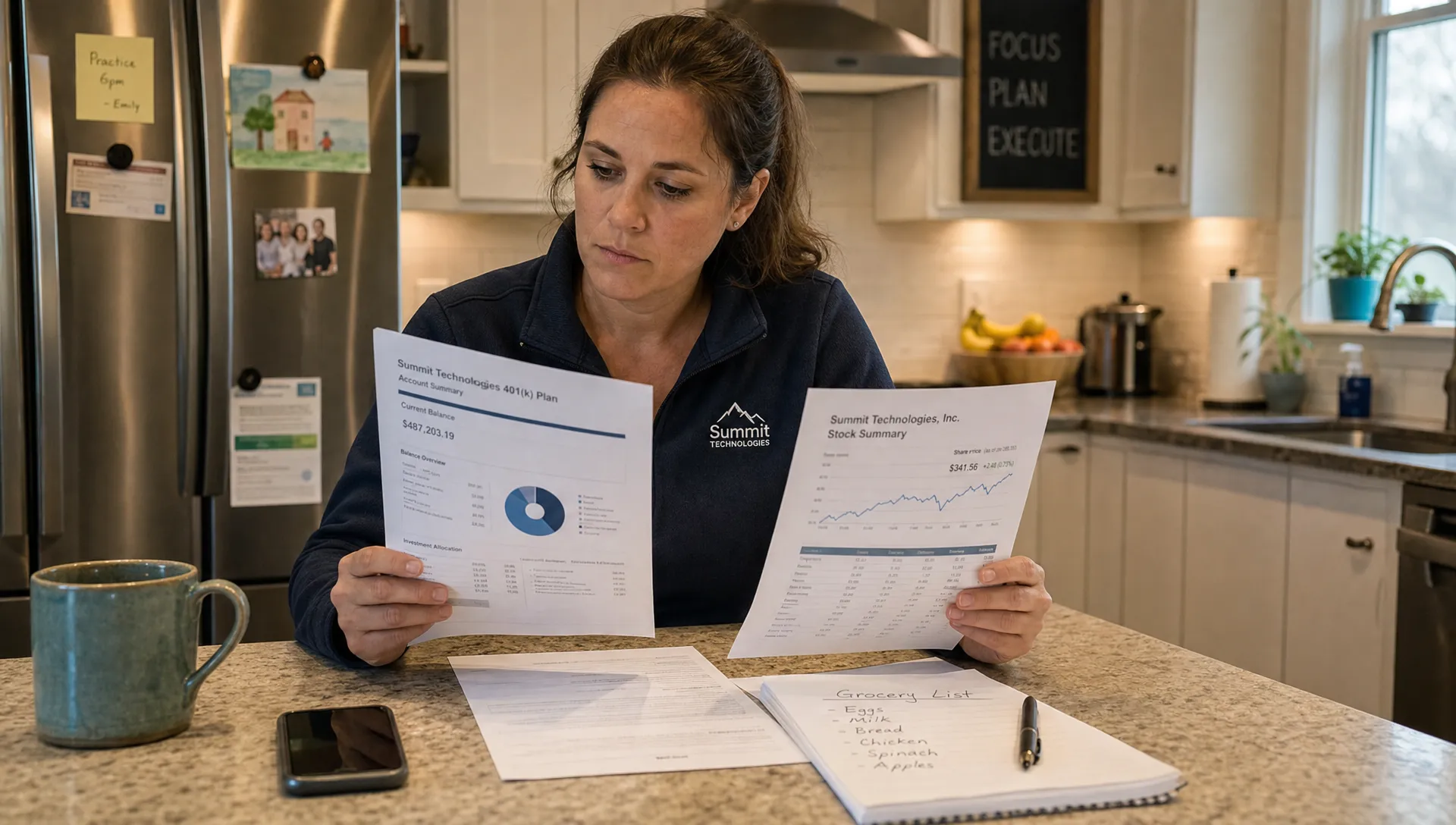
Employee ownership often sounds like an automatic quality signal, but employee owned stock can change company risk in both directions. It may align workers with owners, improve retention and encourage longer-term thinking. It can also concentrate wealth, create valuation blind spots, add debt to the balance sheet or create future cash obligations that investors underestimate.
For retail investors, the question is not whether employee ownership is “good” or “bad.” The better question is how the ownership structure changes the risk profile of the business, the risk carried by employees and the risk you might be adding to your own portfolio.
Start with the risk question, not the ownership label
Employee ownership can show up in several forms: an employee stock ownership plan, stock options, restricted stock units, an employee stock purchase plan or direct share ownership. Each structure creates different incentives and different claims on company value. If you are still sorting out the basics, Upside’s guide to what ESOP employee owned means is a useful starting point before you evaluate risk.
The risk analysis should begin with three questions: who owns the shares, who controls the company and who funds the ownership structure? At that point, employee owned stock becomes less of a label and more of a set of incentives, legal rights and future cash needs.
A small option plan at a profitable public company is not the same as a highly leveraged ESOP at a private business. Both can involve employees owning equity, but the financial risk for investors, employees and lenders can be completely different.
How employee owned stock can affect company risk
The first risk channel is alignment. When employees participate in ownership, they may care more about productivity, cost control, customer satisfaction and long-term durability. That can reduce agency risk, which is the gap between what employees do and what outside shareholders want.
Incentive alignment can lower execution risk
In well-designed ownership cultures, employees see a clearer connection between daily decisions and company value. A sales team may focus on higher-quality revenue instead of short-term volume. Operations teams may pay closer attention to waste, safety and rework. Managers may communicate financial targets more clearly because employees have a stake in the outcome.
That does not mean employee owned stock automatically makes a business safer. Incentives work best when employees understand how value is created, have access to credible performance information and believe leadership is allocating capital fairly.
Financing can raise balance sheet risk
The second risk channel is financing. Some employee ownership structures are funded gradually through company contributions. Others use debt, especially in leveraged ESOP transactions where a company borrows to buy shares from selling owners.
Debt can make the ownership transition possible, but it also changes the company’s margin for error. Interest expense and principal payments compete with reinvestment, hiring, acquisitions and working capital. If earnings fall, the same structure that aligned employees can also pressure liquidity. Upside covers this deeper in its breakdown of leveraged ESOP risks.
| Risk channel | Potential benefit | Potential risk |
|---|---|---|
| Incentives | Better alignment between employees and owners | Overconfidence if ownership is treated as a substitute for strategy |
| Retention | Lower turnover and stronger institutional knowledge | Employees may stay too concentrated in one employer |
| Financing | Smooth succession for selling owners | Debt service can reduce reinvestment flexibility |
| Valuation | Employees share in company value creation | Private share values may be hard to verify |
| Governance | Broader participation in ownership | Control may still sit with insiders or trustees |
Where employee ownership can reduce business risk
The clearest risk reduction comes from operating resilience. Companies with committed employees may retain customer relationships better, preserve technical knowledge and reduce the hidden costs of churn. In sectors where training is expensive or client trust compounds over time, ownership can support a stronger competitive position.
Employee owned stock can also reduce succession risk. Many private companies struggle when founders retire or family owners want liquidity. An ESOP or similar structure can create a buyer for those shares without forcing a sale to a competitor or private equity sponsor. If the transaction price is reasonable and the company has stable cash flow, the structure can help preserve continuity.
There is also a cultural angle. Employee ownership often pushes management to communicate more openly about margins, growth plans and capital needs. That can improve decision-making inside the company, especially when employees are trained to understand the financial levers that drive value.
Where employee ownership can increase business risk
The most obvious added risk is concentration. Employees already depend on the company for wages, benefits, career progression and professional networks. If a large part of their retirement wealth is also tied to the same company, a downturn can affect income and savings at the same time.
Investors should also watch for valuation risk. Public shares trade in visible markets. Private company shares often rely on periodic appraisals, internal assumptions and comparable company analysis. A valuation may be reasonable, but it is still not the same as a live market price. For employees, this can create a gap between statement value and cash value.

Liquidity is another issue. Employees in private companies usually cannot sell shares whenever they want. Distribution rules, vesting schedules, retirement plan limits and repurchase policies affect when value turns into cash. A company can be profitable and still face pressure if many departing or retiring employees need to be bought out over a short period.
The risk map investors should use
For investors, employee owned stock is most useful as a signal when it is analyzed with the rest of the capital structure. A company with modest leverage, recurring revenue and transparent governance may become less risky through employee ownership. A cyclical company with high debt, thin margins and vague valuation practices may become riskier.
Use the following map to separate the signal from the story:
| What to review | Why it matters | Warning sign |
|---|---|---|
| Ownership percentage | Shows how much value employees actually participate in | “Employee owned” marketing with limited economic exposure |
| Debt used to fund ownership | Determines how much cash flow is pre-committed | Large repayments during an uncertain earnings period |
| Repurchase obligations | Reveals future cash needed to buy back shares | Aging workforce with limited liquidity planning |
| Valuation method | Affects reported account values and transaction fairness | Aggressive assumptions unsupported by fundamentals |
| Governance rights | Shows who controls major decisions | Employees own shares but have little visibility or influence |
| Employee diversification | Measures personal financial concentration | Workers rely on one company for both salary and wealth |
No single row should decide the investment case. The pattern matters. A company can tolerate one weakness if the rest of the structure is strong, but multiple red flags can compound quickly.
How to evaluate the risk before investing
A practical review of employee owned stock should move from structure to fundamentals. Start with the ownership plan itself, then test whether the underlying business can support the promises attached to that plan.
First, ask how the shares are created, allocated, vested and valued. If the company is private, find out how often appraisals occur and what assumptions drive the valuation. Upside’s article on how to value ESOP shares explains why statement value and economic value are not always identical.
Second, compare ownership risk with business risk. A stable distributor with recurring customer relationships carries different risk than a cyclical manufacturer, a venture-backed software company or a commodity-linked producer. The more volatile the core business, the more carefully you should examine leverage, liquidity and repurchase obligations.
Third, evaluate whether growth is repeatable. Revenue quality matters as much as ownership structure. For example, if an industrial company depends heavily on search demand, bid-driven campaigns or a narrow lead pipeline, reviewing its industrial marketing SEO and PPC capabilities can be part of broader revenue-risk diligence.
Portfolio context matters as much as company structure
Even when the company is strong, employee owned stock can still create personal portfolio risk. Employees may think about ownership from the inside, focusing on culture and confidence in management. Outside investors usually think in terms of diversification, expected return and drawdown risk. Both perspectives are useful, but they answer different questions.
If you work at an employee-owned company, the key question is how much of your net worth depends on the same employer. If you are evaluating the company as an outside investor, the key question is whether employee ownership improves future cash flows enough to justify any added complexity.
This is where comparison helps. Upside Invest is built around anonymous, verified portfolio data, allowing users to compare holdings, observe what other investors are buying or holding and review return and Sharpe metrics in context. That does not replace diligence, but it can help you avoid treating one ownership feature as the whole investment thesis.
A balanced way to read the signal
The best interpretation is usually conditional. Employee owned stock is a positive signal when it is paired with fair valuation, manageable leverage, durable cash flow, transparent governance and employee education. It is a warning sign when it is used to sell a comforting story while masking weak fundamentals or excessive financial obligations.
Investors should also avoid assuming that employee ownership protects against normal business risk. Demand can fall, competitors can improve, input costs can rise and management can still make poor capital allocation decisions. Ownership structure can influence behavior, but it does not repeal economics.
A disciplined investor treats employee ownership as one input in a broader risk model. If it improves incentives and resilience without overloading the balance sheet, it can strengthen the company. If it concentrates wealth, hides illiquidity or depends on optimistic valuations, it can make risk harder to see until conditions tighten.
Frequently Asked Questions
Is employee ownership always less risky for a company? No. Employee ownership can reduce execution and retention risk, but it can increase financial risk if the structure uses too much debt or creates large future repurchase obligations.
How does an ESOP affect company risk? An ESOP can support succession planning and employee alignment, but it can also affect cash flow, governance, valuation and liquidity. The risk depends on how the ESOP is funded and managed.
What is the biggest risk for employees who own company shares? Concentration is often the biggest risk. Employees may rely on the same company for salary, benefits and retirement wealth, which can magnify the impact of a downturn.
Should outside investors view employee ownership as a bullish signal? It can be bullish when the company has strong fundamentals, reasonable leverage and transparent valuation practices. It should not be treated as a stand-alone reason to invest.
How can investors compare employee-owned companies with other holdings? Compare cash flow stability, debt levels, valuation transparency, governance rights and risk-adjusted returns. A portfolio comparison tool can help place the ownership structure in context rather than viewing it in isolation.
Use ownership data without losing sight of risk
Employee ownership can be a genuine advantage, but only when the economics support it. Before you treat it as a green flag, look at leverage, liquidity, valuation discipline, governance and how much wealth is concentrated in one company.
Upside Invest helps retail investors compare portfolios, spot allocation patterns and learn from verified investor behavior while keeping profiles private and anonymous. Use that broader context to decide whether an employee ownership signal strengthens the investment case or simply adds a new layer of risk to understand.