Stock Market Insights That Matter More Than Daily Noise
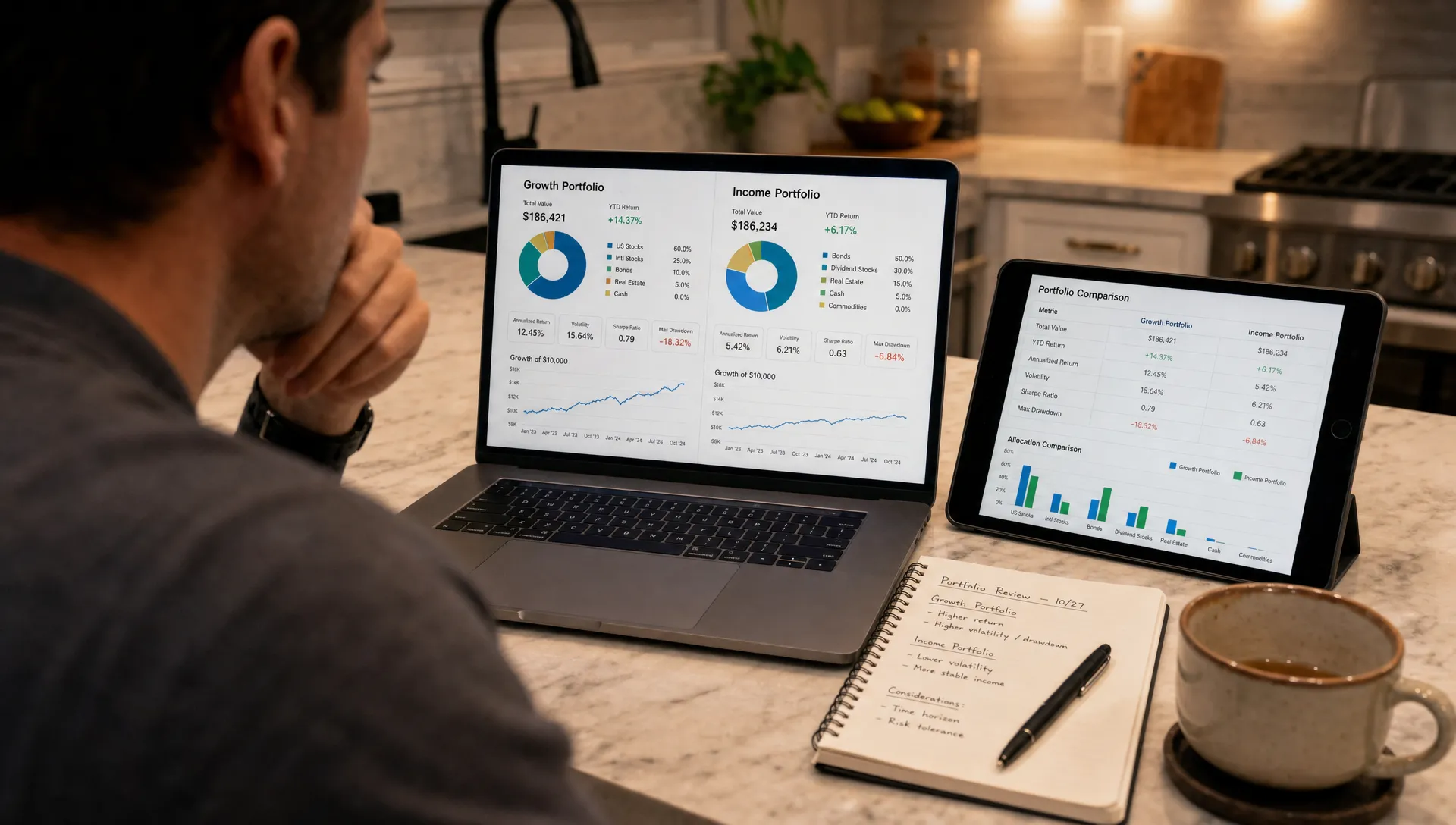
The most useful stock market insights rarely come from the loudest market update, the hottest ticker on social media or the one-day move everyone is trying to explain after it already happened. They come from patterns that help you understand what investors are doing, why a move may persist and where risk is being mispriced.
Daily noise feels urgent because markets reprice constantly. A headline crosses, a stock gaps, a macro number surprises and commentary fills the space within minutes. For long-term investors and active retail investors alike, the better question is not “What happened today?” It is “What information improves my next decision?”
What stock market insights actually mean
Useful stock market insights do three things: they separate signal from randomness, connect behavior to incentives and help you decide whether to act, wait or avoid a trade. That is different from raw data. A price chart is data. A list of analyst upgrades is data. A portfolio move by a verified investor with a strong risk-adjusted record may be an insight, but only if you understand the context.
The market produces more information than any individual can process. The goal is not to consume all of it. The goal is to build a filter that gives more weight to evidence with decision value and less weight to commentary that expires by tomorrow’s open.
| Daily noise | More useful signal | Why it matters |
|---|---|---|
| A stock is up 6% today | Ownership is broadening across strong portfolios | Suggests the move may have support beyond a single session |
| A ticker is trending online | Verified investors are adding exposure over time | Helps distinguish attention from actual capital allocation |
| A company beat earnings | Margins, guidance and valuation changed materially | Shows whether fundamentals improved, not just expectations |
| A portfolio posted a big gain | Returns came with controlled drawdowns and better Sharpe metrics | Separates skill, concentration and luck |
| A macro headline moved markets | The same sectors continue showing relative strength | Helps identify persistent themes rather than one-day reactions |
Investor positioning matters more than commentary
For retail investors, stock market insights become more useful when they are grounded in what investors actually own, not what they say they like. Commentary is cheap. Allocating capital carries opportunity cost, volatility and accountability.
This is why portfolio behavior can be more revealing than market opinions. If a skilled investor keeps adding to a sector through volatility, that says something different from a public bullish comment. If many strong portfolios independently increase exposure to the same theme, that may show conviction before the story becomes obvious in headlines.
Verified holdings beat stated opinions
Positioning data still needs interpretation. A large holding can reflect conviction, tax constraints, legacy gains or simple inertia. A recent purchase can be more informative than a long-held position, but only if it fits the investor’s style and time horizon.
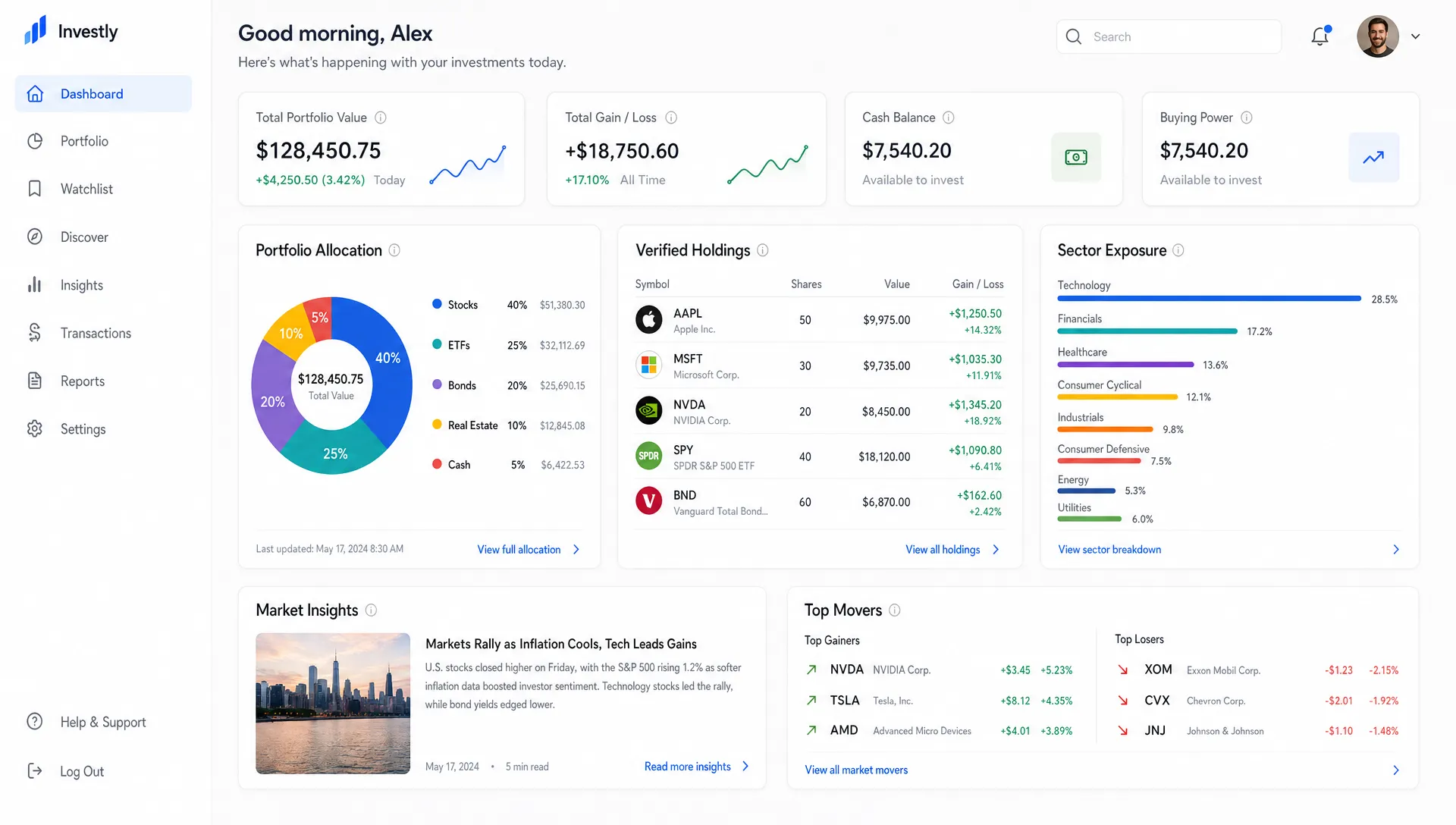
That is where anonymized, verified portfolio data has an edge. Upside Invest is built around the idea that investors can learn from real holdings while preserving privacy. Instead of copying a trade blindly, you can compare your allocation against other investors, examine who is outperforming and look for patterns in what top portfolios are holding.
If you want to go deeper on this type of signal, Upside’s guide to stock ownership data explains which ownership metrics are worth tracking and which ones can mislead you.
Risk-adjusted conviction is more valuable than raw performance
A common mistake is treating high returns as proof of good insight. Strong returns matter, but they do not tell the whole story. A portfolio that doubled because it held one highly volatile stock may not be comparable to one that compounded steadily with lower drawdowns.
Better stock market insights account for the risk required to earn a return. That includes concentration, sector exposure, volatility, maximum drawdown and whether performance came from one lucky outcome or a repeatable process. Sharpe ratio is not perfect, but it helps investors ask a better question: was the return attractive relative to the volatility taken?
Look for repeatability, not just a big win
Repeatability shows up in habits. Does the investor size positions consistently? Do they cut losers or average down without a clear thesis? Are gains coming from a durable strategy, such as quality compounders, factor exposure, sector rotation or early theme identification?
This is especially important when comparing your portfolio to others. A top performer ranking is more useful when you also understand how that performance was generated. Someone may outperform during a crypto rally, a small-cap rebound or a narrow AI-led market, but the same approach may struggle when conditions change.
Time horizon changes the meaning of every signal
The same piece of information can be bullish for one investor and irrelevant for another. A swing trader may care about a breakout, liquidity and near-term momentum. A long-term investor may care more about earnings durability, capital allocation and valuation.
The best stock market insights are matched to a specific time horizon. Without that match, investors often turn useful information into bad trades. They buy a long-term idea with a short-term stop or chase a short-term momentum move as if it were a five-year investment.
A practical way to avoid this mistake is to tag each idea before acting. Is it a trade, a theme, a core holding or a watchlist candidate? Each category should have different evidence requirements. A trade may need price confirmation and a clear exit. A core holding needs a stronger business thesis and tolerance for volatility.
Trend quality matters more than trend speed
Fast moves get attention, but speed alone is not enough. Many crowded trades reverse precisely because everyone discovers them at the same time. A better trend has confirmation from multiple sources: price strength, improving fundamentals, rising ownership quality and a catalyst that has not been fully priced in.
Good stock market insights help you tell the difference between early momentum and late crowding. If a stock is moving higher while ownership is still selective, earnings revisions are improving and the broader theme is gaining capital, the setup may be healthier than a ticker that has already become a crowded social media trade.
Watch who is buying, not only what is moving
Momentum is more useful when you know who is participating. Are strong investors building positions? Are institutions accumulating gradually? Are retail investors discovering a theme before Wall Street coverage expands? Each pattern tells a different story.
Upside Invest’s trend and momentum tracking can help investors see which assets are gaining traction across verified portfolios. For a complementary framework, the article on how to spot trending trades before the crowd breaks down how to combine ownership, price action and catalysts without chasing hype.
Fundamentals still set the limits of the story
Narratives move stocks in the short term, but fundamentals usually decide how much room a story has to run. Revenue growth, margins, cash flow, balance sheet strength and valuation still matter. A popular stock can be a bad investment if expectations already assume perfection.
Durable stock market insights connect the story to the numbers. If investors are buying a stock because of AI demand, weight-loss drugs, energy infrastructure or crypto adoption, the next step is to ask where that theme appears in revenue, margins and capital spending. If it does not show up, the trade may depend mostly on sentiment.
Catalysts need an invalidation point
Every investment thesis should include a reason it could be wrong. A catalyst without an invalidation point becomes a story you can keep believing no matter what happens. That is dangerous because markets often provide just enough evidence to keep investors attached to weak ideas.
Examples of invalidation points include slowing user growth, margin compression, dilution, weak guidance, loss of pricing power or a major technical breakdown. These are not automatic sell signals for every strategy, but they force discipline. They turn insight into a decision framework.
Build a personal filter for market information
The biggest advantage an individual investor can build is not access to every data source. It is a repeatable filter. Your filter should decide which signals matter, which ones require confirmation and which ones you ignore completely.
One way to improve your filter is to study how high-quality insight works outside finance. Strong analysis usually explains the underlying shift, the economics behind it and the behavior it may change. For example, The New Face’s insights on CGI, real-time production and AI commerce are useful because they frame technology trends through business impact rather than simply listing new tools. Investors can apply the same standard to markets.
For market decisions, your personal filter might include ownership change, valuation, earnings quality, sector momentum, risk-adjusted portfolio behavior and your own time horizon. The point is to avoid reacting to every input as if it deserves equal weight.
A simple decision checklist
Before acting on stock market insights, ask whether the signal changes your expected return, your risk estimate or your position sizing. If it does none of those, it may be interesting without being useful.
Use a short checklist like this before buying, selling or adding to a position:
- What changed compared with my previous view?
- Is the signal based on actual capital allocation or just commentary?
- Does this fit my time horizon?
- What evidence would prove the thesis wrong?
- Am I improving my portfolio or just reacting to attention?
This discipline matters because most market content is built to capture attention. Your portfolio needs information that improves judgment.
How Upside Invest helps reduce daily noise
Upside Invest focuses on real portfolio behavior rather than market chatter. By showing verified investor holdings, anonymous profiles, portfolio comparison tools, top performer rankings, trend tracking and risk metrics, it helps investors understand what people are actually buying and holding.
That does not mean every move by another investor is a trade recommendation. It means you can use better context. You can compare allocations, discover sectors and themes, track momentum across verified portfolios and examine performance through return and Sharpe metrics. Those inputs make stock market insights more practical because they connect market ideas to observable behavior.
For investors who want a broader decision-making framework, Upside’s article on investing insights that improve better decisions is a useful companion to this approach.
Frequently Asked Questions
What are the most important stock market insights to track? The most important signals are the ones that affect decision quality: investor positioning, ownership changes, earnings durability, valuation, risk-adjusted performance, sector momentum and catalysts with clear invalidation points.
Why is daily market news often misleading? Daily news can overemphasize short-term price moves and underemphasize context. A stock may rise or fall for reasons that do not change its long-term value, such as positioning, options activity or temporary macro reactions.
How can retail investors use verified portfolio data? Retail investors can use verified portfolio data to compare allocations, identify emerging themes, study top performers and see whether real investors are committing capital to an idea. The goal is not copying, but improving context.
Are trending stocks always bad to buy? No. A trending stock can still be attractive if the move is supported by fundamentals, ownership quality and catalysts that are not fully priced in. The risk is buying after the trade becomes crowded and the upside has already been pulled forward.
How often should I review my portfolio signals? Long-term investors may only need a weekly or monthly review, while active investors may review signals more often. The review schedule should match the strategy, not the pace of headlines.
Turn insight into a better investing process
The market will always produce noise. The investors who handle it best are not the ones who read everything, but the ones who know which information deserves action.
With Upside Invest, you can compare your portfolio privately, learn from verified investor holdings and track the trends that show up in real allocation data. Use it to make stock market insights part of a repeatable process, not another stream of market noise.