Stock Trend Following Rules for Smarter Entries
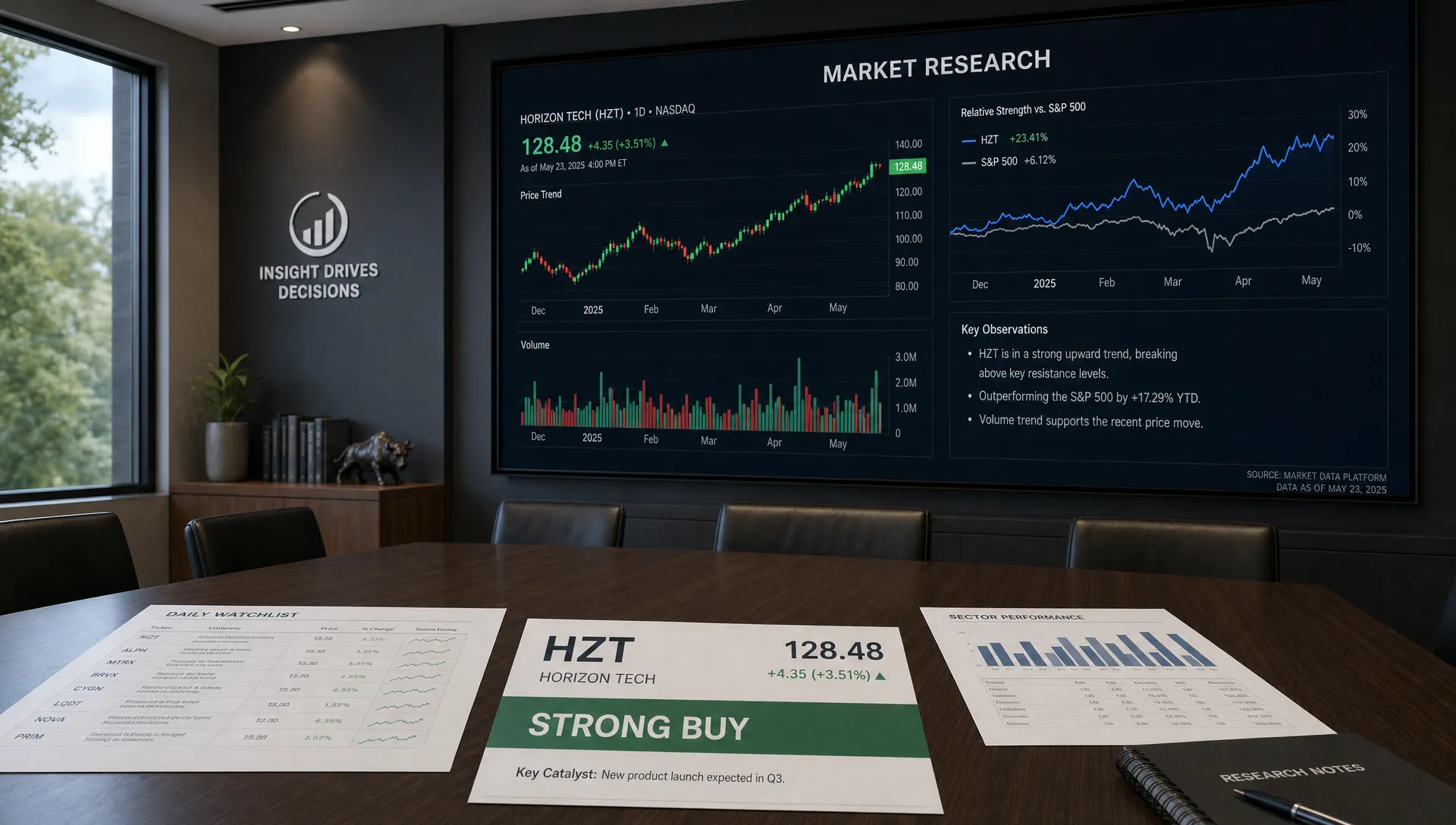
A smarter trend following entry is not the earliest possible buy. It is the point where the trend is strong enough to matter, but not so extended that your risk becomes hard to control.
That distinction matters because many investors use trend following backward. They see a stock up 25 percent, assume the move confirms the thesis, then enter with no clear invalidation level. The trade may still work, but the entry is not disciplined. It is excitement dressed up as momentum.
Stock trend following works best when your entry rules answer four questions before you buy:
- Is the stock in a trend, or just bouncing?
- Is the entry close enough to a logical stop?
- Is the trend supported by relative strength and participation?
- Are you buying before the trade becomes crowded, or after the easy money has already been made?
Research has repeatedly found that trend and momentum effects can persist across markets. For example, AQR’s paper on a century of evidence in trend-following investing reviews trend-following performance across asset classes over a long historical period. But evidence that trends can persist does not mean every breakout is worth chasing. Entry quality still determines whether the trade has a favorable setup or a poor risk profile.
What a Trend Following Entry Should Actually Do
A good entry is not a prediction. It is a rule-based decision to participate after the market has already shown enough strength to justify attention.
That is why trend following is different from bottom fishing. Bottom fishing asks, “Is this stock cheap enough to rebound?” Trend following asks, “Is demand already strong enough to create persistence?” The second question is more observable because it relies on price, volume, relative strength, and sometimes verified investor behavior.
A smart entry should do three things at once. It should confirm that the trend is real, keep the stop close enough to protect capital, and avoid buying when the stock is already stretched far beyond its normal movement range.
The best entries often feel slightly uncomfortable. You are not buying at the absolute low. You are buying after strength appears, but before the move becomes obvious to everyone watching the same chart.
If you want a broader strategy overview, Upside Invest has a separate guide to trend following strategies that still work in 2026. This article focuses more narrowly on entry rules, because the difference between a good trend trade and a frustrating one is often the first decision you make.
Rule 1: Separate the Trend Filter From the Entry Trigger
One of the most common mistakes in stock trend following is treating a trend filter as an entry signal.
A trend filter tells you whether a stock is eligible. An entry trigger tells you when to act.
For example, a stock trading above its 200-day moving average may be in a healthier long-term trend than one trading below it. But being above the 200-day average does not automatically mean today is a good entry. The stock might be extended, entering resistance, or moving on weak volume.
A simple structure is to use a two-step process:
| Decision | Purpose | Example |
|---|---|---|
| Trend filter | Decide whether the stock belongs on your watchlist | Price above the 100-day or 200-day moving average |
| Entry trigger | Decide whether today offers a tradeable entry | Breakout, pullback bounce, or reclaim of a key level |
| Risk rule | Decide whether the entry is worth taking | Stop distance fits your position size and loss limit |
This separation keeps you from buying every stock that looks strong. It also keeps you from ignoring a strong stock simply because it has already moved off the low.
Think of the filter as permission to pay attention. The trigger is the actual decision.
Rule 2: Prefer Breakouts That Clear a Real Level
Breakouts are popular because they are easy to see. The problem is that not every new high is meaningful.
A smarter breakout entry happens when the stock clears a level that other investors are likely watching. That can be a prior high, a multi-week base, a consolidation range, or a level where the stock failed multiple times before. The more visible the level, the more likely a breakout can force action from sidelined buyers, short sellers, or underweight investors.
But the breakout should not be judged by price alone. Ask whether the move has enough confirmation. Is volume expanding compared with recent sessions? Is the stock outperforming its sector or the broader market? Is the breakout happening after a controlled base, or after a near-vertical run?
A breakout from a tight range after weeks of quiet accumulation is usually cleaner than a breakout that comes after five consecutive large green candles. The first suggests pressure is building. The second may suggest late buyers are rushing in.
For more detail on the tools traders use to judge these setups, see Upside Invest’s guide to technical trend indicators traders actually use. Indicators are not magic, but they can help you define strength, distance, and confirmation more consistently.
Rule 3: Use Pullback Entries Only When the Trend Is Still Intact
Pullback entries can offer better risk to reward than breakouts because you are buying closer to support. But they also create a trap: not every dip in a former leader is a buy.
A pullback entry works best when the stock is correcting within an existing uptrend, not breaking that trend. The difference is visible in the structure.
In a healthy pullback, the stock may drift toward a rising moving average, hold above a prior breakout area, or make a higher low. Selling pressure often fades as the pullback develops. In a damaged trend, the stock slices through support, fails to reclaim key levels, and starts underperforming peers.
The smarter rule is simple: buy pullbacks only when the stock is still proving buyers are in control.
That might mean waiting for a reversal candle, a reclaim of the 20-day or 50-day moving average, or a move back above the prior day’s high after testing support. The exact trigger matters less than consistency. You want the market to show that the pullback is ending before you commit capital.
Rule 4: Avoid Entries That Are Too Far From Your Stop
A trend can be real and still offer a bad entry.
This is where many investors get hurt. They correctly identify the leading stock, but they buy it so far from any logical support level that the position becomes emotionally impossible to manage. A normal pullback then feels like a crisis.
Before entering, define the level that proves your trade is wrong. That might be a failed breakout level, a recent swing low, or a close below a moving average. Then calculate the distance from your entry to that invalidation point.
If the stop is too far away, you have three choices. Wait for a better entry, reduce your position size, or skip the trade. What you should not do is move the stop closer just to make the math work. That usually places your exit at a random level where normal volatility can shake you out.
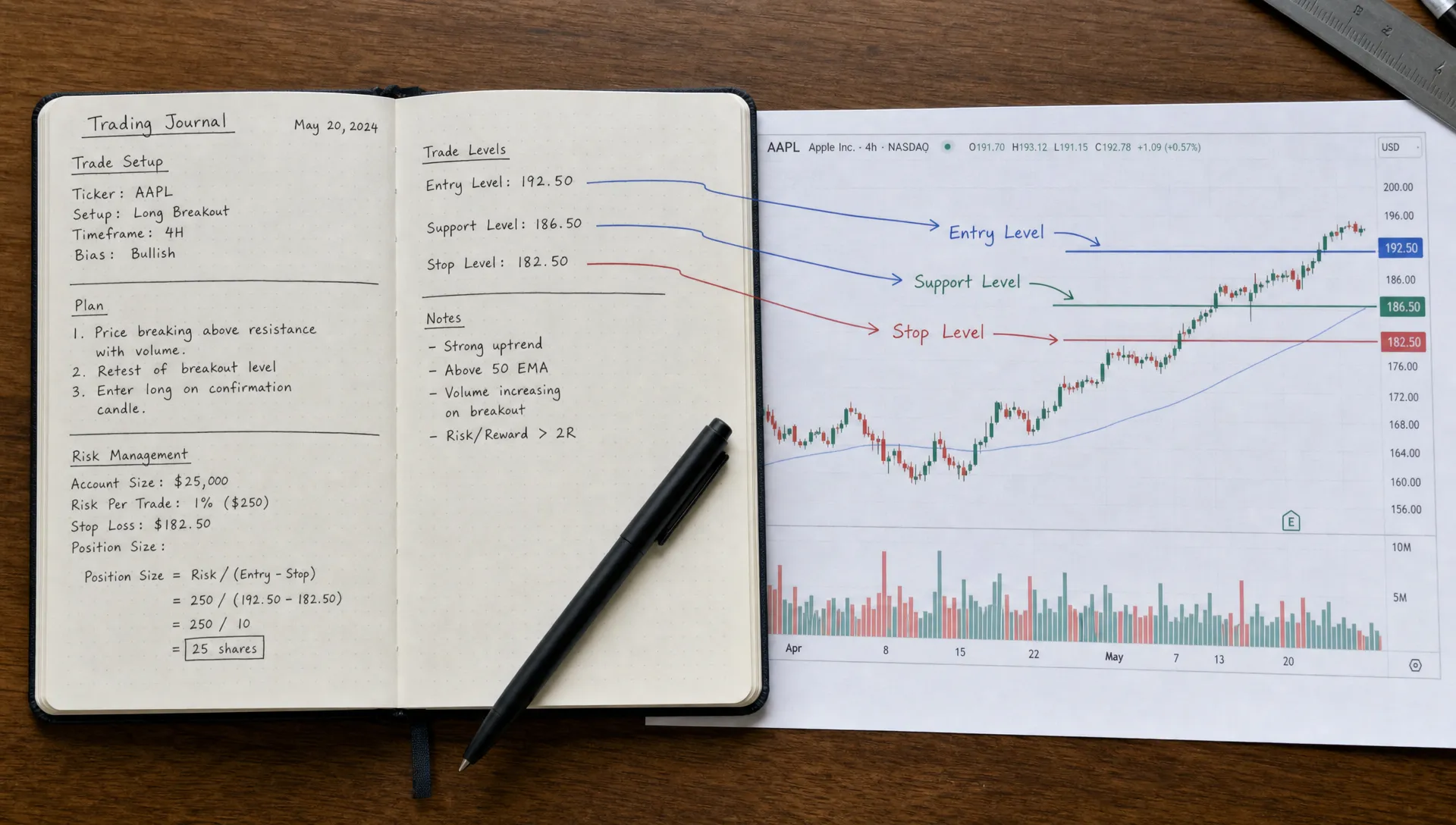
A practical way to avoid chasing is to compare the entry price with the stock’s average true range, often called ATR. If a stock has moved multiple ATRs above its base or moving average, the odds of a pullback can rise. That does not mean the stock must fall. It means your entry has less margin for error.
Rule 5: Confirm Relative Strength Before You Enter
A trend following setup is stronger when the stock is not just rising, but outperforming relevant alternatives.
Relative strength answers an important question: is this stock attracting capital faster than its peers, sector, or benchmark? A stock that is up 10 percent while its sector is down 2 percent is sending a different message than a stock that is up 10 percent because everything in the market is bouncing.
You can compare the stock against the S&P 500, its sector ETF, or a basket of direct competitors. The goal is not to create a complicated model. The goal is to avoid buying stocks that only look strong because the entire market is temporarily rising.
Relative strength is especially useful during market rotations. A stock that holds near highs while the index pulls back may be showing institutional demand. If it breaks out when the market stabilizes, the entry often has better support than a stock that simply follows the index upward.
This is also where ownership and portfolio data can improve your read. Price tells you what happened. Ownership behavior can help you understand who may be participating. Upside Invest’s article on stock ownership data every investor should track explains how signals like institutional holdings, insider ownership, float, and short interest can add context to price action.
Rule 6: Look for Participation, Not Just Price Movement
A stock can move higher for many reasons. A single news headline, a low-float squeeze, a sector sympathy move, or a temporary liquidity gap can all create price strength. Smarter entries look for signs that the move has participation behind it.
Participation can show up in several ways. Volume expands on up days and contracts on pullbacks. More stocks in the same industry begin acting well. The stock holds gains after a catalyst instead of fading. Verified investors, funds, or high-performing portfolios may begin adding exposure.
No single signal is enough on its own. The goal is to stack evidence. A breakout with relative strength, volume expansion, sector support, and improving ownership behavior is usually more compelling than a breakout that only has a sharp one-day price move.
This is where community benchmarking can help. When you can compare your portfolio against verified investor holdings, you can see whether a trend is isolated hype or part of a broader allocation shift. You still need your own rules, but you are no longer reading price action in a vacuum.
Rule 7: Scale Into Strong Trends Instead of Demanding a Perfect Entry
Many investors miss good trends because they wait for the perfect entry. Others enter all at once and panic on the first pullback.
Scaling can solve both problems. Instead of treating the entry as a single moment, you treat it as a process. You might start with a partial position on the breakout, add if the stock holds the breakout level, and add again if the trend continues with healthy consolidation.
This approach has two benefits. First, it reduces the pressure to be exactly right on the first buy. Second, it forces the market to confirm your thesis before you increase exposure.
The key is to define adds before the trade begins. Do not add simply because the stock is down and you want to lower your average cost. In trend following, adding should usually happen after confirmation, not after damage.
A clean scale-in plan might include an initial entry, a confirmation add, and a final add only if the stock continues to outperform. If the first entry fails, the loss stays manageable.
Rule 8: Build an Entry Checklist You Can Repeat
Great entries come from repeatable decision-making, not from staring harder at charts.
That kind of process thinking applies outside investing too. Service businesses often improve when they replace scattered notes and manual workflows with one operating system, which is the idea behind pool service software for scheduling, field operations, and billing. Investors need a similar mindset for entries: one clear workflow that keeps decisions consistent instead of fragmented across watchlists, alerts, social posts, and gut feelings.
Your checklist does not need to be complicated. It should be short enough to use before every trade and strict enough to stop impulsive entries.
A practical stock trend following entry checklist might ask:
- Is the stock above my chosen long-term trend filter?
- Is the entry based on a breakout, pullback reclaim, or another defined trigger?
- Is the stock outperforming its benchmark or sector?
- Is the entry within an acceptable distance from my invalidation level?
- Is volume or participation improving?
- Is the position size based on risk, not conviction?
- Do I know what would make me exit before I enter?
If you cannot answer these questions before buying, the setup may not be ready. More importantly, you may not be ready.
Common Entry Mistakes to Avoid
The first mistake is buying a stock simply because it appears on a trending list. A trending list can be a source of ideas, but it is not an entry system. By the time a stock is widely visible, the risk may already be elevated.
The second mistake is ignoring the market regime. Breakouts are more likely to work when the broader market supports risk-taking. In weak markets, even strong stocks can fail quickly because investors sell winners to raise cash.
The third mistake is using the same entry rule for every stock. A mega-cap stock, a small-cap growth stock, and a volatile crypto-related equity do not behave the same way. Your rules can be consistent, but your volatility assumptions must adjust.
The fourth mistake is entering without a planned exit. Trend followers do not need to know exactly how high a stock can go, but they do need to know what invalidates the trade. Without that, the entry becomes an opinion instead of a system.
How Upside Invest Helps With Smarter Trend Entries
Trend following is easier when you can combine price action with real investor behavior. Upside Invest helps retail investors compare portfolios, view verified investor holdings, track trends and momentum, and learn from anonymous community benchmarks.
That does not replace your rules. It makes your rules more informed.
For example, if a stock is breaking out and also appearing more often in the portfolios of verified outperformers, that may strengthen your watchlist priority. If a stock is trending but high-performing investors are reducing exposure, that may encourage more caution. Either way, you gain context beyond the chart.
The goal is not to copy other investors blindly. It is to understand where capital is moving, how your own allocation compares, and whether your entries align with broader evidence.
Frequently Asked Questions
What is the best entry rule for stock trend following? There is no single best rule for every investor, but a strong approach is to combine a trend filter, a defined trigger, relative strength confirmation, and a risk rule. This prevents you from buying strength without knowing where the trade is wrong.
Should I buy breakouts or pullbacks? Both can work. Breakouts may catch momentum earlier, while pullbacks can offer better risk control. The smarter choice depends on volatility, market conditions, and whether the stock is still showing clear relative strength.
How do I avoid chasing a trending stock? Define your stop before entering and measure how far the entry is from that level. If the distance is too large for your risk tolerance, wait for a base, pullback, or tighter setup.
Can trend following work for long-term investors? Yes, but the rules usually need wider filters and longer holding periods. Long-term investors may use monthly trends, 200-day moving averages, or relative strength rankings instead of short-term chart triggers.
Do I need technical indicators to follow stock trends? You do not need many indicators. A few practical tools, such as moving averages, breakout levels, relative strength, volume, and ATR, are often enough to create disciplined entry rules.
Make Your Entries More Evidence-Based
Smarter entries come from rules, context, and patience. Before buying the next strong-looking stock, ask whether the trend is confirmed, whether the entry is close to a logical invalidation level, and whether investor behavior supports the move.
Upside Invest gives you a private way to compare your portfolio, see verified investor holdings, track momentum, and benchmark your decisions against real portfolios. Use it to turn trend following from a reaction into a repeatable investing process.