Compare ETF Portfolios Before You Add Another Fund
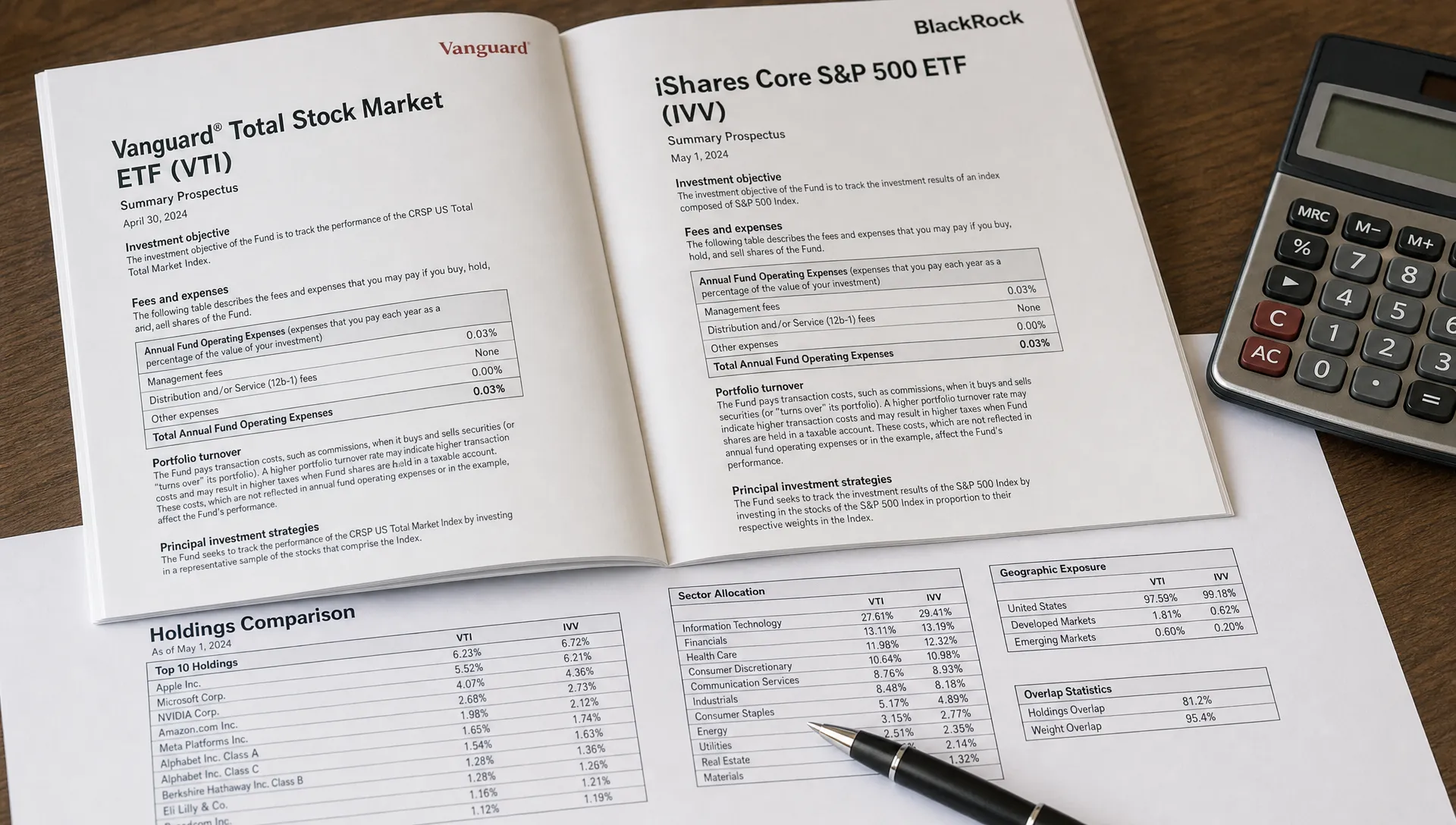
Adding another ETF can feel like a small, harmless decision. One fund gives you more dividend exposure, another adds artificial intelligence, another fills an international gap. But before you compare ETF portfolios, you may not know whether the new fund improves diversification or simply adds a different wrapper around companies you already own.
For retail investors, ETFs are attractive because they are simple to buy, usually tax efficient and often low cost. The hard part is not finding more funds. The hard part is deciding which fund actually changes your portfolio in a useful way. A new ETF should solve a specific problem, such as reducing concentration, improving global exposure, lowering fees or giving you access to an asset class you do not already own.
How to compare ETF portfolios before adding another ticker
The first step is to stop evaluating the new fund in isolation. A strong ETF can still be a poor addition if it duplicates your current holdings, increases your exposure to the same risk factor or pushes your allocation away from your plan.
Start with a simple question: what job is this ETF supposed to do? If you cannot answer that in one sentence, you are probably reacting to a trend, a recent return chart or a fund name rather than making a portfolio decision.
ETF labels can be useful, but they are not enough. In other industries, labels identify what something is, who made it and how it should be handled, much like custom woven labels do for apparel and branded products. ETF labels work differently. “Growth,” “quality,” “dividend” and “innovation” can mean very different things depending on the index methodology, weighting rules and holdings.
That is why the real comparison begins underneath the label.
Look through the fund name to the actual holdings
Two ETFs with different names can own many of the same stocks. A total market fund, an S&P 500 fund, a large cap growth fund and a technology ETF may all give you meaningful exposure to the same mega cap companies.
When you compare ETF portfolios at the holdings level, focus on weights rather than just names. Owning Apple in two funds is not automatically a problem. Owning it across five funds at large weights may be a sign that your portfolio is less diversified than it appears.
A useful holdings review should answer four questions:
- Which individual positions appear across multiple ETFs?
- How much weight do the top 10 holdings represent after combining funds?
- Are you adding new companies or mostly increasing existing positions?
- Does the new ETF make your portfolio more balanced or more concentrated?
If this sounds familiar, it is because overlap is one of the easiest risks to underestimate. Upside has a deeper guide on how to compare funds overlap without missing risk, which is especially helpful if you own several index funds with similar market cap exposure.
Compare exposure, not just ticker overlap
Ticker overlap matters, but it does not capture the full picture. Some ETFs hold different securities that behave similarly because they are tied to the same sector, factor, geography or macroeconomic driver.
For example, a semiconductor ETF and a broad technology ETF may not have identical holdings, but both can be sensitive to AI capital spending, chip demand and growth stock valuations. A U.S. dividend ETF and a low volatility ETF may both lean toward mature companies in defensive sectors.
A practical way to compare ETF portfolios is to group exposure by what could actually move returns. This helps you see whether the new fund adds a new source of return or doubles down on an existing one.
| Comparison lens | What it reveals | Why it matters |
|---|---|---|
| Holdings overlap | Shared companies across funds | Shows direct duplication |
| Sector exposure | Weight in areas like technology, healthcare and energy | Reveals hidden concentration |
| Factor exposure | Growth, value, momentum, quality, size or volatility tilt | Explains why funds may behave similarly |
| Geography | U.S., developed international, emerging markets or single country exposure | Prevents accidental home bias |
| Asset class | Stocks, bonds, commodities, crypto or alternatives | Checks whether the portfolio is truly diversified |
| Market cap | Large, mid, small or micro cap exposure | Shows sensitivity to different company sizes |
The goal is not to remove every overlap. Broad market investing naturally creates overlap if you combine funds. The goal is to know what you are choosing.
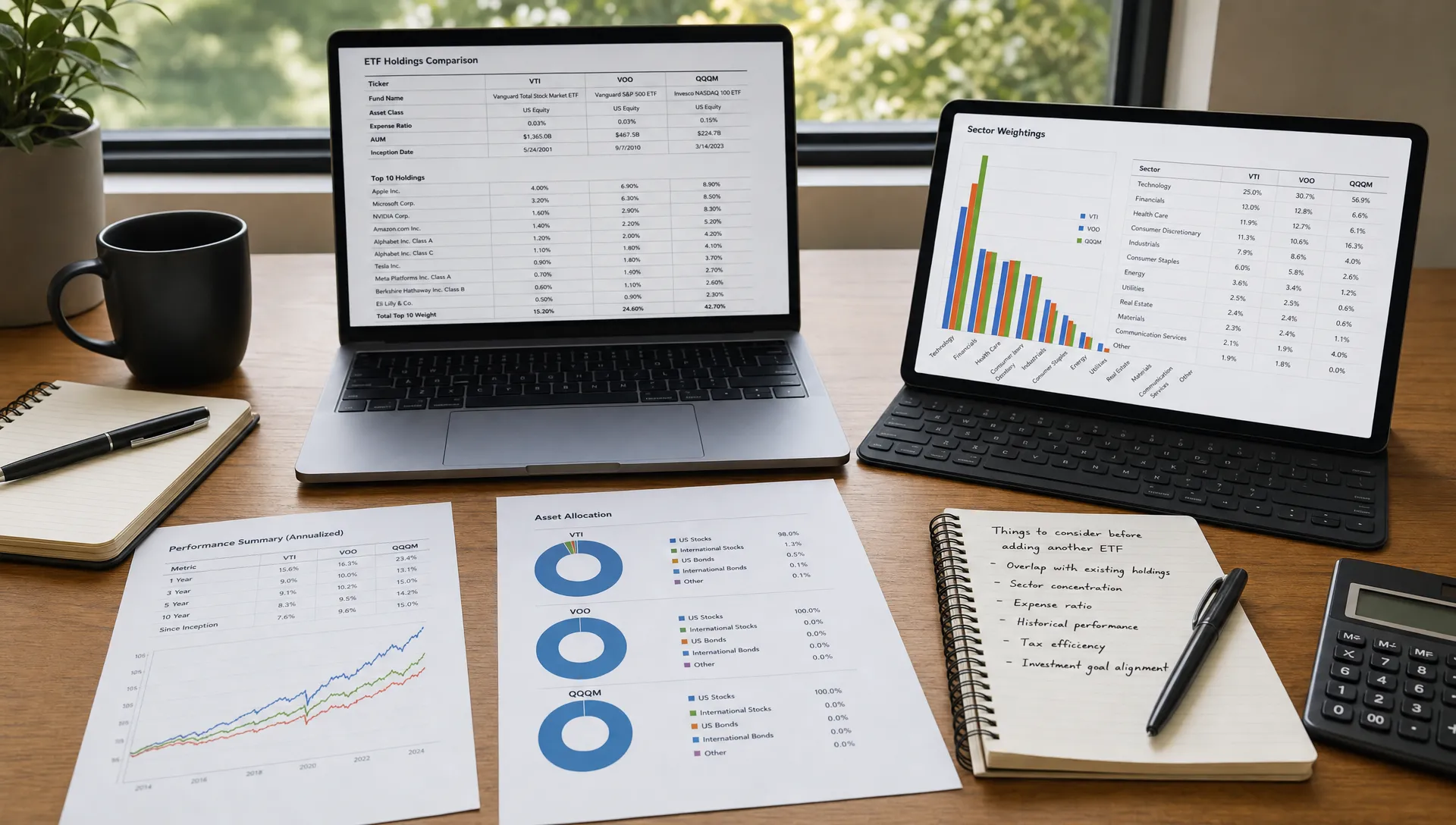
Check whether the new ETF changes your risk profile
A fund can look diversified because it owns hundreds of securities, yet still add risk to your portfolio. This happens when the fund is concentrated in one sector, tracks a narrow theme or owns assets that become highly correlated during market stress.
Look beyond standard deviation alone. Useful risk checks include maximum drawdown, downside capture, beta versus your benchmark and how the ETF performed in different market regimes. If you are comparing bond ETFs, also review duration, credit quality and yield source. A higher yield may come from longer duration, lower credit quality or both.
The best time to compare ETF portfolios is before a market move exposes the risk you did not realize you had. A thematic ETF may look appealing after a strong run, but if it increases your dependence on the same growth stocks already driving your portfolio, the downside can arrive faster than expected.
Upside’s guide to ETF insights that actually improve portfolio decisions covers this broader evaluation process, including structure, liquidity, cost and performance drivers.
Do not let low fees hide poor fit
Expense ratios matter, especially over long holding periods. All else equal, lower costs improve the odds that more of the fund’s return reaches you. But “cheap” is not the same as “useful.”
A low cost ETF that duplicates your current positions may add complexity without improving expected results. A higher cost ETF might be justified if it gives you exposure you cannot easily get elsewhere, although that hurdle should be high. The right question is not “Is this ETF cheap?” but “Is this ETF worth its role in my portfolio?”
Liquidity also matters. Review bid ask spreads, average trading volume and assets under management. Large, heavily traded ETFs often have tighter spreads, though underlying holdings still matter. An ETF holding thinly traded securities can face liquidity pressure even if the ETF itself trades frequently.
For long term investors, a few basis points of fees may matter less than adding a fund that shifts the entire portfolio toward an unintended bet.
Compare the new ETF against your benchmark and your plan
Every ETF addition should be judged against your target allocation. If your plan is 70 percent stocks and 30 percent bonds, a new equity ETF may push you further from that target unless it replaces another stock fund. If your target includes international diversification, another U.S. fund may increase home bias.
When you compare ETF portfolios, use a benchmark that reflects your actual goal. A growth heavy ETF may outperform a balanced benchmark during a bull market, but that does not mean it belongs in a moderate risk portfolio. The comparison should match the job you are hiring the ETF to do.
Good benchmark questions include:
- Is this ETF meant to beat, complement or simply track a benchmark?
- Does it reduce tracking error or increase it intentionally?
- Would I still want this fund if its recent performance looked average?
- Which existing holding would this replace, if any?
This is where a portfolio comparison mindset helps. Instead of asking whether an ETF is “good,” ask whether your combined portfolio is better after adding it. Upside’s article on how to compare investment portfolios without focusing only on returns is useful if you want a more complete framework for judging fit.
Watch what verified investors hold, but do not copy blindly
Seeing what other investors own can be valuable, especially when the data reflects real portfolios rather than social media opinions. It can help you spot common allocations, emerging themes and funds used by investors with similar risk profiles.
Still, copying another investor’s ETF mix without context can create problems. Their time horizon, tax situation, income needs and tolerance for drawdowns may be very different from yours. A concentrated growth allocation may be rational for one investor and reckless for another.
This is where Upside Invest is designed to help. Upside shows verified investor holdings, portfolio comparisons, trend and momentum data, top performer rankings, return and Sharpe metrics, anonymous profiles and alerts on investor moves. That kind of visibility can turn community behavior into research input rather than a copy trade.
Use other portfolios to generate questions, not automatic buys. If many strong performers hold a certain ETF, ask why. Is it cost, exposure, liquidity, momentum or a specific market view? Then test whether that reason applies to your own allocation.
A simple pre-buy checklist
Before adding an ETF, slow the decision down. You do not need a complicated institutional model, but you do need a repeatable process.
Use this checklist before you place the trade:
- Define the ETF’s role in one sentence.
- Review the top holdings and weighted overlap with your existing funds.
- Check sector, factor, geography and asset class exposure.
- Compare costs, liquidity and structure against similar ETFs.
- Measure how the fund changes your overall allocation and risk.
- Decide whether it replaces an existing holding or adds a new sleeve.
- Review whether verified investor behavior supports or challenges your thesis.
The point is not to make ETF investing difficult. The point is to avoid building a portfolio one attractive ticker at a time, only to discover later that you own several versions of the same bet.
Frequently Asked Questions
How often should I compare ETF portfolios? Review your ETF mix at least quarterly or whenever you add a new fund, make a large contribution or rebalance. You do not need to react to every short term move, but you should know when your exposure has drifted from your plan.
Is ETF overlap always bad? No. Some overlap is normal, especially if you own broad market funds. It becomes a problem when overlap creates unintended concentration or makes several funds behave like one large position.
Should I compare ETFs by past performance? Past performance can provide context, but it should not be the main deciding factor. Review holdings, exposure, fees, liquidity, risk metrics and benchmark fit before relying on return charts.
Can I compare ETF portfolios if I also own stocks or crypto? Yes. In fact, you should. A technology ETF may overlap with individual stocks you already own, and a crypto allocation may change your overall volatility even if it sits outside your ETF sleeve.
Make your next ETF decision with better context
The easiest ETF to buy is often the one with the best recent chart or the most convincing theme. The better ETF is the one that improves your total portfolio after costs, overlap, exposure and risk are accounted for.
Before you add another fund, use Upside Invest to compare your allocation with verified investor portfolios, monitor what top performers are holding and see how your current mix stacks up across returns, Sharpe metrics, sectors and themes. ETF research gets much clearer when you can see both your own exposure and how real investors are positioned, privately and anonymously.