How to Test a Stocks With Biggest Upside Case Before Buying
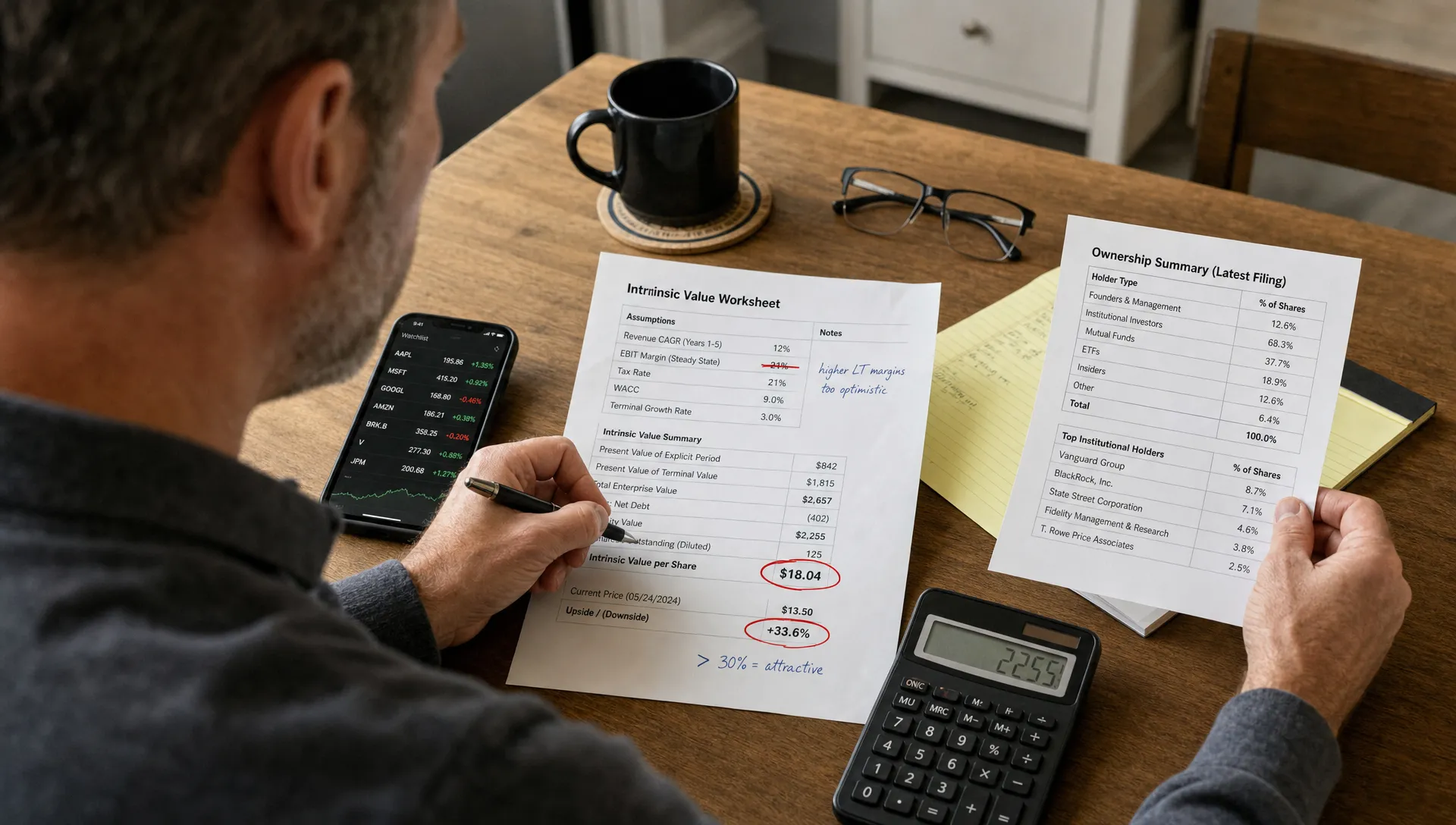
A stocks with biggest upside idea can be exciting, but excitement is not a thesis. Before buying, you need a way to test whether the upside is real, whether the market has already priced it in and whether the downside is tolerable if you are wrong.
The goal is not to prove that a stock can go up. Almost any stock can sound attractive if you only read the bull case. The goal is to build a case that can survive pressure: valuation checks, catalyst timing, ownership behavior, risk limits and comparison against better alternatives.
This article gives you a practical pre-buy framework for testing a high-upside stock idea without turning the process into a spreadsheet marathon.
Build a stocks with biggest upside case you can disprove
The first test for stocks with biggest upside is whether you can explain the case in one clear sentence. If the thesis needs ten moving parts to work, it may still be valid, but it is harder to track and easier to rationalize after the facts change.
A strong thesis usually has four parts: why the market is mispricing the asset, what could make the market change its view, how much the stock could be worth if that happens and what would prove the thesis wrong.
A weak thesis sounds more like this: “The company is innovative, the chart looks strong and people are talking about it.” Those details may be useful inputs, but they are not enough. Innovation without unit economics, momentum without risk control and attention without durable demand can disappear quickly.
Before you buy, write down three short statements:
- The market is underestimating this specific factor.
- The next evidence point should appear by this date or event.
- I will reconsider the position if this fact changes.
That turns a vague idea into something testable.
Separate upside from popularity
In stocks with biggest upside research, popularity can be useful, but it should never be confused with undervaluation. A stock can be widely discussed because it is genuinely improving, because traders are chasing momentum or because a simple story is spreading faster than the facts.
Start by identifying the source of potential upside. The more specific you are, the easier it becomes to know what data to monitor.
| Source of upside | What to verify | Common trap |
|---|---|---|
| Earnings growth | Revenue quality, margins, guidance and backlog | Assuming growth automatically creates shareholder value |
| Multiple expansion | Peer valuation, rate sensitivity and sentiment | Paying for a re-rating that already happened |
| Turnaround | Cash runway, management execution and balance sheet | Mistaking survival for recovery |
| Product cycle | Adoption, retention and pricing power | Overweighting hype before demand is proven |
| Asset value | Sum-of-parts, hidden assets and liquidity | Ignoring the time it may take to unlock value |
A stock can score well in more than one category, but do not let the list become a wish list. Pick the primary source of upside, then test the case around that driver.
Quantify the bull case, base case and bear case
For stocks with biggest upside, a single price target is often misleading. A target price tells you what could happen, but not how fragile the path is. You need at least three scenarios: bull, base and bear.
The bull case should describe what happens if the key upside driver works. The base case should reflect reasonable execution without heroic assumptions. The bear case should show what happens if the market’s concerns are mostly right.
| Scenario | Main question | What to estimate |
|---|---|---|
| Bull case | What if the key upside driver works? | Revenue, margins, valuation multiple and target price |
| Base case | What if the company performs acceptably? | Normalized earnings, cash flow and fair value |
| Bear case | What if the thesis is wrong or early? | Downside price, dilution risk and balance sheet stress |
Then compare reward to risk. A stock with 80 percent theoretical upside and 70 percent realistic downside may not be attractive unless the probability-weighted outcome is compelling. A stock with 40 percent upside and 15 percent downside may be cleaner if the evidence is stronger.
The best cases are not just big. They are asymmetric.
Demand catalysts with dates, not stories
A stocks with biggest upside thesis needs a path from “undervalued” to “recognized.” Without a catalyst, you may be right and still wait for years while your capital sits in a low-return position.
Good catalysts are observable. They include earnings reports, product launches, regulatory decisions, cost-cutting milestones, index inclusion, debt refinancing, investor days, insider buying or a visible shift in ownership. Weak catalysts are vague phrases like “the market will wake up” or “sentiment should improve.”
Use a learning loop rather than a one-time verdict. Good investing research has something in common with adaptive education: progress comes from feedback, reflection and revision. For example, Colegio Pioneros Costa describes a personalized learning model built around feedback, responsibility and mastery, a useful reminder that better decisions come from testing assumptions instead of defending them.
Apply that mindset to investing. After each catalyst, ask what changed. Did the company confirm your thesis, partially weaken it or contradict it? If the answer is unclear, you may need better evidence before adding to the position.
Validate ownership and real investor behavior
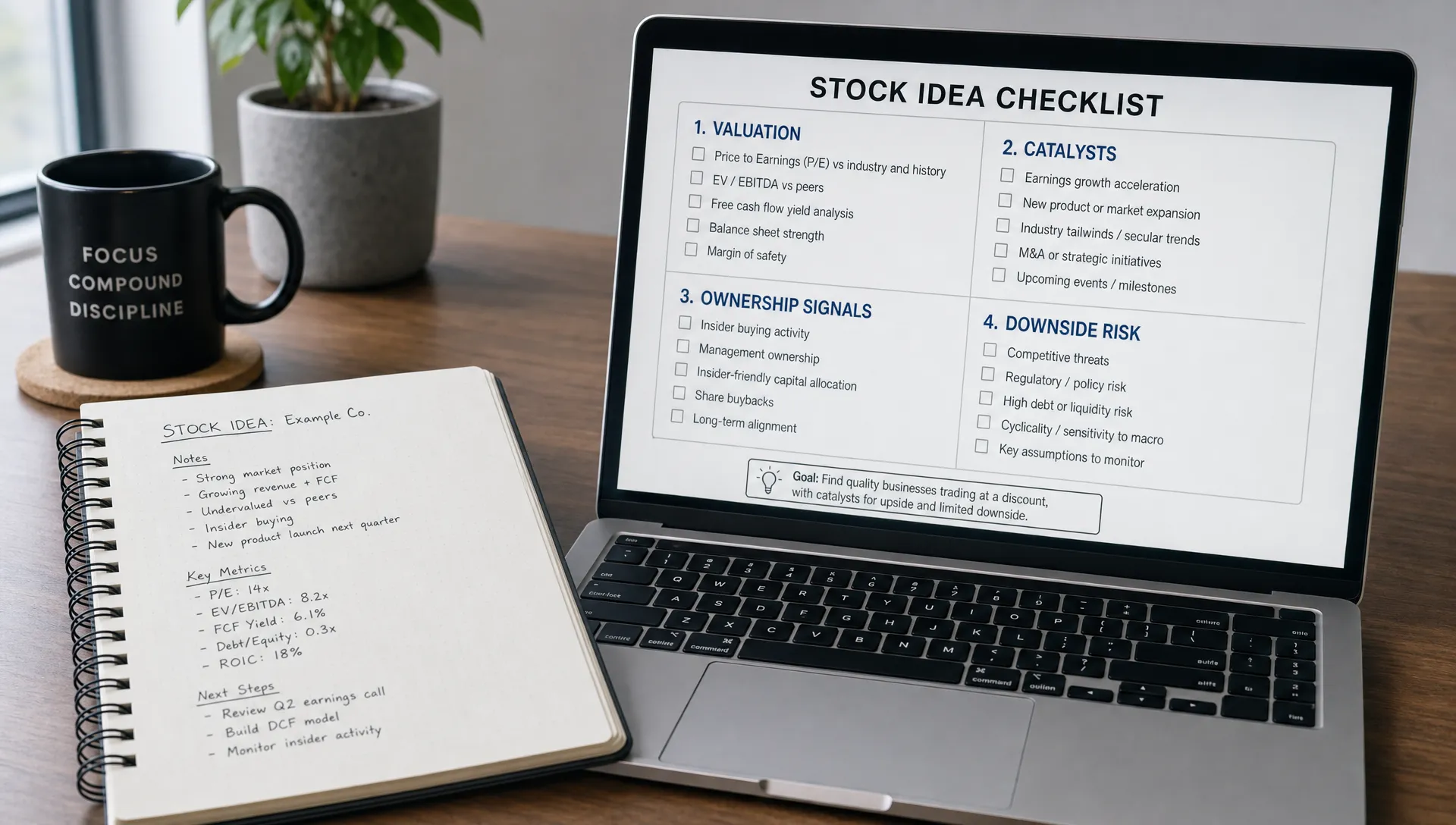
When testing stocks with biggest upside, ownership data can help you see whether conviction is building or fading. Price action tells you what the market did. Ownership behavior can help you understand who may be behind the move and whether stronger holders are accumulating.
Start with the basics: insider ownership, institutional holders, major funds and retail investor interest. Each group has different incentives. Insiders may know the business well, but their ownership can be locked up or symbolic. Institutions may provide credibility, but crowded ownership can create selloff risk. Retail interest can reveal emerging demand, but it can also signal hype.
A useful approach is to build an ownership profile for any stock before you buy. That gives you a baseline for later comparison. If the stock rises but quality holders are selling, the move may be weaker than it looks. If the stock is flat while informed or high-conviction holders are adding, the setup may deserve more attention.
Upside Invest is designed around this kind of behavioral context. Verified investor holdings, anonymous profiles, top performer rankings and portfolio comparison tools can help retail investors see what other investors are actually buying and holding, not just what people say they like.
Check downside before you optimize entry
The cleanest stocks with biggest upside usually have a downside plan before they have an entry plan. If you cannot define what losing looks like, you may size the position too aggressively or hold too long after the thesis breaks.
Separate business risk from stock risk. Business risk asks whether the company can execute, finance itself and protect its competitive position. Stock risk asks whether the valuation, chart and ownership setup leave room for disappointment.
| Risk test | Question to ask | Why it matters |
|---|---|---|
| Balance sheet | Can the company survive a bad year? | Upside does not help if dilution or distress arrives first |
| Valuation floor | What supports the stock if growth slows? | A weak floor can turn a miss into a large drawdown |
| Position size | How much can I lose without changing behavior? | Oversizing leads to emotional decisions |
| Thesis invalidation | What fact would make me sell? | Predefined rules reduce rationalization |
A simple rule helps: if the bear case would force you to abandon your broader investing plan, the position is too large. High-upside ideas should improve your portfolio’s return potential, not make the whole portfolio dependent on one outcome.
Compare the idea against alternatives
If a stocks with biggest upside case looks strong in isolation, compare it against other opportunities before buying. Opportunity cost is real. Capital committed to one idea cannot be used for another idea with better evidence, cleaner timing or lower downside.
Use the same framework across candidates: source of upside, catalyst quality, scenario asymmetry, ownership behavior and risk. This keeps you from giving your favorite idea special treatment.
Context also matters. A 30 percent upside target may be attractive in a stable compounder, but less attractive in a speculative turnaround with financing risk. A 100 percent upside target may be meaningless if it depends on perfect execution. If you want a deeper framework for this part of the process, Upside Invest has a guide on how to measure investment upside with better context.
The point is not to find the highest possible target price. The point is to find the best combination of upside, probability, timing and risk.
Use price action as confirmation, not permission
A stocks with biggest upside setup does not require buying the second you find it. Timing still matters, especially when the stock is volatile or already extended.
Price action can confirm that other investors are beginning to agree with your thesis. It can also warn you that the trade is crowded, stretched or vulnerable to a reversal. The key is to decide in advance what kind of entry fits the setup.
Some investors prefer breakouts when a catalyst is near and volume confirms demand. Others prefer pullbacks when the long-term thesis is intact but short-term sentiment is weak. Neither approach is automatically superior. What matters is consistency between thesis, timeframe and risk control.
If your process uses trend confirmation, make sure your entry rule is separate from your thesis. A great company can still be a bad short-term trade if the entry is poor. Upside Invest’s article on stock trend following rules for smarter entries can help you structure that decision more clearly.
A pre-buy checklist for stocks with biggest upside
Before committing capital, run the idea through a final checklist. This should take minutes, not days, once your research is organized.
- Can I state the upside thesis in one sentence?
- Do I know the primary source of mispricing?
- Have I estimated bull, base and bear outcomes?
- Is there a catalyst with a date or observable milestone?
- Do ownership signals support the case or contradict it?
- Have I defined the fact that would invalidate the thesis?
- Is the position size small enough for the bear case?
- Is this idea better than my next-best alternative?
If you cannot answer several of these, the issue is not that the stock lacks potential. The issue is that the case is not ready. Watchlists exist for a reason. Sometimes the best decision is to track the evidence and wait for a cleaner setup.
Frequently Asked Questions
How much upside should a stock have before I buy? There is no universal threshold. A stock with 30 percent estimated upside can be attractive if the downside is limited and the probability is high. A stock with 150 percent theoretical upside can be unattractive if the assumptions are fragile.
What is the biggest mistake investors make with stocks with biggest upside? The biggest mistake is focusing only on the bull case. High potential returns are useful only when they are weighed against probability, timing, dilution risk, valuation and what could invalidate the thesis.
Should I buy before or after a catalyst? It depends on the evidence and risk. Buying before a catalyst can offer more upside, but it also carries more uncertainty. Buying after confirmation may reduce upside, but it can improve confidence if the price has not already moved too far.
Can ownership data really improve a stock thesis? Yes, if you use it as context rather than proof. Ownership changes can show whether certain investor groups are accumulating, selling or crowding into a trade. That can help you judge conviction and reversal risk.
Make the upside case measurable before you buy
Big upside is attractive, but measurable upside is more useful. The strongest ideas combine a clear mispricing, realistic scenarios, visible catalysts, supportive ownership behavior and a downside plan you can actually follow.
Upside Invest helps retail investors bring that context into one process with verified investor holdings, portfolio comparisons, trend tracking, return metrics, alerts and anonymous community benchmarking. Use it to test what other investors are doing, compare your portfolio against real behavior and make your next high-upside idea easier to evaluate before you buy.