Use Morningstar Investing Insights With Your Own Research
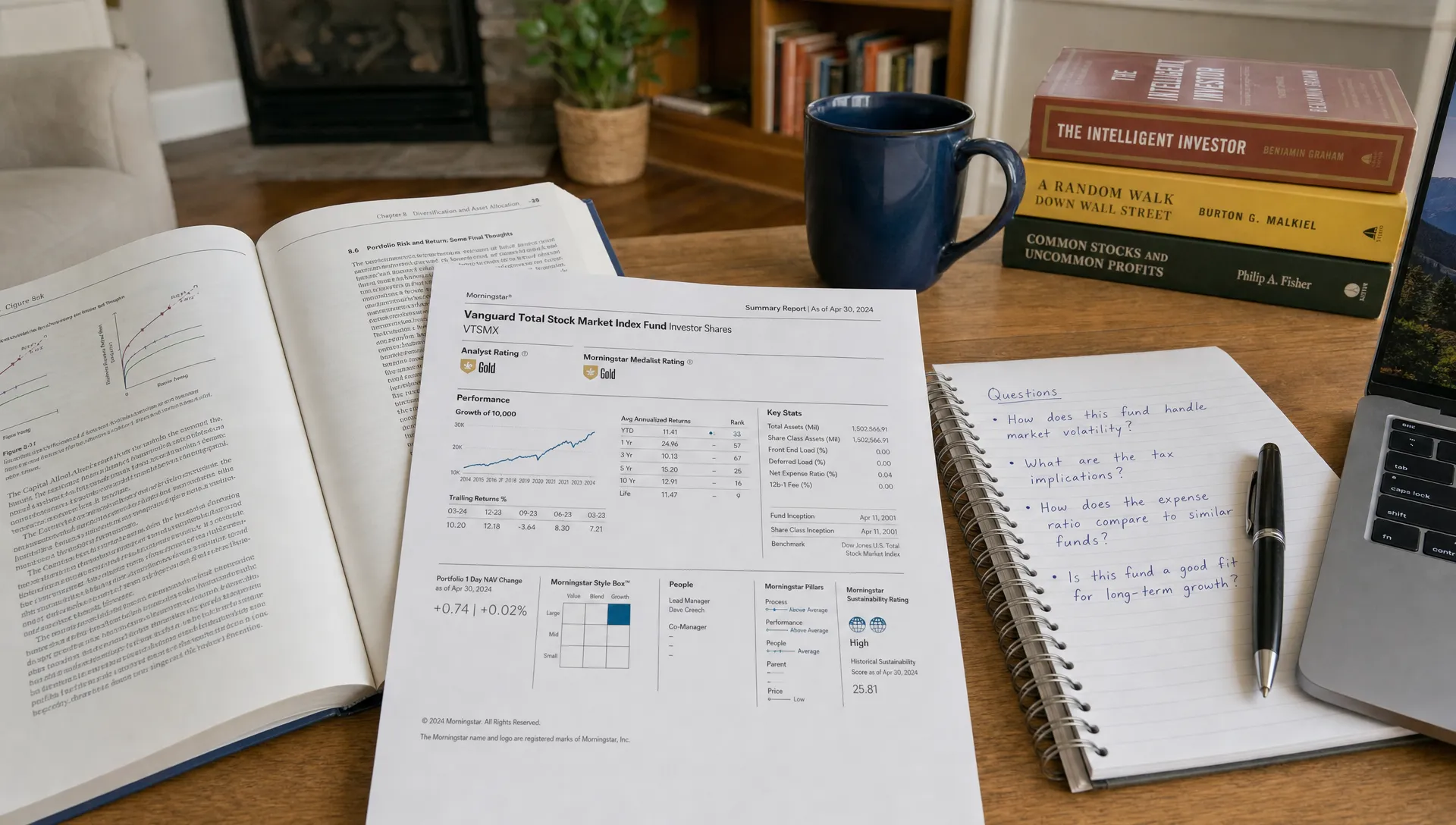
Morningstar can be a strong research companion for retail investors. Its ratings, analyst commentary, fund data, valuation estimates and portfolio tools can help you cut through noise and organize your thinking. The mistake is treating Morningstar investing insights as the final answer rather than a starting point for your own research.
A better approach is to use Morningstar to surface questions, then use your own process to decide whether an investment fits your goals, risk tolerance and existing portfolio. That distinction matters. A high rating, attractive fair value estimate or popular fund category can point you toward something worth studying, but it cannot tell you how much to buy, what to sell or whether the trade makes sense for your situation.
Morningstar Is a Research Input, Not a Substitute for Judgment
Morningstar is useful because it standardizes a lot of information investors need: historical performance, fees, portfolio holdings, valuation, fund categories, risk measures and analyst perspectives. For many retail investors, that structure is the main benefit. It helps you compare investments without starting from a blank page.
But every research platform has limits. Ratings summarize a point of view. Historical performance looks backward. Valuation estimates depend on assumptions. Fund categories can hide differences in holdings and strategy. Even an excellent piece of research is still a model of reality, not reality itself.
Your job is not to agree or disagree with Morningstar on instinct. Your job is to ask what the insight implies, what assumptions support it and whether those assumptions match your own thesis. If Morningstar says a stock trades below fair value, the next question is not “Should I buy?” It is “What has the market priced in, and do I have a reason to believe the market is too pessimistic?”
That shift turns third-party research into a decision tool rather than a shortcut.
Know What Each Morningstar Insight Is Actually Telling You
Different Morningstar data points answer different questions. Mixing them together can lead to bad conclusions. A fund’s star rating is not the same as a forward-looking analyst opinion. A stock’s economic moat rating is not the same as saying the stock is cheap. A fair value estimate is not a guarantee that the price will move there.
Use each signal for the job it was built to do.
| Morningstar insight | What it can help with | What you still need to research |
|---|---|---|
| Star rating | How a fund has performed on a risk-adjusted basis versus peers | Whether the strategy still fits current market conditions and your goals |
| Analyst or medalist rating | The analyst’s view of process, people, parent firm and potential | Whether you agree with the assumptions and time horizon |
| Fair value estimate | A reference point for valuation | The revenue, margin, growth and risk assumptions behind that value |
| Economic moat rating | The durability of a company’s competitive advantage | Whether the moat is strengthening, weakening or already priced in |
| Expense ratio and fee data | The cost drag on long-term returns | Whether the fund’s benefits justify the cost versus cheaper alternatives |
| Holdings and sector exposure | What you actually own inside a fund or portfolio | Overlap, concentration and whether the exposure duplicates what you already hold |
This is where many investors go wrong. They see a five-star fund and assume it is the best fund to buy today. In reality, the rating may reflect a period when the fund’s style was in favor. If market leadership changes, the same fund can lag even though nothing is “wrong” with it.
The same applies to stocks. A company with a wide moat can still be a poor investment if the price already assumes years of flawless execution. A low price-to-fair-value ratio can be attractive, but only if your research supports the assumptions behind that estimate.
Build a Two-Layer Research Process
A practical way to use Morningstar is to separate discovery from conviction.
The discovery layer is where Morningstar shines. You can screen for funds, compare categories, review stock valuation metrics, identify sectors that look expensive or cheap and find analyst commentary that frames the debate. This layer helps you decide what deserves more attention.
The conviction layer belongs to you. This is where you decide whether the idea is investable, what role it plays in your portfolio and what evidence would make you change your mind.
For an individual stock, your own research should cover the business model, balance sheet, competitive position, valuation, management behavior and major risks. Read recent filings, earnings transcripts and investor presentations. Look for what has changed, not just what sounds impressive. A stock can look cheap because investors misunderstand it, but it can also look cheap because the business is deteriorating.
For a fund or ETF, focus on holdings, concentration, fees, turnover, liquidity and overlap with your current positions. A fund with a strong rating may still add little value if it owns many of the same large-cap stocks you already hold elsewhere. If you are comparing ETFs specifically, it helps to go beyond the label and evaluate the underlying portfolio, as explained in Upside Invest’s guide to ETF insights that improve portfolio decisions.
The goal is not to out-research every analyst. It is to understand enough to know why you own something, what could go wrong and how it affects the rest of your portfolio.
Test Every Idea Against Your Existing Portfolio
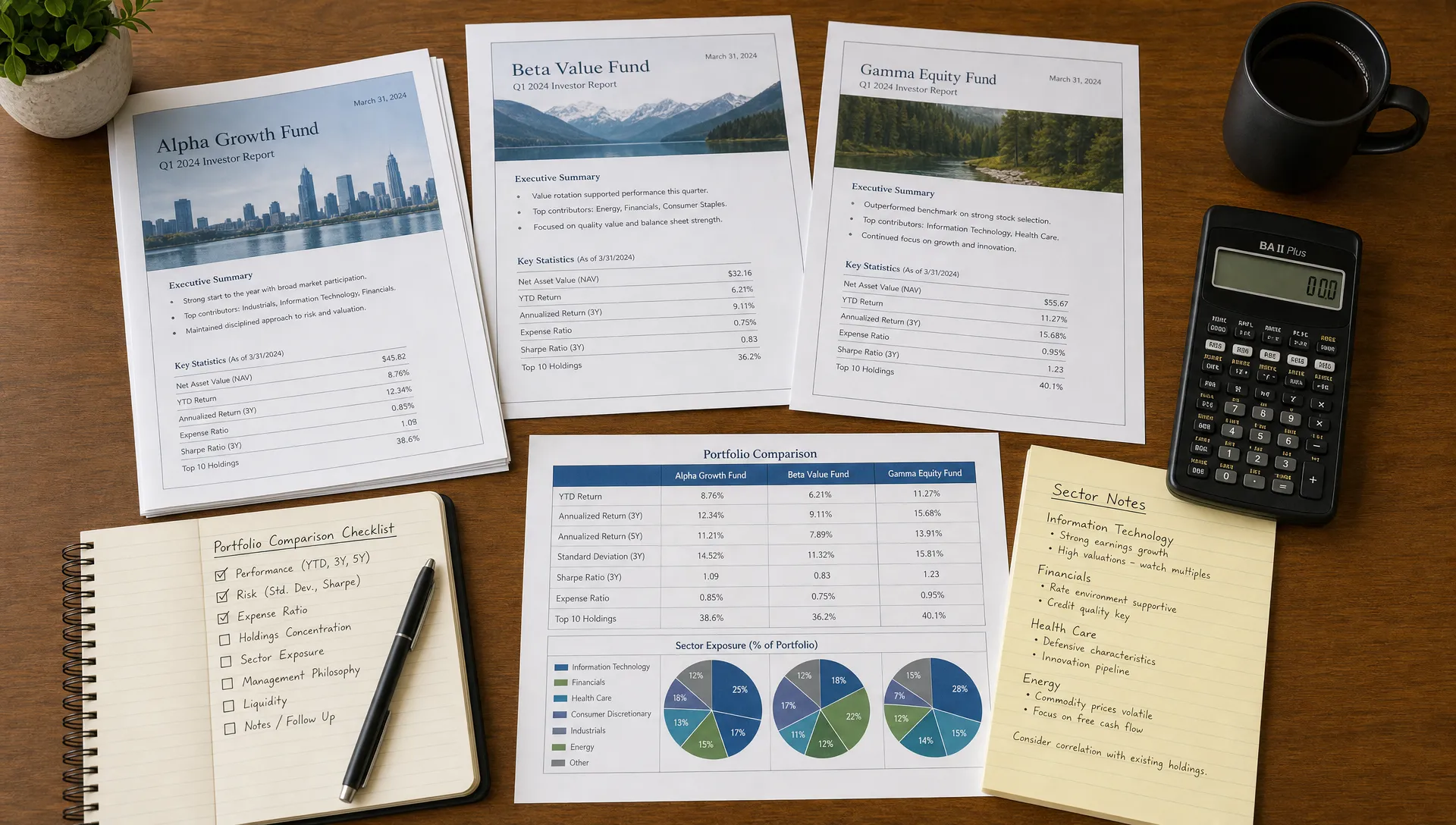
An investment can look good in isolation and still make your portfolio worse. This is one of the most common blind spots in retail investing. Morningstar might help you identify a high-quality fund or undervalued stock, but portfolio fit is a separate question.
Before acting on any insight, ask how the new position changes your allocation. Does it increase exposure to one sector, country, currency, factor or theme? Does it make your portfolio more dependent on interest rates, technology earnings, commodity prices or consumer spending? Does it reduce risk or simply add another version of a bet you already have?
This is where portfolio comparison becomes more useful than return comparison. Two portfolios can have similar performance but very different risk profiles. One may be diversified across sectors and asset classes, while the other may be quietly concentrated in the same handful of mega-cap stocks through multiple funds. Upside Invest covers this problem in more detail in its article on portfolio comparison tips that reveal hidden risk.
A simple test is to write down what would have to happen for the investment to disappoint. If that scenario would also hurt several other positions you own, the idea may be less diversifying than it appears.
Use Verified Investor Behavior as a Second Opinion
Morningstar can show you structured research and investment data. Your own work can test whether the thesis makes sense. A useful third layer is observing how other verified investors are positioned.
This does not mean copying someone else’s portfolio. Blindly following top performers is risky because you may not know their time horizon, tax situation, cash needs or tolerance for drawdowns. But verified portfolio behavior can add context that pure research platforms may not provide.
If many strong investors are increasing exposure to a sector that Morningstar research also suggests is attractively valued, that alignment may be worth studying. If the research looks bullish but verified investors with strong risk-adjusted records are reducing exposure, that does not automatically mean the thesis is wrong, but it should prompt better questions.
Upside Invest is built around this type of context: anonymous verified holdings, portfolio comparison, top performer rankings, trend tracking and risk metrics. Used alongside Morningstar, it can help you move from “What does the research say?” to “How are real investors positioned, and how does my portfolio compare?” For a broader framework, Upside Invest’s article on investing insights that improve better decisions explains why context matters more than collecting endless data points.
Avoid the Most Common Morningstar Research Mistakes
The biggest mistake is outsourcing conviction. Morningstar can inform your view, but it cannot carry the emotional weight of owning an investment through volatility. If you buy only because a rating looked good, you are more likely to sell at the wrong time when the rating changes, the price drops or the market narrative turns negative.
Another mistake is confusing quality with expected return. A high-quality business may be expensive. A strong fund manager may face a market environment that does not reward their style. A low-cost ETF may be efficient but still unsuitable if it concentrates your portfolio in an area you already own heavily.
Investors also tend to ignore time horizon. Morningstar research often involves assumptions that may take years to play out. If you need liquidity in six months, a long-term valuation gap is less relevant. The investment may be fundamentally attractive but personally inappropriate.
Finally, many investors fail to record their thesis. They remember the exciting part and forget the conditions that made the investment attractive in the first place. That makes it easier to rationalize losses, chase performance or change the story after the facts change.
Create a Research Checklist You Can Reuse
A repeatable checklist makes Morningstar more valuable because it forces you to convert insights into decisions. You do not need a complex model for every investment. You need a consistent way to decide what matters.
A practical checklist can include:
- What did Morningstar identify that is worth investigating?
- What are the key assumptions behind the rating, valuation or analyst view?
- What evidence supports or contradicts those assumptions?
- How does this investment change my portfolio’s allocation and risk?
- What position size is appropriate if I am wrong?
- What would make me sell, trim or add?
Good research is also traceable. You should be able to look back and see what you believed at the time of purchase, which evidence mattered and what changed later. Software teams use a similar discipline when they connect requirements to code and run checks continuously, as with Proof’s continuous correctness audit. Investors can borrow the same mindset by keeping a source of truth for each thesis and reviewing it when new information arrives.
This does not need to be complicated. A short investment memo is enough for most retail investors. Write the reason for buying, the expected role in the portfolio, the main risks, the valuation view and the review trigger. If you cannot explain those points clearly, you may not be ready to invest.
A Simple Example: Combining Morningstar With Your Own Work
Imagine Morningstar research highlights a healthcare stock trading below fair value with a durable competitive position. That is a useful lead, not a completed thesis.
Your own research might start with the company’s latest annual report and earnings call. You would look at revenue growth, margins, debt levels, patent or product risk, regulatory exposure and management’s capital allocation. You would also compare valuation to peers and to the company’s own history. If the stock looks cheap because temporary concerns are depressing sentiment, the opportunity may be real. If it looks cheap because earnings quality is weakening or the company faces structural pressure, the discount may be justified.
Then you would test portfolio fit. If you already own several healthcare ETFs and another large position in a similar company, adding the stock may create more concentration than you intended. If your portfolio is light on defensive sectors, the same stock might improve balance.
Finally, you could compare your view with verified investor behavior. Are strong investors adding similar exposure? Are top performers avoiding the sector? Are there signs of momentum or crowding? None of these signals should decide for you, but they can help you see whether your thesis is consensus, contrarian or unsupported.
That is how Morningstar investing insights become more powerful: they start the research, but they do not end it.
Frequently Asked Questions
Should I buy a stock just because Morningstar says it is undervalued? No. A fair value estimate can be a helpful reference point, but you still need to understand the assumptions behind it, the company’s risks and whether the position fits your portfolio.
Are Morningstar star ratings useful for choosing funds? They can be useful, especially for comparing historical risk-adjusted performance within a category. They should not be treated as a prediction of future returns or a complete fund selection process.
What should my own research include after reading Morningstar? For stocks, review business quality, financials, valuation, management and risks. For funds or ETFs, review holdings, fees, concentration, liquidity, strategy and overlap with what you already own.
How can verified investor data complement Morningstar research? Verified investor data can show how real portfolios are positioned, which themes are gaining traction and how your allocation compares with other investors. It adds behavioral context without replacing your own judgment.
Bring Better Context Into Your Research
Morningstar can help you find ideas, compare investments and understand the analyst case. Your own research should decide whether the idea deserves a place in your portfolio.
If you want to add another layer of context, Upside Invest helps you compare your portfolio with verified investors, track trends and see what top performers are holding while keeping profiles private and anonymous. Use it alongside Morningstar to move from isolated insights to better-informed portfolio decisions.