Why Trades Trending Today Can Reverse Tomorrow
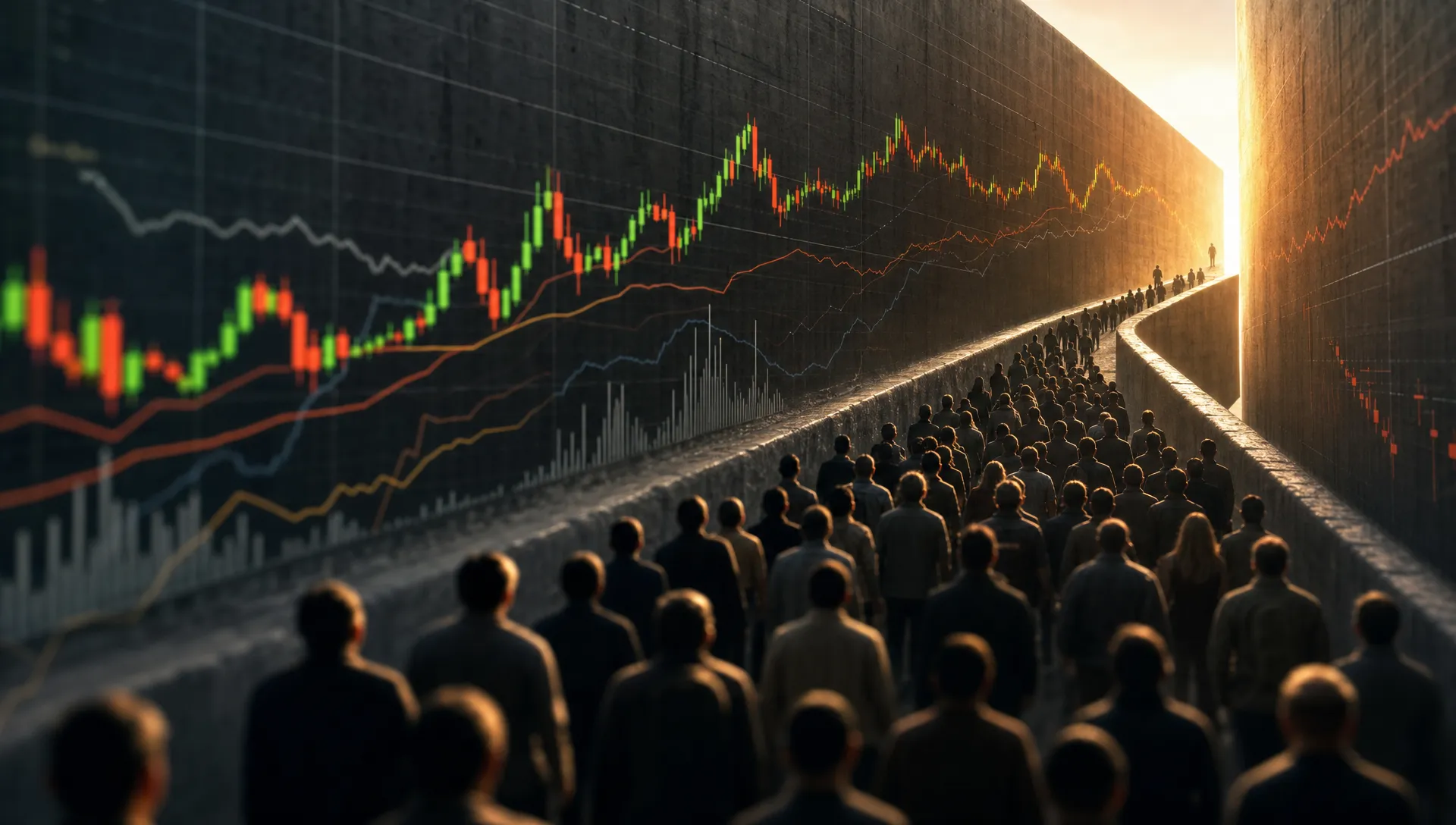
A trade can look obvious at the exact moment it becomes dangerous. The chart is green, volume is high, social feeds are loud, and everyone seems to have a clean reason why the move should continue. That is why trades trending today can reverse tomorrow, not because momentum is fake, but because momentum is often fragile once too many investors are leaning the same way.
For retail investors, the real question is not whether a trade is popular. It is whether the popularity still has fuel. A trend backed by improving fundamentals, fresh demand, and disciplined positioning can keep going. A trend driven mostly by excitement, leverage, or fear of missing out can unwind quickly.
This article breaks down why hot trades reverse, what warning signs to watch, and how portfolio data can help you distinguish durable momentum from a crowded exit door.
What makes a trade trend in the first place?
A trending trade is usually more than a rising price. It is a cluster of signals that makes an asset feel timely. That can include accelerating price action, unusually high volume, options activity, social media attention, analyst upgrades, ETF inflows, insider narratives, macro catalysts, or visible buying from well-known investors.
In 2026, trends can spread faster than ever because investors see the same signals almost instantly. A chart breaks out, a short clip goes viral, a fund manager mentions a theme, and retail platforms begin surfacing the same ticker. The speed of discovery is useful, but it also compresses the life cycle of a trade.
That is why early signal quality matters. There is a big difference between spotting a move as it begins and buying it after the crowd has already repriced the story. If your goal is to understand the earlier stage of that process, Upside Invest has a deeper guide on how to spot trending trades before the crowd.
The key point is simple: a trade can be trending for good reasons and still become risky once expectations outrun reality.
The core reason reversals happen: the marginal buyer disappears
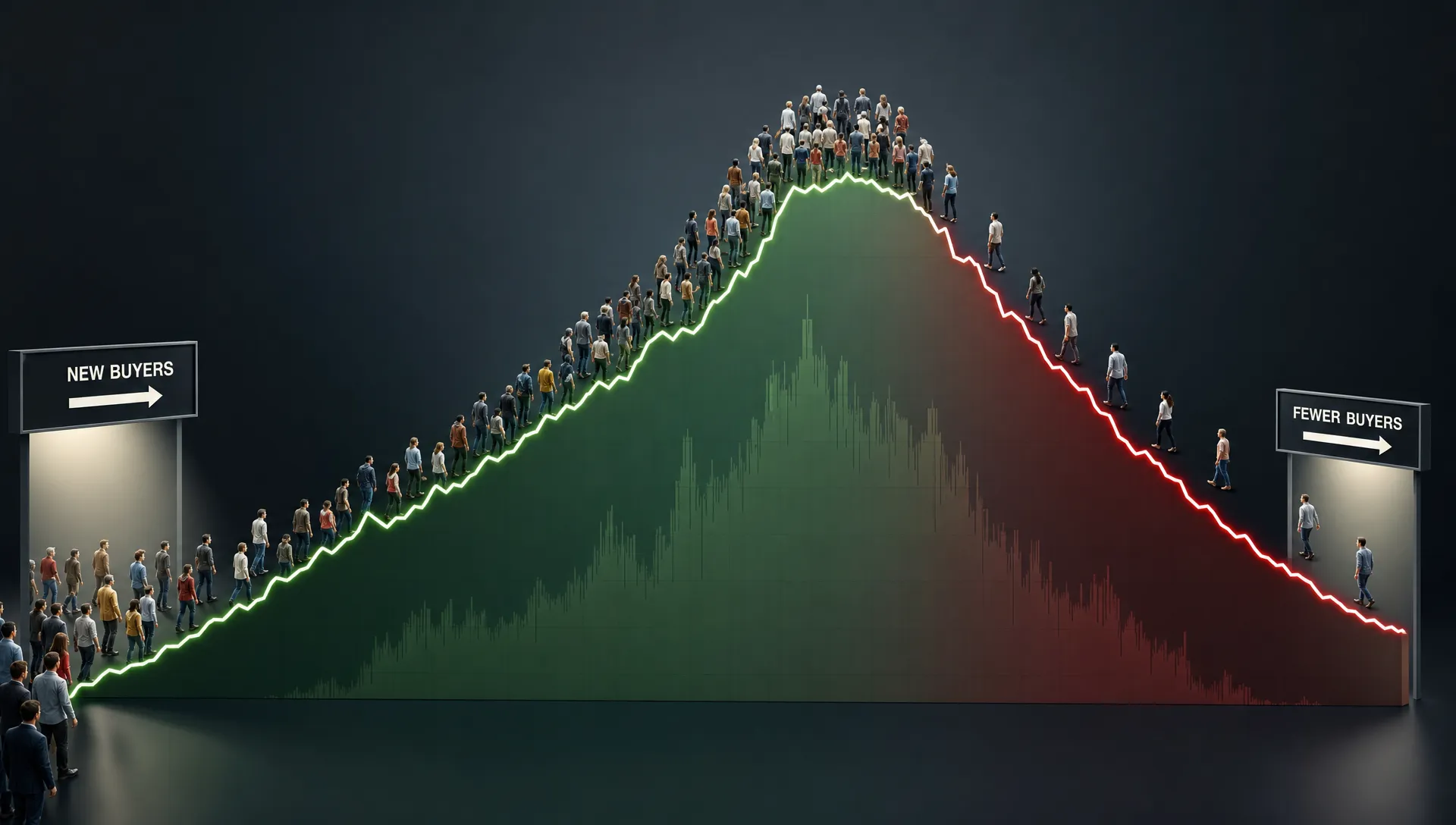
Every trend needs new demand. If a stock, fund, or crypto asset has already attracted the most enthusiastic buyers, the next move depends on whether new buyers are willing to pay even higher prices.
Reversals often begin when the trade runs out of incremental believers. The original thesis may still be intact, but the market has already pulled forward the expected upside. Once the marginal buyer disappears, even neutral news can feel negative because there are fewer participants left to absorb selling.
This is why the most dangerous point is often not when the news is bad. It is when the news is good, but the price no longer responds. A stock that rallies on weak news but stalls on strong news may be telling you that expectations are already stretched.
Crowding turns momentum into a liquidity problem
Crowding is one of the biggest reasons trending trades reverse quickly. When many investors own the same trade for the same reason, they often sell for the same reason too.
At first, crowding feels like confirmation. If many investors are buying, the trade appears validated. But once a position becomes crowded, the risk changes. The issue is no longer only whether the thesis is right. It is whether too many holders have similar time horizons, stop losses, leverage levels, or return expectations.
Imagine a growth stock that rallies 40 percent because investors expect a strong earnings report. If the company reports solid results but guidance is merely normal, short-term holders may decide the catalyst has passed. Momentum funds may trim because the stock loses relative strength. Options traders may close calls. Investors who bought late may panic when the stock breaks below a recent support level.
None of these sellers need to hate the company. They only need to reduce exposure at the same time.
That is why ownership context matters. Price shows what has happened. Positioning helps explain who may be forced or motivated to act next. If you want to go deeper on this type of signal, read Upside Invest's guide to stock ownership data every investor should track.
Catalysts get priced in before fundamentals arrive
Trending trades often start with a catalyst. It could be rate-cut expectations, an earnings surprise, a regulatory change, product launch, merger rumor, AI adoption story, commodity shock, or ETF approval. Catalysts matter because they create a reason for investors to reprice the asset.
The problem is that markets often price the story faster than the business can deliver. A company may need quarters or years to convert a theme into revenue and cash flow. The stock, however, can revalue in days.
This creates a gap between narrative speed and fundamental speed. When that gap gets too wide, the trade becomes vulnerable to disappointment. The disappointment does not have to be catastrophic. It can be as small as slower adoption, lower margins, a delayed launch, or management using cautious language.
The same dynamic appears across asset classes. A crypto token can rally on ecosystem excitement before activity data catches up. A sector ETF can surge on macro hopes before earnings estimates improve. A defensive stock can trend on recession fears, then reverse if growth expectations stabilize.
A useful question is: what must happen next to justify the current price? If the answer requires several optimistic assumptions to arrive at once, the trend may be more fragile than it looks.
Momentum is real, but it is not a free pass
Momentum has been studied in markets for decades. Assets that have performed well over intermediate periods can continue to perform well, especially when the move is supported by earnings revisions, liquidity, and broad participation. Trend following is not just internet folklore. It is a legitimate investing concept.
But momentum is not the same as chasing. Good trend strategies usually define entry rules, exit rules, position sizing, and risk controls before the trade becomes emotional. Chasing happens when the only rule is that the price is going up.
This distinction matters because trend strength and reversal risk can exist at the same time. A trade can be in a valid uptrend, but also extended. It can have strong fundamentals, but also too much near-term optimism. It can be owned by skilled investors, but still vulnerable if those investors already have large positions.
For a more strategy-focused view, see Upside Invest's discussion of trend following strategies that still work in 2026. The takeaway here is that trend following works best when it is systematic. It becomes dangerous when it turns into a story you are afraid to question.
Warning signs that a trending trade may reverse
No single signal predicts a reversal perfectly. Markets are noisy, and strong trends can stay overbought longer than cautious investors expect. Still, certain conditions deserve attention because they often show that a trade is becoming dependent on perfect sentiment.
| Warning sign | Why it matters | What to watch |
|---|---|---|
| Price rises while volume fades | Fewer buyers may be supporting each new high | Breakouts that fail quickly or close weak |
| Good news no longer moves the asset | Expectations may already be priced in | Strong headlines followed by flat or negative price action |
| Ownership becomes highly concentrated | Similar investors may sell at the same time | Crowded exposure among short-term or momentum-driven holders |
| Valuation expands faster than estimates | Narrative may be outrunning fundamentals | Multiple expansion without earnings or cash flow upgrades |
| Leadership narrows | The trend may depend on fewer winners | Sector rallies led by only one or two names |
| Volatility rises during gains | Buyers and sellers may be fighting for control | Large intraday reversals, gap-ups that fade, wider spreads |
| The catalyst calendar is exhausted | Traders may have no next reason to hold | Selling after earnings, product events, or macro announcements |
The most important warning sign is a change in behavior. If an asset used to rally on modest news but now fails to rally on excellent news, the market is probably shifting from accumulation to distribution.
Why reversals feel sudden even when the setup was visible
Reversals often feel like they came out of nowhere because the final trigger is easy to see, but the setup was building quietly. The headline gets blamed, while positioning did the real work.
For example, a stock may fall after an earnings call, so investors say earnings caused the reversal. But the deeper issue may be that the stock had already doubled, sentiment was euphoric, short-term holders were crowded, and the company needed flawless guidance to keep the trend alive. Earnings were the spark, not the fuel.
This is also why strong assets can experience sharp pullbacks without changing their long-term trajectory. A reversal does not always mean the original thesis is broken. Sometimes it means the trade needed to reset.
The same principle shows up outside markets. Athletes do not improve by training at maximum intensity every day. They manage stress, rest, and sometimes use recovery tools used by athletes to avoid overextension. Markets are not muscles, but trends also need periods of consolidation. Without pauses, the move becomes more vulnerable to injury.
The role of leverage and options in faster reversals
Leverage can turn a normal pullback into a forced unwind. When investors use margin, derivatives, or highly volatile instruments to express a trending view, they reduce their ability to wait through volatility.
Options can also accelerate both directions. During the rise, call buying may contribute to dealer hedging activity that supports the trend. But when momentum slows, those same flows can fade or reverse. Traders who bought short-dated calls may sell, roll down, or let contracts expire. The demand that helped lift the asset may disappear quickly.
This is not a reason to avoid every trade with options activity. It is a reason to understand the quality of demand. Long-term buying by investors with conviction is different from short-term exposure that must be closed if the chart weakens.
When a trade is trending, ask whether buyers are building durable positions or renting exposure for a catalyst. The second type can be profitable, but it is usually less stable.
How to avoid becoming exit liquidity
Being late to a trending trade does not automatically mean you will lose money. It does mean you need a clearer process. The goal is not to predict every reversal. The goal is to avoid buying simply because the trend is visible.
Start by separating the trade from the thesis. The thesis might be that a company is gaining market share, a sector is benefiting from policy changes, or an asset class is attracting new capital. The trade is the current price, current positioning, and current expectations. A good thesis can be a bad trade if the entry price already assumes too much.
Next, compare the position to your existing portfolio. Many investors accidentally double down on the same factor without realizing it. A trending AI stock, a growth ETF, and a semiconductor fund may all increase exposure to the same market driver. If the trend reverses, the portfolio impact can be larger than expected. Upside Invest's guide to portfolio comparison tips that reveal hidden risk explains how to uncover this kind of overlap.
Finally, define what would prove you wrong before you enter. That can be a fundamental condition, a price-based risk level, or a change in ownership behavior. The key is to decide while you are calm, not after the trade moves against you.
Using verified investor behavior as context, not a shortcut
Real portfolio data can help investors see whether a trend is being accumulated, held, trimmed, or abandoned. That context is valuable because it moves the conversation beyond headlines. If verified investors with strong track records are gradually building positions, that may say something different than a sudden spike in attention from short-term traders.
Still, portfolio data should not be treated as a copy button. Even skilled investors have different objectives, risk tolerance, tax situations, time horizons, and liquidity needs. A position that makes sense as 2 percent of one portfolio may be reckless as 25 percent of another.
Upside Invest is designed around this context. By showing verified investor holdings, portfolio comparisons, trend tracking, top performer rankings, and anonymous profiles, it helps retail investors study what others are buying and holding without relying only on social noise. The advantage is not that you can outsource your decisions. The advantage is that you can ask better questions before making them.
A practical framework for evaluating a hot trade
When a trade is trending, slow the decision down. A simple framework can help you avoid emotional entries and forced exits.
| Question | Stronger answer | Weaker answer |
|---|---|---|
| What is driving the move? | Fundamentals, revisions, durable demand, improving data | Viral attention, vague theme, single headline |
| Who is buying now? | Long-term holders, diversified investors, repeat accumulators | Late momentum buyers, highly leveraged traders |
| What is already priced in? | Reasonable expectations with room for upside surprise | A perfect outcome with little room for error |
| What could reverse the trade? | Known risks with manageable downside | Unclear risks, no exit plan, dependence on sentiment |
| How does it affect your portfolio? | Adds diversified exposure with defined size | Increases hidden concentration in the same theme |
This framework does not eliminate uncertainty. It helps you avoid confusing popularity with probability.
Frequently Asked Questions
Why do trades trending today reverse tomorrow? Trending trades can reverse when the marginal buyer disappears, the catalyst is already priced in, positioning becomes crowded, or investors sell at the same time after a change in sentiment.
Does a reversal mean the investment thesis was wrong? Not always. A reversal can mean the price moved too far too fast, even if the long-term thesis remains valid. The trade can be wrong in the short term while the underlying business or theme is still improving.
Is momentum investing still useful? Yes, momentum can be useful when it is applied with rules, risk controls, and awareness of crowding. It becomes more dangerous when investors chase price action without understanding valuation, positioning, or catalysts.
What is the biggest warning sign before a reversal? One of the strongest warning signs is when good news no longer produces positive price action. That can indicate expectations are stretched and buyers are no longer willing to pay higher prices.
How can retail investors use portfolio data when evaluating trends? Portfolio data can show whether verified investors are accumulating, holding, trimming, or avoiding a trending asset. It should be used as context for better research, not as a substitute for your own risk management.
Turn trend noise into better investing context
Trending trades can create real opportunity, but they can also hide crowded risk. The difference often comes down to context: who owns the asset, why they own it, how stretched expectations are, and how the position fits inside your portfolio.
Upside Invest helps retail investors compare portfolios, study verified holdings, track investor moves, and explore trends across stocks, funds, and crypto while keeping profiles private and anonymous. Before you chase the next popular trade, use better context to decide whether the trend still has room to run or is already running out of buyers.